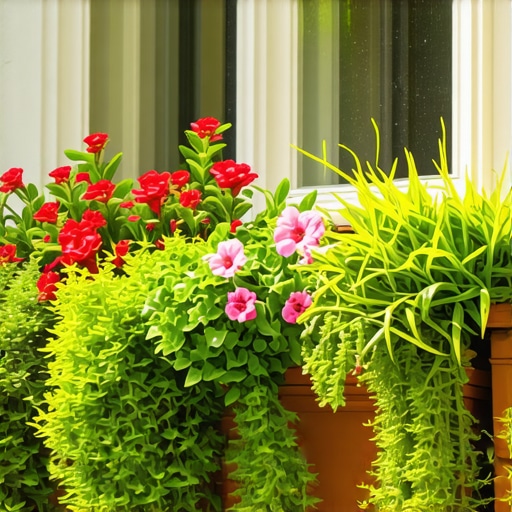
5 2026 Best Plants for South-Facing Window Boxes
The Engineering of Solar Loading in Container Gardening
South-facing window boxes require specific drought-tolerant plant species and high-performance potting substrates to survive 8 to 10 hours of direct UV exposure and thermal heat transfer from building envelopes. Success in these micro-climates depends entirely on managing the evapotranspiration rate and ensuring the root zone does not exceed 85 degrees Fahrenheit. It is not just about aesthetics; it is about biological survival in a confined, high-heat environment.
I always drill into my new crew members: if you don’t fix the soil grading and substrate composition first, every plant you put in the ground is just expensive compost. I remember a job back in 2018 where a client spent four figures on high-end nursery stock for a series of custom copper window boxes. Three weeks later, the roots were literally cooked because they used standard topsoil that compacted and held heat like a brick oven. We had to excavate the entire system, install 1-inch thick rigid foam insulation liners, and switch to a high-porosity mix. It was a costly lesson in thermal dynamics. Don’t make that mistake.
Why 80% of the Work Happens Before Planting
A south-facing window box is a botanical blast furnace. The sun hits the front of the box, the glass reflects heat from the back, and the siding radiates infrared energy. To combat this, you need a container with a minimum depth of 8 inches. Shallow boxes dry out before noon. I recommend using high-density polyethylene or thick cedar. Avoid thin metal unless you want to boil the root hairs. Drainage is the next bottleneck. You need 1/2-inch holes every 6 inches. If water sits, it heats up. Hot, stagnant water kills oxygen levels, leading to anaerobic rot.
“A container garden is a closed system where the margin for error is dictated by the water-holding capacity of the media rather than the frequency of the gardener’s intervention.” – USDA Circular on Urban Horticulture
The 2026 Selection: Top 5 Performers
For the 2026 season, we are moving away from thirsty annuals and toward plants with thick cuticles and high solar reflectance.
- Angelonia (Summer Snapdragon): These are the workhorses of the heat. They utilize a specialized leaf structure that prevents wilting even when the mercury hits triple digits.
- Scaevola (Fan Flower): This plant has a semi-succulent leaf. It stores moisture in its tissue, making it resistant to the 2 PM transpiration spike.
- Dichondra ‘Silver Falls’: The silver color isn’t just for show. Those microscopic hairs reflect UV radiation away from the plant, keeping the internal temperature lower than green-leaved counterparts.
- Lantana (Compact Cultivars): These are nearly indestructible. They thrive on neglect and high-intensity light, provided they have a well-drained base.
- Portulaca (Moss Rose): This is your fail-safe. It uses CAM photosynthesis (Crassulacean Acid Metabolism), closing its stomata during the heat of the day to preserve every drop of water.
| Plant Name | Water Requirement | Growth Habit | UV Tolerance |
|---|---|---|---|
| Angelonia | Moderate | Upright | Extreme |
| Scaevola | Low to Moderate | Trailing | High |
| Dichondra | Low | Long Trailing | Extreme |
| Lantana | Very Low | Mounding | High |
| Portulaca | Minimum | Low Spreading | Extreme |
How much modified gravel do I need for a patio base?
While not directly for the box, many window box projects are part of a larger hardscaping plan. For a standard 4-inch compacted base, you need approximately 1 ton of modified crushed stone (2A or similar) per 50 square feet. Do not skip the plate compactor. A soft base leads to settling, which shifts the window box brackets and can cause structural damage to your siding.
What is the best soil for window boxes in full sun?
Stop buying the cheap bags at the big-box stores. You need a professional-grade soilless mix. Look for a ratio of 60% peat moss or coconut coir, 20% perlite for aeration, and 20% vermiculite for moisture retention. Add a handful of calcined clay (oil dry) to increase the cation exchange capacity. This allows the soil to hold onto nutrients rather than letting them wash out every time you water. Use a slow-release 14-14-14 fertilizer at the start of the season. No more, no less.
“The hydrostatic pressure in a saturated container can exceed the structural integrity of the mounting hardware if drainage is restricted.” – ICPI Technical Bulletin
Installation Checklist for Maximum Longevity
- Check bracket weight ratings; a wet window box can weigh over 100 pounds.
- Install a 1/2-inch spacer between the box and the house to prevent rot.
- Pre-soak your potting mix before putting it in the box.
- Plant the root flare level with the soil surface. Do not bury the stems.
- Apply a 1-inch layer of finely shredded hardwood mulch to suppress evaporation.
The Settling-In Period
Once planted, these boxes need daily monitoring for the first 14 days. Even drought-hardy plants need to establish their roots in the new media before they can handle the full heat. Water early in the morning, before 7 AM. Watering at night encourages fungal pathogens like powdery mildew. If you see the Dichondra turning gray or the Angelonia drooping, check the soil moisture with your finger at a 2-inch depth. If it is dry, saturate it until water runs out the bottom. It will recover. Don’t skip the morning soak.