Repairing 2026 Loose Deck Railings for Under $30
The Forensic Autopsy of a Failing Guardrail
I recently got called out to tear up a $30,000 patio that was sinking because the previous contractor failed to account for hydrostatic pressure, but while I was there, I noticed something much more dangerous: the homeowner’s deck railing was swaying like a reed in the wind. This was not a cheap deck, but it was a dangerous one. Upon inspection, the original builder had used standard 16d nails to attach the 4×4 posts to the rim joist. Nails have zero withdrawal strength in this application. Over five years, the wood fibers around those nails had undergone repeated wetting and drying cycles, eventually loosening the grip until the railing became a liability rather than a safety feature. The homeowner thought they needed a $5,000 deck rebuild. They did not. They needed $28 worth of structural fasteners and two hours of labor. In the world of hardscaping and landscape structures, the difference between a collapse and a century-long lifespan is often found in the metallurgy of your screws.
The Physics of Lateral Railing Failure
Loose deck railings are primarily caused by the failure of the post-to-joist connection to resist lateral loads, typically resulting from the use of inadequate fasteners like nails or standard lag bolts that have loosened over time due to wood shrinkage and moisture cycles. To fix this for under $30, you must focus on increasing the moment-arm resistance of the post by using modern structural screws that bite into the wood grain with high torque. Wood is a living, breathing material. Even after it is milled and pressure-treated, it reacts to the micro-climate created by your garden design and lawn care habits. If you have mulch piled against the deck or a sprinkler system constantly hitting the wood, you are inviting fungal hyphae to colonize the cellular structure of the lumber, leading to soft-tissue rot that no screw can fix. Don’t skip the inspection phase.
Why is my deck railing wobbly?
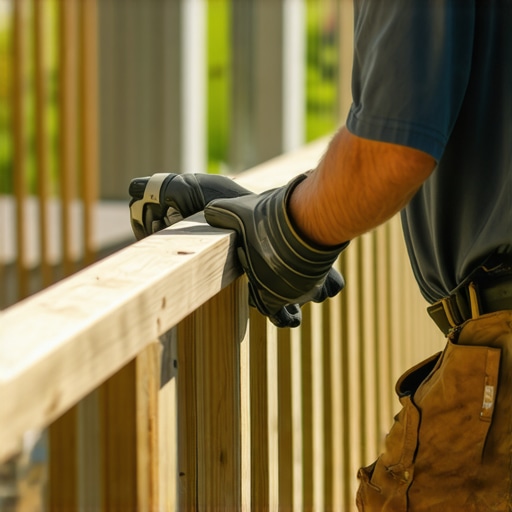
The primary reason for a wobbly railing is the fulcrum effect. A 36-inch or 42-inch railing post acts as a long lever. When someone leans on the top rail, that force is multiplied at the base of the post where it meets the joist. If that connection is only held by two nails, the leverage is simply too great for the friction of the nail shank to hold. Furthermore, many DIY builds omit ‘blocking,’ which are short pieces of lumber installed between joists to prevent the rim joist from twisting. Without blocking, even the strongest bolt will eventually pull the joist out of alignment. [IMAGE_PLACEHOLDER]
“Guardrail posts must be connected to the deck frame in a manner that transfers the required 200-pound concentrated load into the floor system. Nails or lag screws into the end grain of the joists are not permitted.” – American Wood Council DCA6 Standards
The $30 Material Breakdown
To perform a professional-grade repair, we are moving away from the hardware store’s bargain bin. We are looking for structural screws that are IRC/IBC code-compliant. For less than $30, you can purchase a 12-pack of 5-inch or 6-inch structural wood screws (such as GRK RSS or Simpson Strong-Tie SDWS) and a small tube of exterior-grade wood adhesive or wood-hardener if the surface has minor softening. These fasteners are heat-treated and specifically designed to replace old lag bolts without the need for pre-drilling, which saves the structural integrity of the remaining wood fibers.
| Fastener Type | Holding Power (Withdrawal) | Installation Time | Cost per Post |
|---|---|---|---|
| 16d Galvanized Nails | Near Zero (Friction only) | Fast | $0.05 |
| 1/2-inch Lag Bolts | Moderate (Requires pre-drill) | Slow | $4.50 |
| Structural Screws (GRK/SDWS) | High (Tested/Rated) | Fast | $2.25 |
| Through-Bolts with Washers | Extreme (Highest) | Moderate | $6.00 |
As the table shows, structural screws provide the best balance of cost and engineering performance for a $30 budget. If you are dealing with more than 4 or 5 loose posts, your budget will scale, but the principle remains the same. Do not use zinc-plated hardware. The chemicals used in modern pressure-treated lumber (ACQ or CA-B) are highly corrosive to zinc. You need hot-dipped galvanized or stainless steel to prevent the fasteners from dissolving inside the wood.
The Step-by-Step Remediation Process
First, clear any landscaping or garden design elements that obstruct access to the joist system. If you have heavy shrubbery or overhanging vines, prune them back to ensure the wood can breathe and dry out after the repair. Step two is to remove any old, rusted nails or failed lag screws. If they are stuck, leave them and offset your new structural screws by at least 2 inches to avoid the old holes. Step three: drive two structural screws through the post and into the rim joist. One screw should be positioned 2 inches from the top of the joist, and the second should be 2 inches from the bottom. This creates a vertical couple that resists the leverage of the railing. If the rim joist itself is rotating, you must install blocking behind the post. Use a scrap piece of 2×8 or 2×10 lumber, cut to fit tightly between the joists, and screw it into the adjacent joists using 3-inch deck screws. This creates a rigid box that prevents the post from pulling the rim joist outward. It will not move. It will stay solid for another decade.
What is the best screw for deck railing repair?
For a repair under $30, the 5-inch structural screw is the industry standard. These screws feature a built-in washer head and a ‘Cintech’ or similar coating that resists the corrosive nature of pressure-treated chemicals. Unlike lag bolts, they have a smaller diameter shank but are made of higher-strength steel, meaning they don’t require the massive 1/2-inch holes that can weaken a 4×4 post. They bite hard. They don’t strip. They hold.
“A retaining wall doesn’t fail because of the stone; it fails because of the water trapped behind it. Similarly, a deck rail fails because of the rot trapped in the joint.” – Hardscape Engineering Axiom
The Maintenance Schedule for Structural Longevity
Once the railing is tight, your job isn’t done. Hardscaping and landscaping structures require an annual audit. Check your soil grading around the deck footings. If water is pooling near the posts, it will wick up into the end-grain of the lumber, causing rot from the inside out. Ensure your lawn care routine doesn’t involve spraying high-nitrogen fertilizers directly onto the wood, as this can accelerate the breakdown of the cellulose. Apply a high-quality oil-based stain every 2-3 years to keep moisture out of the fastener holes. A tight screw in rotten wood is useless. Keep the wood dry, keep the screws tight, and your $30 investment will save you a $30,000 liability.
- Inspect post-to-joist connections for rust or withdrawal.
- Check for ‘mulch volcanoes’ against deck stairs or posts.
- Tighten structural screws if the wood has shrunk during dry seasons.
- Verify that blocking is present and secure between joists.
- Apply wood preservative to any newly drilled holes or cuts.