5 2026 Best Shrubs for Low-Light Front Yards
Designing for the Shadows: Why Foundation Planning Trumps Plant Selection
Planning a low-light front yard requires a fundamental understanding of site-specific hydrology and solar orientation, as roughly 80% of successful installation occurs before a single hole is dug. For 2026, professional garden design focuses on species that exhibit high photosynthetic efficiency and pathogen resistance in damp, shaded environments, ensuring structural longevity without the need for constant chemical intervention.
I always drill into my new crew members: if you don’t fix the soil grading first, every plant you put in the ground is just expensive compost. I’ve seen $50,000 landscapes rot in three months because a contractor ignored the hydrostatic pressure building against the foundation and allowed water to pool in the shade. Shade doesn’t just mean less light; it means slower evaporation and a higher risk of root rot (Phytophthora). If your soil doesn’t drain, your plants are essentially standing in a bucket of stagnant water. We test for percolation rates and soil pH before we even look at a catalog. It is the only way to work.
“The single most common cause of plant failure in shaded landscapes is planting the root ball too deep, which leads to stem girdling and oxygen deprivation in the rhizosphere.” – University of Maryland Extension Service
What are the best low-light shrubs for front yard landscaping in 2026?
The best low-light shrubs for 2026 include Taxus x media ‘Hicksii’ for vertical structure, Sarcococca hookeriana for winter interest, and Mahonia eurybracteata ‘Soft Caress’ for texture. These species are selected for their low-maintenance requirements, shade tolerance, and ability to thrive in USDA Hardiness Zones 5-9 while resisting common fungal pathogens.
| Shrub Species | Light Requirement | Soil pH Preference | Growth Rate | Key Benefit |
|---|---|---|---|---|
| Taxus x media (Hicks Yew) | Deep Shade to Sun | 6.0 – 7.5 | Medium | Exceptional structural hedging |
| Sarcococca (Sweet Box) | Full Shade | 5.5 – 6.5 | Slow | Fragrant winter blooms |
| Mahonia ‘Soft Caress’ | Part to Full Shade | 5.0 – 6.5 | Medium | Fern-like texture, no spines |
| Pieris japonica | Part Shade | 4.5 – 5.5 | Slow | Broadleaf evergreen interest |
| Hydrangea quercifolia | Dappled Shade | 5.5 – 7.0 | Fast | Four-season bark and foliage |
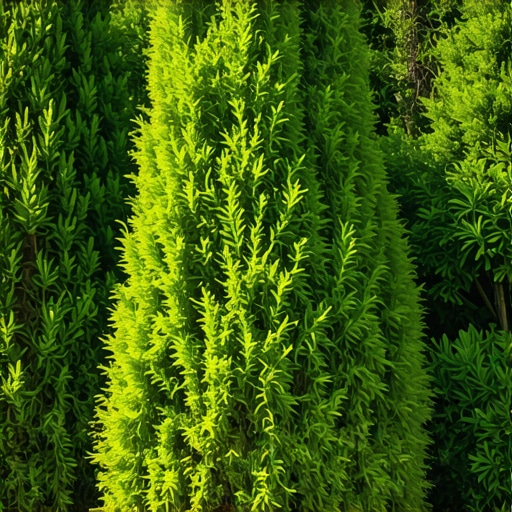
1. Taxus x media ‘Hicksii’ (Hicks Yew)
This is the workhorse of hardscaping borders. It provides a dense, dark green screen that can handle the heavy compaction often found near driveways. Unlike most conifers, Taxus can regenerate from old wood, making it forgiving for homeowners who forget to prune. We use it for verticality. It is tough as nails.
2. Sarcococca hookeriana var. humilis (Sweet Box)
If you have a north-facing entry with zero direct sun, this is your solution. It’s a stoloniferous evergreen that stays low, roughly 2 feet. It thrives in high organic matter. In February, the small white flowers will scent the entire front walk. It ignores salt spray. It doesn’t quit.
3. Mahonia eurybracteata ‘Soft Caress’
Most Mahonias are prickly and aggressive. ‘Soft Caress’ changed the landscaping game by offering bamboo-like foliage without the thorns. It’s a Zone 7-9 staple that brings a delicate texture to the heavy, dark corners of a front porch. We plant these in clusters of three for maximum visual impact.
How much water do new shrubs need in the shade?
New shrubs in shaded areas require deep, infrequent watering of approximately one inch per week, delivered directly to the root ball via drip irrigation or a slow-release hose. Over-watering in shade is a death sentence, as lower evapotranspiration rates keep the soil saturated longer than in sunny locations.
4. Pieris japonica (Japanese Andromeda)
For 2026, we are looking at cultivars like ‘Katsura’ which offer incredible phyto-chemistry. The new growth emerges blood-red before turning green. It requires acidic soil. If your soil is alkaline, you must amend with elemental sulfur or it will chlorose and die. No exceptions.
5. Hydrangea quercifolia (Oakleaf Hydrangea)
This is a native powerhouse. While most Hydrangeas wilt the moment the sun hits them, the Oakleaf is rugged. It offers exfoliating bark for winter interest and deep purple fall foliage. It needs space. Don’t crowd it against the siding.
“Shade-tolerant species have adapted broader, thinner leaves to maximize light interception while minimizing metabolic costs.” – Silvics of North America
- Step 1: Verify 811 utility markings before excavation.
- Step 2: Excavate a hole twice the width of the root ball but no deeper.
- Step 3: Score the sides of the root ball to prevent root girdling.
- Step 4: Position the root flare 1 inch above the finished grade.
- Step 5: Backfill with native soil; avoid heavy peat amendments.
- Step 6: Apply 2 inches of aged arborist wood chips, keeping mulch away from the trunk.
- Step 7: Hand-water immediately to eliminate air pockets.
How do I improve drainage for shade gardens?
Improving drainage in shaded garden design involves installing French drains or 4-inch perforated PVC pipes wrapped in drainage fabric to divert surface runoff away from planting beds. Incorporating expanded shale or coarse sand into the soil profile can also increase pore space and oxygen availability for roots.
The maintenance schedule for these installs is rigorous for the first twelve months. You cannot just walk away. The rhizosphere needs time to stabilize. We monitor soil moisture tension. If the tamper bounces off the ground during the initial site prep, your compaction is too high. Fix the ground, or don’t bother planting. Professionalism isn’t about the flowers; it’s about the dirt. It’s about the biology. Anything less is just a waste of the client’s money.