
![5 Deer-Proof Shrubs for 2026 Privacy Hedges [Full Sun]](https://lawnmajesty.com/wp-content/uploads/2026/05/5-Deer-Proof-Shrubs-for-2026-Privacy-Hedges-Full-Sun.jpeg)
5 Deer-Proof Shrubs for 2026 Privacy Hedges [Full Sun]
5 Deer-Proof Shrubs for 2026 Privacy Hedges [Full Sun]
Planning a privacy hedge for the 2026 season requires more than just picking a green plant and digging a hole. Most homeowners fail because they ignore the fundamental engineering of the site: soil density, drainage, and the local deer population’s caloric requirements. If you want a screen that lasts twenty years instead of two, you have to treat the perimeter of your property like a civil engineering project. This means measuring the bulk density of your soil and ensuring you have at least 18 inches of well-drained, uncompacted medium before the first root ball touches the ground.
The Critical Failure of Site Preparation
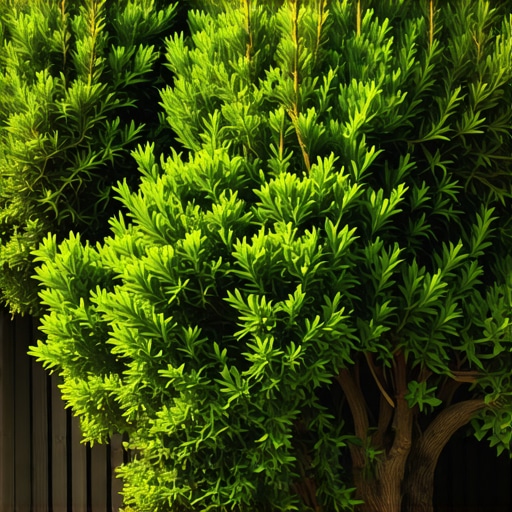
Successful 2026 privacy hedges require 18 to 24 inches of uncompacted topsoil, a neutral pH, and a specific drainage profile before selecting deer-resistant species like Thuja plicata. Without addressing hydrostatic pressure and soil aeration, even the most expensive nursery stock will succumb to root rot or secondary pest stress within thirty-six months of installation. I always drill into my new crew members: if you don’t fix the soil grading first, every plant you put in the ground is just expensive compost. Last season, I had a guy, Mike, who thought he could skip the transit level on a 150-foot hedge line. We ended up with a three-inch dip in the middle. After one heavy spring rain, those four Arborvitae were sitting in a swamp. Within a month, the Phytophthora root rot set in and they were dead. We had to rip them out, fix the grade, and replant on his dime. Now he checks the grade twice. You should too. If your yard doesn’t move water at a rate of one inch per hour, your hedge is doomed before it starts. [IMAGE_PLACEHOLDER]
“Planting depth is the single most critical factor in the long-term survival of woody ornamentals. A tree planted too deep is a tree on a countdown to failure.” – International Society of Arboriculture (ISA) Best Management Practices
1. Thuja plicata ‘Green Giant’ (Western Red Cedar Hybrid)
The Thuja plicata ‘Green Giant’ is the gold standard for full-sun privacy because it contains plicatic acid, a natural chemical compound that makes the foliage unpalatable to Odocoileus virginianus. Unlike the common Emerald Green Arborvitae, which is basically a salad bar for deer, the Green Giant grows at a rate of 3 to 5 feet per year once the root system is established. You must ensure you are buying the Plicata hybrid. If you buy the standard Occidentalis, you are just feeding the local herd. Spacing is critical here; plant them at least 5 to 6 feet apart on center. If you crowd them, you lose the lower interior foliage due to lack of light, and your privacy screen will look like a row of lollipops in a decade. Check your root flares. If you bury that flare, the bark will saturate, the phloem will die, and the tree will starve.
2. Juniperus virginiana ‘Taylor’ (Eastern Red Cedar)
For narrow spaces where you need a vertical screen without a 20-foot footprint, Juniperus virginiana ‘Taylor’ is the tool for the job. This is a native cultivar that thrives in high-calcium soils and can handle the salt spray if you are near a roadway. Deer avoid Junipers because of the volatile oils and the prickly texture of the needles. These aren’t the messy, sprawling Junipers of the 1970s; ‘Taylor’ stays tight and columnar, reaching 15 feet tall but only 3 feet wide. Because it is a native species, it supports local specialized pollinators while being completely ignored by the local deer. Don’t over-fertilize these. High nitrogen levels lead to weak, leggy growth that sags under snow loads. They need the lean soil to stay structural and strong.
3. Viburnum dentatum (Arrowwood Viburnum)
If you want a deciduous hedge that provides security and privacy, the Viburnum dentatum is the heavy hitter of the landscaping world. It gets its name because Native Americans used the straight, hard wood for arrow shafts. It is incredibly dense. Deer find the leathery, serrated leaves difficult to digest. In the spring, you get white flat-top flowers, and in the fall, you get deep blue drupes that birds love. For a hedge, I recommend the ‘Chicago Lustre’ cultivar because it has a higher gloss on the leaf which further deters browsing. This plant is a beast in full sun and can handle heavy clay soil that would kill most other shrubs. Just make sure you prune out one-third of the oldest wood every three years to keep the airflow moving and prevent powdery mildew.
“Deer browse pressure varies by seasonal caloric needs; no plant is 100% deer-proof if the population density is high enough, but selection of resistant genotypes is the primary defense.” – Cornell University Cooperative Extension
4. Ilex x meserveae (Blue Holly)
The Blue Holly series, specifically ‘Blue Maid’ or ‘Blue Princess’, provides a year-round evergreen barrier that no deer wants to touch. The leaves are coriaceous (leathery) and tipped with sharp spines. Beyond the physical deterrent, the leaves contain theobromine, which is toxic in high quantities to many mammals. To get those iconic red berries, you must plant one male ‘Blue Boy’ or ‘Blue Stallion’ for every five to eight females. These shrubs require a slightly acidic soil pH between 5.5 and 6.5. If your soil is alkaline, the leaves will turn chlorotic (yellow) because the plant can’t uptake iron. I always tell clients to hit these with a sulfur-based acidifier twice a year. If you keep the pH right, the foliage stays a deep, dark blue-green that looks incredible against winter snow.
5. Prunus laurocerasus ‘Schipkaensis’ (Skip Laurel)
For a sophisticated, broad-leaf evergreen look that is tougher than it looks, the Skip Laurel is my go-to for high-end garden design. These plants contain cyanogenic glycosides, which give the leaves a bitter almond scent when crushed. Deer take one bite and move on. They have a refined, glossy leaf that reflects sunlight, making them perfect for brightening up the edge of a property. They grow well in full sun but can also handle the shifting shadows of a maturing landscape. The ‘Schipkaensis’ cultivar is more cold-hardy than the standard ‘Otto Luyken’ and grows taller, reaching 10 to 12 feet. One word of warning: do not use overhead irrigation on these. They are susceptible to ‘shot-hole’ fungus if the leaves stay wet. Use a drip irrigation system laid right at the soil surface.
Technical Comparison of 2026 Hedge Selections
| Species | Growth Rate | Mature Width | Soil Preference | Deer Resistance Level |
|---|---|---|---|---|
| Green Giant | 3-5 ft/yr | 12-15 ft | Loves Loam | High |
| Taylor Juniper | 1-2 ft/yr | 3-4 ft | Alkaline/Dry | Extreme |
| Arrowwood Viburnum | 2 ft/yr | 8-10 ft | Adaptable/Clay | Medium-High |
| Blue Holly | 1 ft/yr | 6-8 ft | Acidic (pH 5.5) | High |
| Skip Laurel | 2 ft/yr | 6-7 ft | Well-drained | High |
How deep do I plant privacy hedges?
You must plant the shrub so the root flare (where the trunk widens at the base) is 1 to 2 inches above the surrounding grade. Most nursery stock comes from the grower with too much soil on top of the roots. You have to scrape that excess off until you find the first structural root. If you bury that flare, you are suffocating the tree. Dig your trench twice as wide as the root ball but no deeper. The shelf of undisturbed soil underneath prevents the plant from settling too deep over time.
The 2026 Installation Checklist
- Call 811 to mark underground utilities before any excavation begins.
- Test soil pH and bulk density using a local university extension lab.
- Excavate a continuous trench rather than individual holes to encourage lateral root spread.
- Remove all burlap, twine, and wire cages from the top 50 percent of the root ball.
- Backfill with native soil only; do not add heavy amendments to the hole to avoid the ‘bathtub effect’.
- Apply 3 inches of aged arborist wood chips, keeping the mulch 4 inches away from the trunk.
- Set up a dedicated drip line with emitters spaced every 12 inches.
How much water does a new hedge need?
New hedges require deep, infrequent watering to force the roots to grow downward. For the first year, aim for 1 inch of water per week delivered over two sessions. Do not daily mist the foliage. You want the soil saturated to a depth of 12 inches, then allowed to dry slightly so oxygen can reach the roots. In 2026, with the increasing volatility of summer heat waves, a smart irrigation controller with a soil moisture sensor is not an option; it is a necessity for protecting your five-figure landscape investment. Stay away from ‘mow-and-blow’ guys who want to prune your hedge with gas shears in the middle of a July drought. That opens up the canopy to sunscald and stress. Prune in late winter or early spring only. It will live longer. Your hedge is a living wall. Treat it like one.
![4 Fire-Safe 2026 Shrubs for High-Heat Zones [Zone 9]](https://lawnmajesty.com/wp-content/uploads/2026/06/4-Fire-Safe-2026-Shrubs-for-High-Heat-Zones-Zone-9.jpeg)
![4 Shade-Loving Groundcovers for 2026 Clay Soil [Fast]](https://lawnmajesty.com/wp-content/uploads/2026/05/4-Shade-Loving-Groundcovers-for-2026-Clay-Soil-Fast.jpeg)