Why Your New Trees Aren’t Growing and How to Fix the Soil
The Hard Truth About Early Tree Failure
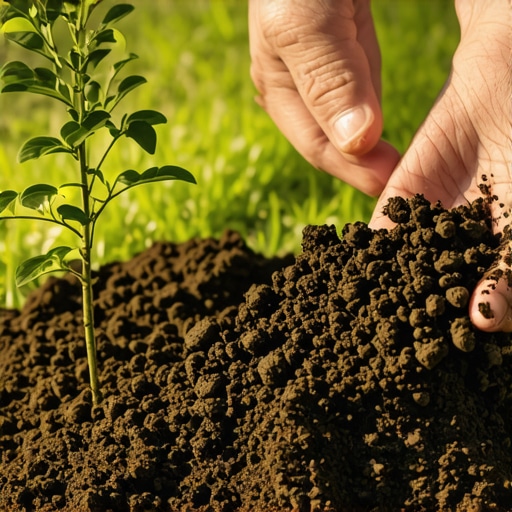
I always drill into my new crew members: if you don’t fix the soil grading first, every plant you put in the ground is just expensive compost. You can spend five thousand dollars on a specimen Japanese Maple, but if you drop it into a hole with the drainage capacity of a concrete bucket, you are just watching money die. Most homeowners and even some landscape contractors focus on the foliage. They want the immediate visual impact. But the reality of arboriculture is that 80 percent of your success is determined before the tree ever leaves the nursery pot. We are building biological infrastructure, not decorating a room.
“A tree’s ability to establish is directly proportional to the volume of uncompacted soil available for root colonization during the first three years.” – USDA Forest Service Urban Forestry Manual
Why is my new tree not growing?
Your new trees are not growing because of root flare burial, soil compaction, or hydrostatic stress. When the root flare is buried under mulch or soil, the trunk tissues rot and gas exchange is choked off. This leads to secondary infections and stunted growth that no amount of fertilizer can fix.
The Soil Engineering Phase: Physics Before Biology
Before you dig, you have to understand the mechanical properties of your dirt. In most new residential developments, the soil has been stripped of its organic horizon and compacted by heavy machinery to a bulk density that roots simply cannot penetrate. We are talking about soil with a PSI resistance that rivals asphalt. If your soil is too tight, the roots will circle the planting hole like they are in a pot, eventually girdling the trunk and killing the tree five years down the line.
How much modified gravel do I need for a patio base near trees?
While hardscaping requires a minimum of 4 to 6 inches of compacted 2A modified gravel, you must keep this base at least 3 feet away from the critical root zone of any new or existing tree. The high pH of limestone gravel can leach into the soil, causing nutrient lockout and chlorosis in sensitive species. We call this the chemical wall. It is a common mistake in modern garden design that leads to slow decline.
Analyzing Soil Chemistry and CEC
Cation Exchange Capacity (CEC) is the soil’s ability to hold onto essential nutrients like magnesium, potassium, and calcium. If you have sandy soil, your nutrients wash away. If you have heavy clay, the nutrients are there, but they might be chemically locked because of your pH levels. You need a soil test from a lab, not a ten dollar kit from a big box store. Most trees prefer a slightly acidic environment (pH 6.0 to 6.5). When the pH climbs above 7.5, iron becomes unavailable, and your leaves turn yellow regardless of how much nitrogen you dump on them.
| Soil Component | Ideal Range | Impact on Tree Growth |
|---|---|---|
| Bulk Density | 1.1 – 1.4 g/cm3 | Allows root penetration and oxygen flow. |
| Organic Matter | 5% – 8% | Supports mycorrhizal fungi and water retention. |
| pH Level | 6.0 – 7.0 | Optimizes nutrient solubility and uptake. |
| Pore Space | 50% | Balances water storage and gas exchange. |
The Forensic Installation Process
When you finally dig the hole, it should be two to three times wider than the root ball, but no deeper. The bottom of the hole must be firm. If you loosen the soil underneath the tree, it will settle. When it settles, the root flare sinks. When the flare sinks, the tree dies. It is that simple. We use a shovel handle to bridge the hole and ensure the flare is exactly one inch above the surrounding grade. This accounts for future settling without risking rot.
Can you fix a tree planted too deep?
You can fix a tree planted too deep by carefully excavating the root flare using an air spade or hand tools to remove excess soil from the trunk base. If the tree has been in the ground for less than a year, you may need to physically lift and replant it at the correct height to prevent long term girdling and trunk decay.
- Identify the root flare: The point where the trunk widens at the base.
- Scarify the hole walls: Break up the “glaze” caused by shovels in clay soil to allow roots to exit the hole.
- Remove the top 2 inches of nursery soil: Most trees come from the nursery already planted too deep in the pot.
- Backfill with native soil: Do not use 100 percent potting soil; the tree needs to acclimate to the surrounding environment immediately.
- Mulch properly: Use a donut shape, never a volcano. Keep mulch 3 inches away from the bark.
“Proper soil preparation is the only way to mitigate the ‘bathtub effect’ where water collects in a dug hole and drowns the root system.” – Penn State Extension Horticultural Research
The Maintenance Reality
Deep, infrequent watering is the mandate. Most people mist the surface daily. This is useless. You need to deliver 15 to 20 gallons of water once a week directly to the root ball. This forces the roots to grow downward to chase the receding moisture line. If you keep the surface wet, the roots stay shallow. Shallow roots cannot survive a July heatwave. It will fail. Stop looking for shortcuts. Landscaping is a long game of patience and proper physics.
![5 Low-Maintenance 2026 Front Yard Layouts [DIY]](https://lawnmajesty.com/wp-content/uploads/2026/06/5-Low-Maintenance-2026-Front-Yard-Layouts-DIY.jpeg)