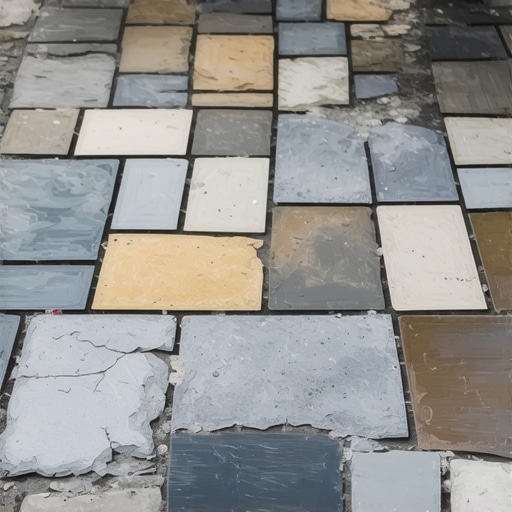
The Best Way to Paint an Old Concrete Patio to Look Like Stone
The Hardscape Autopsy: Why Most Painted Patios Fail
The best way to paint an old concrete patio to look like stone involves a rigorous mechanical cleaning, chemical etching, and the application of multi-tonal concrete stains rather than traditional latex paint. Achieving a realistic stone aesthetic requires proper surface porosity and a layered application technique to mimic natural mineral variance. Most homeowners fail because they treat concrete like a drywall surface. I recently got called out to tear up a $30,000 patio that was sinking and peeling because the previous contractor thought he could hide structural drainage issues with a thick coat of deck paint. He didn’t check the moisture vapor transmission rate. Within one season, the hydrostatic pressure pushed that paint right off the surface in giant, ugly flakes. It was a mess. Concrete is a breathing, porous organism. If you clog its pores with cheap big-box store paint, it will revolt. This guide isn’t about making it look ‘pretty’ for a weekend; it is about engineering a finish that bonds at a molecular level.
“Concrete surfaces must be free of all laitance, oil, grease, and other contaminants to ensure mechanical bond strength.” – ICPI Installation Standards
The Science of Surface Preparation
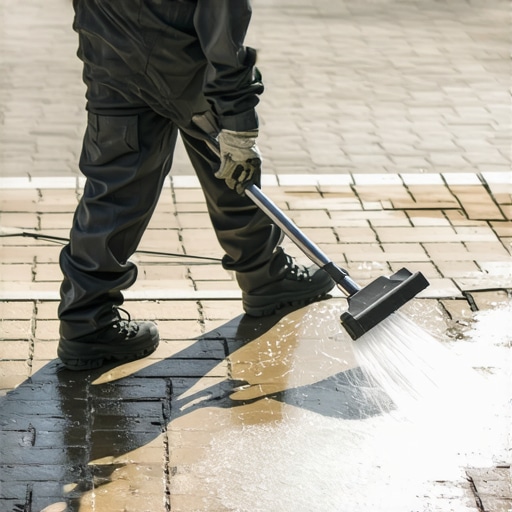
Before you even touch a brush, you must achieve a specific concrete surface profile (CSP) to ensure the coating adheres to the substrate. This means removing the ‘cream’ layer of the concrete to expose the aggregate beneath. You need a 3,000 PSI pressure washer at minimum. We are looking for a texture similar to 100-grit sandpaper. If water beads on your patio, a coating will not stick. You have to kill the surface tension. I use a muriatic acid solution mixed at a 10:1 ratio to etch the slab. This chemical reaction opens the pores. It is dangerous work. Wear your respirator. After etching, you must neutralize the slab with baking soda or ammonia to bring the pH back to a neutral 7.0. If the slab remains acidic, the pigment in your stain will undergo a chemical shift, and your ‘slate gray’ will turn a sickly yellow in three weeks. Don’t skip the neutralization step. It is the difference between a professional finish and a DIY disaster.
How do I know if my concrete is too wet to paint?
To test for hydrostatic pressure or excessive moisture, tape a 2-foot by 2-foot piece of clear plastic wrap to the concrete, sealing all edges with duct tape. Leave it for 24 hours. If condensation forms under the plastic or the concrete turns dark, your slab is ‘exhaling’ too much water. Any paint you apply will delaminate. You may need to install a French drain nearby to lower the local water table before proceeding. Water always wins. It is a fundamental law of civil engineering. If you ignore the moisture, you are just throwing money into a hole in the ground.
The Blueprint for Faux-Stone Realism
To mimic natural stone, you need to abandon the idea of a single color and move toward chromatic layering using semi-transparent stains. Real stone like flagstone or slate has secondary and tertiary tones. We achieve this by using a base coat of a neutral tan or gray and then ‘mottling’ the surface with darker accents. I prefer water-based acrylic stains because they allow for a longer ‘open time’ to blend colors. Acid stains are great for permanent color but are harder to control for a specific stone pattern. Use a HVLP (High Volume Low Pressure) sprayer for the base. For the stone shapes, you can use 1/4 inch fine-line masking tape to create ‘grout lines.’ It takes patience. Your back will ache. But the result is a surface that looks like it was quarried, not poured.
| Material Property | Standard Deck Paint | Acrylic Concrete Stain | Epoxy Overlay |
|---|---|---|---|
| Bonding Mechanism | Mechanical (Film) | Penetrating (Pore) | Chemical (Covalent) |
| Breathability | Low (Traps Moisture) | High (Vapor Permeable) | Non-existent |
| UV Resistance | Poor (Fades) | Excellent | Varies by Resin |
| Life Expectancy | 1-2 Years | 5-10 Years | 15+ Years |
The Execution Phase: Step-by-Step Installation
Follow this checklist exactly. Deviation leads to failure. There are no shortcuts in hardscaping. If the weather forecast shows rain within 48 hours, stay inside. You need a dry window for the chemical bond to set. Use a leaf blower to ensure every speck of dust is gone. Dust is a bond-breaker. Even a thin layer of pollen can ruin a $500 gallon of high-performance sealer.
- Mechanical Grind: Use a diamond-cup wheel on an angle grinder for any high spots or old paint.
- Acid Etch: Apply muriatic acid, scrub with a stiff brush, and rinse until the water runs clear.
- pH Balancing: Neutralize the acid with a base solution to ensure the concrete is chemically stable.
- Base Coat Application: Apply your primary ‘stone’ color using a 3/8 inch nap roller.
- Taping the Pattern: Lay out your flagstone or ashlar pattern using specialized concrete tape.
- Highlighting: Use a sea sponge or a rag to dab secondary colors (burnt umber, charcoal) into the centers of your ‘stones.’
- Sealing: Apply two thin coats of a solvent-based acrylic sealer with a non-slip additive.
“A retaining wall doesn’t fail because of the stone; it fails because of the water trapped behind it.” – Hardscape Engineering Axiom
How much modified gravel do I need for a patio base?
While this article focuses on painting, remember that the concrete slab stability depends on its 4-inch compacted gravel base. If your slab is cracking, it is likely because the sub-base was poorly compacted or the soil is expansive clay. Painting over a structural crack is like putting a band-aid on a broken leg. Use a high-quality polyurethane caulk to fill cracks before painting, but know that if the ground is still moving, the crack will return. You must address the drainage first. Most ‘mow-and-blow’ contractors won’t tell you that because they want the quick check. I want your patio to last twenty years.
The Final Seal: Protecting Your Investment
The sealer is the most critical component of the landscaping project. Without it, the UV rays will bleach your pigments in a single summer. You need a sealer with at least 25% solids content. Don’t buy the cheap stuff from the hardware store that looks like milk; it is mostly water. You want a solvent-based acrylic that ‘wets’ the surface and brings out the depth of the color. Apply it in thin, even coats. If you go too thick, you’ll get ‘blushing,’ where moisture gets trapped under the sealer and turns it white. It looks like a ghost is living in your patio. It is a nightmare to fix. Use a ‘shark grip’ or similar slip-resistant additive. Wet painted concrete is a skating rink. Safety is not optional. Once finished, keep foot traffic off for 24 hours and heavy furniture off for 72 hours. Let the chemistry finish its work. Your patio isn’t just a floor; it is a multi-layered engineered system. Treat it with respect, and it will serve you well.”