Build a $150 Permeable Walkway Using Local Stone
The Hardscape Autopsy: Why Cheap Paths Fail
I recently got called out to tear up a $30,000 patio that was sinking because the previous contractor ignored the basic laws of hydrostatic pressure and sub-grade compaction. He used fine screenings as a base in a high-clay area, essentially creating a bathtub that trapped water under the pavers. Within two winters, the freeze-thaw cycle turned that expensive stone into a jagged, tripping hazard. This happens every day in this industry. Homeowners get sold on a look, but they don’t buy the engineering. When we talk about building a $150 permeable walkway using local stone, we aren’t just throwing rocks in a trench. We are designing a drainage system that happens to look like a path. You have to understand that soil is a living, moving entity. If you don’t account for how water moves through your hardscaping, the earth will eventually reclaim your work. It is a biological and mechanical certainty. Stop thinking about the surface and start thinking about the six inches beneath it.
What is a Permeable Walkway and Why Does It Matter?
A permeable walkway is a specialized hardscaping feature designed to allow 100% of rainwater to infiltrate the ground through a series of open-graded stone layers rather than running off into storm drains. By utilizing local stone and non-woven geotextiles, you create a landscaping solution that manages hydrostatic pressure while providing a stable, slip-resistant surface for foot traffic. This approach prevents soil erosion and protects the nitrogen cycle in your garden design. It’s about civil engineering at the residential scale.
| Material Layer | Technical Specification | Estimated Cost (Local Sourcing) |
|---|---|---|
| Sub-grade Soil | Compacted to 95% Standard Proctor Density | $0 (Existing) |
| Geotextile Fabric | Non-woven, 4oz needle-punched | $35 (25′ roll) |
| Base Aggregate | ASTM No. 57 Stone (3/4″ clean) | $60 (1 ton) |
| Bedding Layer | ASTM No. 8 Stone (1/4″ clean) | $30 (0.5 ton) |
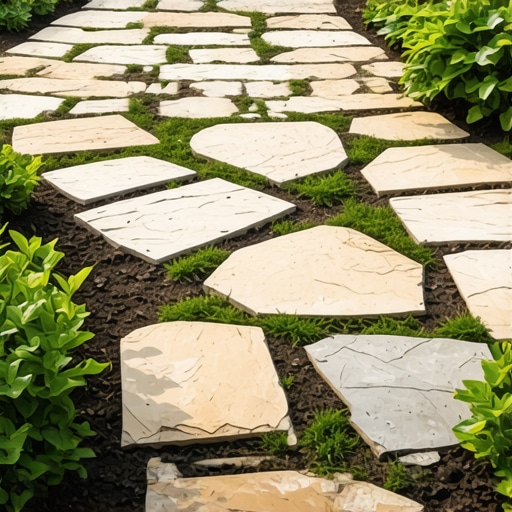
| Surface Stone | Local Fieldstone or River Rock | $25 (Sourcing/Delivery) |
How deep should a walkway base be for proper drainage?
For a standard residential permeable walkway, you must excavate to a minimum depth of 6 to 8 inches to accommodate 4 inches of compacted base stone, 2 inches of bedding stone, and your surface material. This depth is critical because it moves the load-bearing surface below the organic thatch layer and into the stable sub-soil. Failure to dig deep enough results in lateral migration of the stones. Dig deep. Don’t compromise. The depth also provides a reservoir for water during heavy rain events, preventing the ‘moat’ effect often seen in poorly planned lawn care projects. If you are dealing with heavy clay soil, you may need an additional 2 inches of base to prevent the soil from pumping up into your clean stone.
“A retaining wall doesn’t fail because of the stone; it fails because of the water trapped behind it. The same logic applies to walkways; manage the water, and the stone stays put.” – Hardscape Engineering Axiom
The Science of Stone: Sourcing Locally for Performance
The $150 budget is only achievable if you stop buying bagged stone from big-box retailers. Those bags are a scam for anyone doing more than a flower pot. You need to call a local quarry or a landscaping supply yard. Ask for ‘Clean 57s’ or ‘Crushed #8s.’ The term ‘clean’ is vital here. In hardscaping, ‘clean’ means the stone has been washed of fines (dust and sand). If you use stone with fines, the path will not be permeable. The dust will settle at the bottom, create a concrete-like slurry, and block all water infiltration. This kills the microbiology of the soil beneath and leads to puddling. Local stone is also ecologically superior. It matches the geological profile of your region, meaning the pH levels of the runoff won’t shock your garden design or lawn care zones. For example, using limestone in an area that needs acidic soil for azaleas is a rookie mistake that will kill your plants within two seasons. Research your local geology. It matters.
What is the best stone for a permeable path on a budget?
The most cost-effective and structurally sound choice for a budget-friendly permeable walkway is crushed angular granite or local river rock with an angular sub-base. Angular stones lock together under pressure, whereas rounded stones (like pea gravel) act like ball bearings and shift underfoot. For the surface, local fieldstone can often be sourced for free from farmers or construction sites, provided you have a way to haul it. This information gain is what separates professionals from DIYers: the surface stone is for aesthetics, but the angular base is for structural integrity. Avoid ‘crusher run’ or ‘modified’ stone for this project, as they contain the dust that prevents permeability.
The Ground-Up Build: Step-by-Step Installation
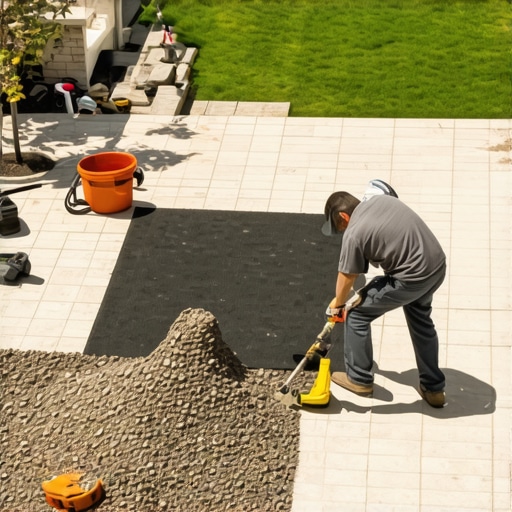
- Excavation: Remove all sod and organic material. Dig to 8 inches. Use a flat shovel to keep the floor level.
- Compaction: Rent a plate compactor. Do not skip this. If you don’t compact the sub-grade, the path will settle unevenly.
- Geotextile Placement: Lay down non-woven fabric. This prevents the dirt from mixing with your clean stone while allowing water through.
- The Base Layer: Pour 4 inches of No. 57 clean stone. Level it. Compact it again.
- The Bedding Layer: Add 2 inches of No. 8 stone. This smaller stone fills the gaps and creates a smoother surface for your top layer.
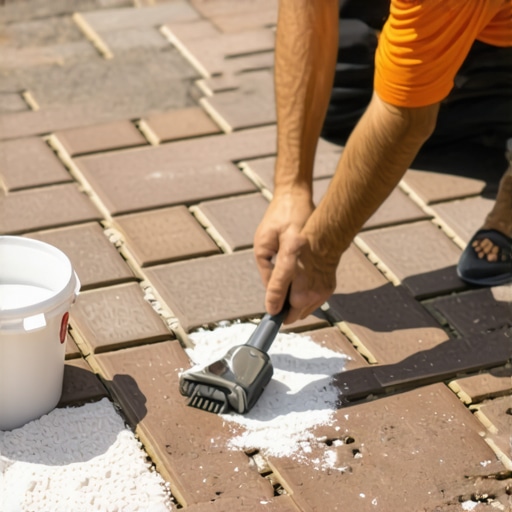
- The Finish: Place your local stone. Hand-tighten the joints. Sweep No. 8 stone into the cracks to lock everything in place.
“Soil compaction is the most overlooked phase of residential construction, yet it dictates 90% of the long-term success of the installation.” – Penn State Agricultural Extension
Maintaining the Nitrogen Cycle and Soil Health
Most people think a walkway is a dead zone. In a permeable system, it’s quite the opposite. Because oxygen and water can still reach the soil, the mycorrhizal fungi and beneficial bacteria thrive. This is essential if your path runs near the drip line of a tree. Standard concrete or asphalt paths suffocate roots, leading to root girdling and eventual tree death. By spending $150 on a permeable stone path, you are essentially installing a lung for your yard. You are preventing hydrostatic pressure from building up against your home’s foundation. It’s a holistic approach to landscaping. Do not use weed killers on your path. The chemicals will leach directly into the groundwater. Instead, if a stray weed pops up in the polymeric sand or stone joints, pull it by hand or use a flame weeder. Protect the biology you’ve worked so hard to preserve. Cheap hacks use landscape staples and plastic edging that heaves in the winter. Use vertical stone edging or heavy-duty aluminum restraints if you want the path to last a decade. The weight of the stone itself, if properly interlocked, should provide most of the stability you need. This isn’t just a path; it’s a piece of environmental engineering. Treat it as such.

![Build a $350 Flagstone Path in One Weekend [DIY 2026]](https://lawnmajesty.com/wp-content/uploads/2026/05/Build-a-350-Flagstone-Path-in-One-Weekend-DIY-2026.jpeg)