5 Modern Fire Pit Designs That Use Clean-Burning Propane
The Structural Engineering of Hardscape Bases for Propane Features
A stable fire pit requires a compacted aggregate base of at least 6 inches, using modified gravel (21A or 3/4-inch minus) to ensure proper load distribution and prevent subsidence or lateral shifting caused by freeze-thaw cycles or hydrostatic pressure. I recently got called out to tear up a $30,000 patio that was sinking because the previous contractor used ‘clean’ stone instead of modified gravel. The lack of fines meant the stone shifted every time a heavy foot stepped on it, and the fire pit above it began to tilt. It was a disaster. We had to excavate the entire area, re-compact the subgrade to 95% Standard Proctor density, and start from scratch. Don’t skip the base. It is the only thing keeping your investment from becoming a pile of expensive rubble.
“A retaining wall doesn’t fail because of the stone; it fails because of the water trapped behind it.” – Hardscape Engineering Axiom
The Engineering Reality of Propane vs. Wood
Propane fire pits offer a controlled, clean-burning combustion environment that eliminates particulate matter and smoke while providing consistent BTU output for outdoor living spaces. Unlike wood-burning pits, propane units require dedicated gas lines or hidden tank enclosures, necessitating precise ventilation and drainage within the structure to prevent gas buildup. You aren’t just building a ring of stones. You are building a mechanical enclosure. If you don’t vent a propane pit, you are creating a bomb. It is that simple. Airflow must be calculated based on the burner’s BTU rating to ensure safe operation. I see too many DIYers block every gap with mortar. That is a lethal mistake.
5 Modern Fire Pit Designs for the Professional Landscape
Modern propane fire pit designs prioritize minimalist aesthetics, structural durability, and thermal efficiency by utilizing materials like GFRC concrete, Corten steel, and natural granite. These designs must integrate into the broader hardscaping plan, accounting for gas line routing and clearance to combustibles. Below are the top five configurations for a high-performance backyard.
1. The Corten Steel Linear Trough
Corten steel is a weathered steel that develops a stable, rust-like appearance when exposed to the elements. In a linear trough design, the burner runs the length of the vessel, typically 48 to 72 inches. This design is perfect for defining the edge of a seating area. The material is resilient. It protects the inner core. The industrial look fits perfectly with modern architecture. Ensure the burner is stainless steel to prevent galvanic corrosion between the Corten and the gas components.
2. The Geometric Sunken Concrete Vessel
Glass-fiber reinforced concrete (GFRC) allows for thin-walled, high-strength shapes that look like solid stone but weigh significantly less. A square or rectangular sunken pit creates a seamless look with a paver patio. You must use thermal expansion joints between the pit and the surrounding pavers. Concrete expands. Pavers shift. Without a joint, the concrete will crack. It is inevitable.
3. The Granite Monolith Pit
For a rugged, high-end look, a single piece of granite can be core-drilled to house a propane burner. This requires heavy machinery to set. You need a 4-inch sleeve for the gas line and 2 inches of drainage stone at the bottom of the core. Granite is dense. It retains heat well. But it is difficult to work with. If the stone isn’t perfectly level, your flame will look crooked. Precision is mandatory here.
4. The Minimalist Fire Bowl with Lava Rock
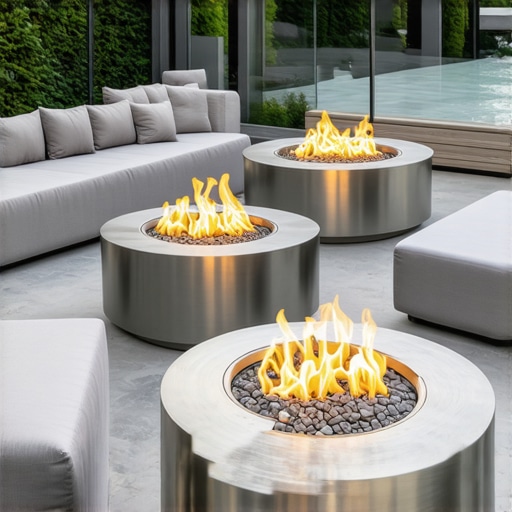
A circular fire bowl provides 360-degree heat distribution. Using large-diameter lava rock or tumbled fire glass covers the burner while allowing for even gas dispersion. Avoid cheap glass that shatters under high heat. Use tempered glass rated for 1500 degrees Fahrenheit. The bowl should have at least three drainage holes. Standing water in a burner is the fastest way to ruin a system.
5. The Integrated Tabletop Dual-Function Unit
In smaller garden designs, a fire pit that doubles as a coffee table is the pragmatic choice. These usually feature a removable lid that covers the burner when not in use. The internal structure must house a 20lb propane tank if a direct line isn’t available. Ensure the tank sits on a stable, level tray. If the tank tips, the regulator can fail. Safety first.
How much modified gravel do I need for a patio base?
To calculate the required modified gravel, multiply the square footage of the patio by the depth of the base (usually 0.5 feet for 6 inches) and divide by 27 to get cubic yards. Always add 10% for compaction. If your math is wrong, you will run short or overspend. In hardscaping, volume is everything. Do not guess. Measure twice.
How many BTUs do I need for an outdoor fire pit?
A standard outdoor fire pit requires between 50,000 and 100,000 BTUs to provide sufficient heat for a 10-foot diameter seating area. High-wind areas may require higher outputs or wind guards to maintain combustion stability. 50k is for ambiance. 100k is for warmth. Know the difference before you buy the burner.
| Material | Durability Rating | Heat Retention | Maintenance Level |
|---|---|---|---|
| Corten Steel | High | Moderate | Low |
| GFRC Concrete | High | High | Moderate |
| Granite | Very High | Very High | Low |
| Cast Stone | Moderate | Moderate | High |
Pre-Installation Checklist for Propane Hardscaping
- Verify 811 utility markings before excavation.
- Calculate total BTU load for gas line sizing.
- Ensure 95% compaction on the subgrade.
- Install heat shields if using composite decking nearby.
- Check local municipal codes for burner clearances.
“Propane combustion produces 2,500 BTUs per cubic foot, requiring precise ventilation to prevent carbon monoxide accumulation in sunken designs.” – Texas A&M AgriLife Extension
![Build a $500 Outdoor Kitchen Base [2026 Budget]](https://lawnmajesty.com/wp-content/uploads/2026/06/Build-a-500-Outdoor-Kitchen-Base-2026-Budget.jpeg)