5 2026 Best Trees for Small Front Yards
Designing for Longevity: The Foundation of Small Yard Arboriculture
The 5 2026 Best Trees for Small Front Yards are selected based on their genetic resistance to urban stressors, mature height limitations, and non-invasive root structures that protect nearby hardscaping and foundation footings. Successful garden design starts with understanding that a tree is a permanent biological installation, not a temporary decoration.
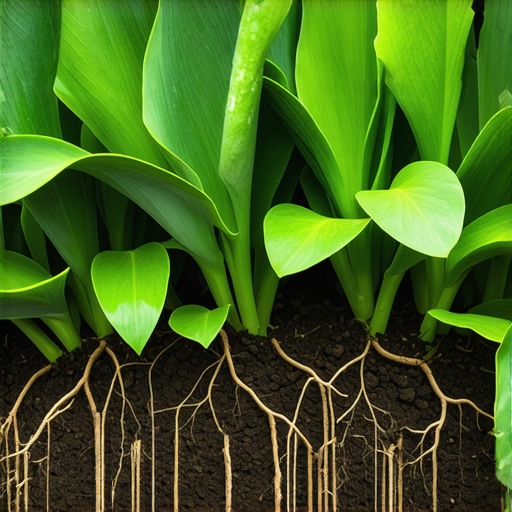
Before you even look at a nursery catalog, you have to look at your dirt. Most homeowners see a flat patch of grass; I see a complex system of hydrostatic pressure, bulk density, and cation exchange capacity. If you are planning a landscaping overhaul in 2026, you must account for the shift in hardiness zones and the increasing frequency of flash-drought cycles. I always drill into my new crew members: if you don’t fix the soil grading first, every plant you put in the ground is just expensive compost. I have spent the last two decades remediating sites where a previous contractor ignored the soil horizons. They threw a $500 specimen tree into a hole dug into heavy, anaerobic clay. Within two years, the tree was dead from phytophthora root rot because the hole acted as a bucket, holding water against the root flare. We do not do that here. We build from the ground up, ensuring the soil microbiology is functioning before the first shovel hits the earth. You need to verify your soil pH and compaction levels. If your soil is at a PSI higher than 300, no root system can penetrate it effectively. You are essentially planting in concrete.
“Proper planting depth is the single most important factor in tree survival; the root flare must be visible at the soil surface to allow for gas exchange in the critical root zone.” – International Society of Arboriculture (ISA) Standards
1. Acer Palmatum ‘Tamukeyama’ (Japanese Maple)
The Acer palmatum ‘Tamukeyama’ remains a top tier choice for 2026 because of its structural integrity, slow growth rate, and drought resistance once established in a professional garden design. This cultivar is particularly valuable for its ability to handle high-intensity UV exposure without the leaf scorch that plagues other Japanese Maples.
When we install these in a hardscaping context, such as near a paver patio or a natural stone walkway, we focus on the radial root spread. Unlike aggressive species, ‘Tamukeyama’ has a polite root system. However, don’t let that fool you into skipping the prep. You need a well-draining site. If your front yard has poor drainage, we install a French drain or a sub-surface gravel chimney to move water away from the root ball. The xylem transport in these trees is efficient, but they cannot tolerate saline soil conditions often found near sidewalks that are heavily salted in winter. I recommend a perimeter shield or choosing a different location if your municipality uses heavy de-icing agents. We look for specimens with a strong central leader and no included bark in the branch unions. This ensures the tree won’t split during a heavy snow load or high wind event, which are becoming more common in our shifting climate patterns.
2. Cercis Canadensis ‘The Rising Sun’ (Redbud)
The Cercis canadensis ‘The Rising Sun’ provides a multi-seasonal interest while maintaining a compact canopy of 10 to 12 feet, making it ideal for small front yards and lawn care enthusiasts. This tree is a biological powerhouse, capable of nitrogen fixation in the soil through its relationship with rhizobia bacteria.
This tree is the answer for homeowners who want architectural value without the maintenance nightmare of a larger canopy. From a landscape engineering perspective, the ‘The Rising Sun’ Redbud is excellent for shading AC units or low-voltage lighting systems without interfering with overhead utility lines. When planting, we check for girdling roots. These are roots that have started to circle the pot in the nursery. If you don’t cut them, they will eventually choke the tree as it grows. It is a slow death that most homeowners don’t notice until the tree is ten years old and suddenly dies. We use a root-washing technique to ensure every lateral root is spread out like the spokes of a wheel. This creates a stable mechanical anchor in the soil, preventing the tree from leaning over time. This species also responds well to mycorrhizal inoculants, which increase the root surface area for nutrient uptake.
“Redbuds are remarkably adaptable to various soil types, but they thrive in well-drained loams with a pH between 5.0 and 7.5.” – Penn State Extension Horticultural Manual
3. Amelanchier x Grandiflora ‘Autumn Brilliance’ (Serviceberry)
The Amelanchier x grandiflora ‘Autumn Brilliance’ is a native hybrid that offers ecological benefits such as supporting local pollinator populations while fitting perfectly into a modern landscaping aesthetic. It provides white spring flowers, edible berries, and an intense structural color in the fall.
From a foreman’s perspective, the Serviceberry is a workhorse. It can be grown as a multi-stemmed shrub or a single-trunk tree. For small front yards, I always recommend the single-trunk version to keep the sightlines clear for traffic and security. This tree is highly resistant to cedar-apple rust, which is a major concern for many ornamental trees. We focus on air circulation in the canopy to prevent any fungal issues. When we integrate this into a garden design, we often place it near hardscape elements like retaining walls. The root system is fibrous and helps with soil stabilization without putting excessive lateral pressure on the wall’s drainage stone or filter fabric. If you are dealing with sloped terrain, the Serviceberry is a strategic choice for erosion control. We ensure the mulch layer is no deeper than two inches and never touches the bark of the tree to prevent cambium rot.
4. Magnolia Stellata ‘Royal Star’ (Star Magnolia)
The Magnolia stellata ‘Royal Star’ is a slow-growing ornamental that maxes out at about 15 feet, providing a high-impact focal point for front yard landscaping without overwhelming the house’s scale. Its density of blooms in early spring is unmatched in the 2026 market.
Magnolias have fleshy roots, which means they are very sensitive to soil compaction. If your lawn care company is driving heavy zero-turn mowers over the drip line of your Magnolia, they are killing it. I tell my clients: this tree needs a protected root zone. We often design a curbed garden bed or a cobblestone border to keep foot traffic and machinery away from the sensitive feeder roots. These roots stay close to the surface, searching for oxygen. If you bury them under a mulch volcano, you are suffocating the tree. We use a shredded hardwood mulch that breaks down and adds organic matter to the soil, supporting the earthworm population which naturally aerates the ground. The ‘Royal Star’ is also more cold-hardy than the larger evergreen Magnolias, making it a safer bet for regions with unpredictable spring frosts.
5. Cornus Kousa ‘Scarlet Fire’ (Kousa Dogwood)
The Cornus kousa ‘Scarlet Fire’ is the 2026 gold standard for disease-resistant dogwoods, offering deep pink bracts and a horizontal branching habit that adds visual width to narrow yards. Unlike the native Cornus florida, the Kousa variety is highly resistant to anthracnose and powdery mildew.
When we install a ‘Scarlet Fire’, we are looking at the long-term maintenance cycle. This tree has exfoliating bark as it matures, which is a stunning hardscape-complementary feature. However, it requires consistent moisture during the first three years. We install drip irrigation emitters directly at the root ball perimeter to ensure the water reaches the absorbing roots, not just the surface grass. Grass is a competitor. In any lawn care strategy involving trees, the turf should be kept at least three feet away from the trunk. We use a structural soil mix if the tree is being planted near a driveway to ensure the roots have pore space even under the weight of vehicles. This is where the engineering meets the horticulture. Without that pore space, the anaerobic conditions will lead to root dieback and canopy thinning.
2026 Tree Comparison Matrix for Small Yards
| Tree Species | Mature Height | Root Aggression | Drought Tolerance | Best Soil Type |
|---|---|---|---|---|
| Acer Palmatum | 6-10 ft | Very Low | Moderate | Acidic Loam |
| Cercis Canadensis | 10-15 ft | Low | High | Well-Drained Clay |
| Amelanchier | 15-20 ft | Moderate | Medium | Moist Loam |
| Magnolia Stellata | 10-15 ft | Low | Low | Rich Organic |
| Cornus Kousa | 15-25 ft | Low | Medium | Sandy Loam |
Professional Tree Planting Checklist
- Pre-Dig Inspection: Call 811 to mark utility lines and irrigation pipes.
- Hole Architecture: Dig the hole 3x wider than the root ball but no deeper.
- Root Flare Verification: Remove excess soil from the top of the root ball until the first structural root is found.
- Mechanical Stabilization: Remove all burlap, wire cages, and twine. They do not decompose fast enough.
- Backfill Protocol: Use the native soil. Do not heavily amend the hole, or the roots will never leave the