Stop 2026 Lawn Mower Damage to Tree Roots
The Fatal Impact of the Zero-Turn: A Forensic Look at Root Flare Destruction
I always drill into my new crew members: if you don’t fix the soil grading first, every plant you put in the ground is just expensive compost. But when it comes to existing trees, the biggest threat isn’t the soil—it’s the guy sitting on the zero-turn mower who thinks he can shave seconds off his lap time by getting ‘just a bit closer’ to the trunk. I’ve been called out to properties where 50-year-old Oaks are flagging, their leaves thinning out at the crown, all because of three years of repeated mechanical trauma to the root flare. This isn’t just a cosmetic issue; it is a slow-motion execution. By 2026, many of the trees currently suffering from these ‘minor’ nicks will begin to show signs of irreversible decline. We call this the ‘mower-induced decline cycle.’ It starts with a strip of bark, moves to fungal infiltration, and ends with a stump grinder. Don’t let your landscape be the victim of a lazy mow-and-blow operation.
How to Stop 2026 Lawn Mower Damage to Tree Roots Immediately
Stopping 2026 lawn mower damage requires the immediate implementation of physical root-zone barriers, mulch ring expansion, and mechanical exclusion zones to prevent mower blades and heavy tires from compacting the soil or de-barking the structural root flare of your trees. Prevention is the only cure for bark girdling. It will rot if left exposed. Protect the cambium at all costs.
Why the ‘Root Flare’ is the Tree’s Most Vulnerable Point
The root flare, or the ‘trunk flare,’ is where the trunk transitions into the root system. This area needs gas exchange. When a mower deck slams into this flare, it doesn’t just ‘scratch’ the tree. It destroys the phloem and xylem—the vascular tissues responsible for transporting water and nutrients. Unlike humans, trees don’t heal; they compartmentalize. A wound from a 2026-model mower blade creates a permanent breach that the tree must spend massive energy to seal off. Most trees fail because they run out of energy trying to close these mechanical wounds while fighting off the pathogens that entered through the breach. The damage is cumulative. One hit is a wound; twenty hits is a death sentence.
“Trees do not ‘heal’ in the sense that animals do; they compartmentalize. Wounds are permanent and become the primary entry point for wood-decaying fungi that compromise structural integrity.” – International Society of Arboriculture (ISA) Standards
The Microscopic Reality: Soil Compaction and Root Asphyxiation
It’s not just the blades. The weight of a commercial zero-turn mower can exceed 1,200 pounds. When that weight is concentrated on four small tires, the PSI (pounds per square inch) is high enough to crush the macro-pores in your soil. Tree roots need oxygen. In compacted soil, those pores vanish. The roots literally suffocate. I’ve seen sites where the grass looks ‘fine’ but the tree is dying because the soil is as hard as concrete from years of mower traffic. This is why you see roots ‘surfacing’—they are desperately gasping for air. Then, the mower hits those surfacing roots, and the cycle of destruction accelerates. You need to change the environment, not just the mowing path.
| Mower Type | Avg. Weight (lbs) | Root Zone Hazard | Compaction Risk |
|---|---|---|---|
| Push Mower | 60-90 | Low | Minimal |
| Residential Zero-Turn | 600-800 | High | Moderate |
| Commercial Zero-Turn | 1,200+ | Extreme | Severe |
| Tractor / Bush Hog | 2,000+ | Critical | Extreme |
How much modified gravel do I need for a root-safe path?
While gravel is common in hardscaping, you should never use modified gravel (crushed stone with fines) near tree roots. The ‘fines’ in the gravel will leach into the soil and can alter the pH, while the compaction required to set the gravel will kill the roots. If you must create a path near a tree to keep mowers away, use 3 inches of clean, washed 1/2-inch stone or, better yet, a raised timber boardwalk that allows for air and water flow. Do not use limestone-based gravel; the alkaline runoff will cause chlorosis in most hardwoods. Stick to granite or river rock if you must use stone.
The Correct Way to Create a Protection Zone (The 3-Foot Rule)
The only way to guarantee a mower never touches a tree is to remove the temptation. This means eliminating turf grass within at least three feet of the trunk. Turf and trees are natural enemies. Grass is a nitrogen hog that outcompetes tree roots for every drop of water. By removing the grass, you remove the reason for the mower to be there. But don’t just throw down mulch. You have to do it right. No mulch volcanoes. I will fire a crew member on the spot if I see them piling mulch against the bark. It’s a death trap for the tree.
- Identify the Root Flare: You should see the base of the tree widen as it meets the dirt. If it looks like a telephone pole sticking out of the ground, it’s buried too deep.
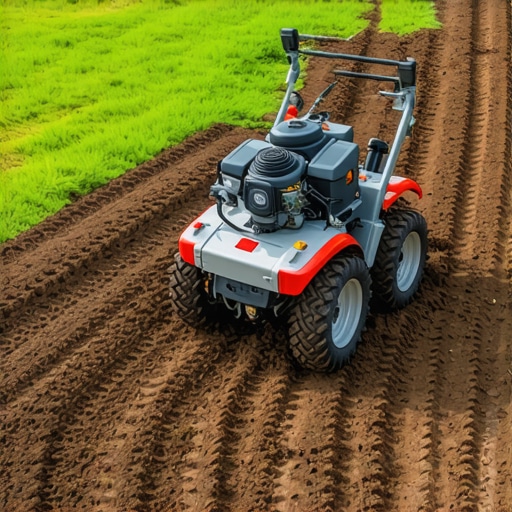
- Remove Turf Manually: Do not use a rototiller. You will shred the fine feeder roots. Use a flat spade or a hand-weeder.
- Apply Arbo-Grade Mulch: Use triple-shredded hardwood or pine bark. It should be 2 to 3 inches deep, max.
- Maintain the ‘Donut’: Keep the mulch 3-5 inches away from the actual bark. This prevents moisture from rotting the trunk.
- Edging: Use a clean-cut ‘V’ edge in the soil rather than plastic edging, which can eventually girdle roots as they grow.
“A retaining wall doesn’t fail because of the stone; it fails because of the water trapped behind it, and a tree doesn’t fail because of the mower; it fails because the bark is the only thing standing between the internal vascular system and the world.” – Hardscape Engineering Axiom
Will a tree survive if its roots are cut by a mower?
Survival depends on the percentage of the root system affected and the species of the tree. If you’ve severed more than 25% of the anchoring roots on one side, the tree is a localized hazard and may fall in high winds. If it’s just surface scarring, you can treat it by cleaning the wound with a sharp knife to remove jagged edges (which hold moisture and fungi) and focusing on deep, infrequent watering to reduce stress. Do not apply ‘tree paint.’ It’s a gimmick. It traps moisture and accelerates decay. Let the tree compartmentalize on its own terms.
The Long-Term Solution: Engineering the Landscape for Zero Contact
In high-end garden design, we don’t just plant trees; we engineer ‘no-fly zones.’ This involves using hardscaping elements like decorative boulders or low-profile dry-stack stone walls (built outside the drip line) to physically prevent equipment from entering the sensitive root zone. If you can’t trust your mowing crew, you have to make it impossible for them to mess up. I often suggest ‘island’ plantings where multiple trees are grouped into one large mulch bed. This reduces the number of turns a mower has to make, which reduces the chance of a skid-steer-style tire tear. It also improves the soil biology by allowing a larger area of undisturbed fungal networks to thrive. Remember: the soil is a living organism. Treat it like one. Don’t skip the aeration, but keep the machine away from the canopy. It’s a simple rule, but ignore it, and you’ll be paying me to remove that tree in 2027.

![Why Your 2026 Grass Stays Brown After Rain [Dormancy vs Dead]](https://lawnmajesty.com/wp-content/uploads/2026/05/Why-Your-2026-Grass-Stays-Brown-After-Rain-Dormancy-vs-Dead.jpeg)