Fix Your 2026 Sprinkler Pressure with This $10 Valve
Why High Water Pressure Is Killing Your Landscaping Investment
Irrigation pressure issues are usually the result of a fundamental misunderstanding of hydraulics and friction loss within a residential mainline. Most homeowners assume more pressure is better, but excessive PSI causes atomization, where water turns into a fine mist that drifts away before it ever hits the root zone. Fixing this requires a pressure-regulating valve or a specialized regulator insert to stabilize the system.
I always drill into my new crew members: if you don’t fix the hydraulics first, every plant you put in the ground is just expensive compost. I’ve seen $50,000 garden designs wither in three months because some hack didn’t understand friction loss across a 200-foot run of 3/4-inch pipe. Last season, we stepped onto a job site where the ‘landscaper’ had installed twenty spray heads on a single zone of half-inch poly. The pressure at the last head was so low it was just weeping onto the mulch. We had to dig up the entire perimeter. It was a mess. If they had spent ten dollars on a proper pressure-regulating component and understood basic GPM (gallons per minute) requirements, the homeowner wouldn’t have been looking at a $4,000 remediation bill. Biology doesn’t care about your excuses; it only cares about water delivery at the correct soil moisture tension.
“Irrigation systems should be designed to deliver water uniformly at a rate that does not exceed the infiltration rate of the soil, typically requiring regulated pressures between 30 and 45 PSI for spray heads.” – Texas A&M AgriLife Extension
The Science of Pressure and Flow Velocity
System pressure is a measurement of potential energy, while flow is the actual volume of water moving through your pipes. When the pressure is too high, your sprinkler heads will ‘scream’—a high-pitched whistling sound that indicates the internal seals are being shredded. This leads to premature mechanical failure and uneven lawn coverage. Conversely, low pressure results from undersized piping or high friction loss. Every 90-degree elbow and every foot of pipe reduces the energy available to push that water out of the nozzle. You must calculate the Dynamic Pressure, which is the PSI measured while the water is actually flowing. If your static pressure is 80 PSI but it drops to 15 PSI when the zone kicks on, you have a volume problem, not just a pressure problem.
How do I fix low water pressure in my sprinkler system?
To fix low sprinkler pressure, you must first identify if the issue is a clogged filter, a leaking lateral line, or an undersized mainline. If the entire neighborhood has low pressure, you may need a booster pump, but often the fix is simply replacing a faulty $10 solenoid valve or adjusting the flow control handle on the valve manifold.
| Component Type | Ideal PSI Range | Common Failure Symptom | Fix Material Cost |
|---|---|---|---|
| Fixed Spray Heads | 30 PSI | Misting / Fogging | $5 – $12 |
| Rotary Nozzles | 40 – 45 PSI | Slow Rotation / Stalling | $8 – $15 |
| Drip Irrigation | 15 – 25 PSI | Emitter Blowout | $10 – $20 |
| Mainline (PVC 40) | 60 – 80 PSI | Pipe Burst / Joint Leak | $20+ |
The $10 Solution: The Pressure Regulating Valve (PRV)
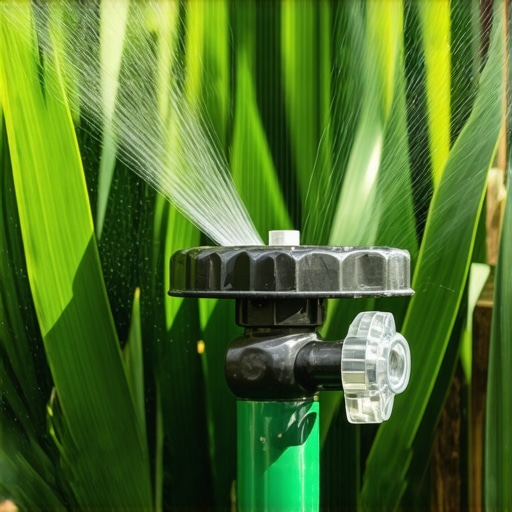
The most overlooked tool in the veteran landscaper’s truck is the pressure-regulating dial or the ACCU-SYNC style regulator that snaps onto your existing valves. For about ten dollars in parts, you can down-regulate a high-pressure zone to exactly 30 PSI. This stops the misting. It saves up to 30% of your water bill. It prevents the soil erosion caused by high-velocity droplets. You don’t need a degree in civil engineering to install one, but you do need to know your GPM requirements. If you install a regulator on a zone that is already struggling with volume, you’ll kill the performance entirely. Check the data. Measure the flow. Don’t guess.
“Hydrostatic pressure must be managed at the source to prevent mechanical fatigue in thermoplastic piping systems used for residential irrigation.” – ICPI Hardscape Engineering Manual
How much modified gravel do I need for a patio base?
While often asked alongside irrigation, patio base depth depends on soil type, but generally, you need 4 to 6 inches of compacted 21A or 3/4-inch modified gravel. This ensures proper drainage so that your irrigation overspray doesn’t settle under your pavers and cause frost heave or settling. Use a plate compactor. Do not skip this step. It will sink.
The Professional Troubleshooting Checklist
- Test Static PSI: Hook a gauge to your outdoor hose bib. If it’s over 70 PSI, you need a whole-house regulator.
- Inspect the Diaphragm: Open the valve jar top. Check for pebbles or tears in the rubber. A tiny tear causes pressure loss.
- Clean the Filters: Every head has a small plastic basket. If it’s clogged with sand, your pressure will tank.
- Adjust the Flow Control: That little knob on top of the valve isn’t just for show. Turn it to balance the zone.
- Install the Regulator: Add a 30 PSI or 40 PSI regulator to the valve body. It takes five minutes.
Stop buying cheap heads from big-box stores. They are designed for three seasons of use before the springs rust out. Buy commercial-grade irrigation components from a local supply house. The internal check valves alone are worth the extra two dollars. They prevent low-head drainage, which is when the water in the pipes leaks out of the lowest head every time the system turns off, wasting gallons and creating a muddy swamp in your turf. Professional gear lasts twenty years. DIY junk lasts two. Do the math.
![Stop 2026 Lawn Patchiness with This $30 Seed Hack [Fix]](https://lawnmajesty.com/wp-content/uploads/2026/05/Stop-2026-Lawn-Patchiness-with-This-30-Seed-Hack-Fix.jpeg)