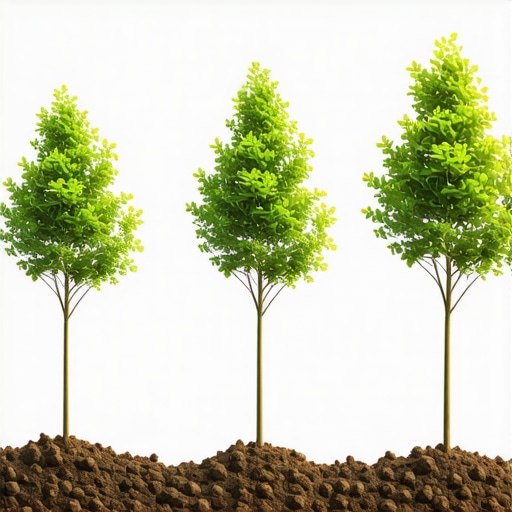
5 2026 Best Trees for Urban Compact Yards
The Engineering Reality of Small-Scale Urban Forestry
I always drill into my new crew members: if you don’t fix the soil grading and structural compaction first, every plant you put in the ground is just expensive compost. Most homeowners see a 10×10 plot and think of aesthetics, but I see a hydraulic challenge and a volumetric constraint. Urban yards aren’t just gardens; they are biology living in a concrete-jacketed pressure cooker. If you ignore the bulk density of the soil or the proximity of the tree’s root flare to the foundation, you are planning for a disaster that will manifest in five years. You don’t just ‘plant’ a tree in a compact yard; you engineer its survival within a restricted footprint.
Selecting the Foundation for 2026 Urban Landscapes
The best trees for urban compact yards in 2026 are species selected for high stress-tolerance, limited lateral root spread, and resistance to urban heat island effects. These specimens provide maximum canopy benefits with minimal encroachment on hardscape foundations or utility lines. In a compact environment, every cubic inch of soil is a finite resource that must be managed with precision engineering.
“A tree in a city is not a decorative element; it is a structural component of the urban ecosystem that requires specific oxygen diffusion rates in the soil to survive.” – Agricultural Extension Agronomy Manual
1. Amelanchier x grandiflora ‘Autumn Brilliance’ (Serviceberry)
This isn’t just a pretty face. The Serviceberry is a workhorse for the urban landscape. It typically matures at 15-25 feet with a spread that won’t compromise your house’s siding. It handles a variety of soil pH levels, but I’ve found it thrives when the drainage is impeccable. If you have heavy clay, you need to mound this tree or install a French drain nearby. Its root system is non-aggressive, making it safe for proximity to pavers. Don’t skip the structural pruning in year two. It needs a clear central leader to avoid becoming a messy shrub.
2. Carpinus betulus ‘Fastigiata’ (Columnar European Hornbeam)
If you are dealing with a narrow alley or a tight property line, this is your structural solution. It grows like a green pillar. In the trade, we call this ‘architectural foliage.’ It’s dense, it’s tough, and it laughs at wind. The wood is incredibly hard, meaning it won’t drop limbs on your car during a summer thunderstorm. It thrives in USDA hardiness zones 5-8. The key here is the soil compaction. I see people plant these in 95% compacted ‘builder dirt’ and wonder why they die. You need to fracture the surrounding soil at least three times the diameter of the root ball.
3. Acer griseum (Paperbark Maple)
This is for the homeowner who wants slow, predictable growth. Most Maples are ‘aggressive’—their roots will lift your sidewalk like it’s a piece of cardboard. Not the Paperbark. It’s slow-growing and stays small. The cinnamon-colored exfoliating bark is the real draw. From a horticultural perspective, it’s remarkably resistant to pests. However, it’s sensitive to drought. If you don’t have a dedicated drip line or a deep-watering schedule, don’t buy it. It needs 1 inch of water per week, delivered directly to the root zone, not the leaves.
4. Ginkgo biloba ‘Princeton Sentry’
This is a prehistoric tank. The ‘Princeton Sentry’ is a male clone, so you don’t get the stinky fruit that plagues older Ginkgo varieties. It is virtually immune to air pollution and salt spray, making it the king of the sidewalk strip. It has a narrow, upright habit. More importantly, it can tolerate the low-oxygen soil environments common in urban centers. I’ve seen these survive in conditions that would kill an Oak in two seasons. It’s the ultimate ‘set it and forget it’ tree for harsh urban environments.
5. Cercis canadensis ‘Rising Sun’ (Redbud)
Most Redbuds are prone to canker and dieback, but ‘Rising Sun’ has shown improved heat tolerance in our recent trials. It stays under 15 feet. It’s the perfect specimen for a small patio corner. But here is the professional warning: Redbuds hate wet feet. If your yard has standing water after a rain, you’ll rot the roots in months. You must ensure the soil is loamy and well-drained. I always test the soil drainage by digging a 12-inch hole and filling it with water; if it doesn’t drain in two hours, we’re changing the design.
Urban Tree Specification Comparison Table
| Tree Species | Max Height (ft) | Max Spread (ft) | Hardiness Zone | Soil Preference |
|---|---|---|---|---|
| Serviceberry | 20-25 | 15-20 | 4-9 | Well-drained, Acidic |
| Columnar Hornbeam | 30-40 | 15-20 | 5-8 | Adaptable, Heavy Clay OK |
| Paperbark Maple | 20-30 | 15-25 | 4-8 | Moist, Loamy |
| Ginkgo ‘Princeton Sentry’ | 40-50 | 15-20 | 3-9 | Highly Adaptable |
| Redbud ‘Rising Sun’ | 12-15 | 12-15 | 5-9 | Well-drained, Alkaline OK |
How deep should a root ball be buried?
The root flare—the point where the trunk widens at the base—must always be visible at the soil surface. Burying a tree too deep suffocates the roots and leads to stem-girdling roots. If you can’t see the flare, you’ve planted a slow-motion death sentence for that tree.
What is the best small tree for a 10-foot wide patio?
For a 10-foot wide space, the Columnar European Hornbeam or a Serviceberry are the superior choices. They provide vertical height without significant lateral expansion, ensuring the canopy doesn’t scrape against structures or interfere with foot traffic while maintaining healthy air circulation.
The Professional Planting Protocol Checklist
- Excavate the hole: Dig 2-3 times wider than the root ball, but no deeper.
- Score the sides: Use a shovel to roughen the walls of the hole so roots can penetrate the soil.
- Remove all debris: Take off the burlap, wire cages, and twine. These do not ‘rot away’ fast enough.
- Backfill with native soil: Don’t heavily amend the hole with potting soil; you want the roots to adapt to the real yard.
- Hydraulic settlement: Use water to settle the soil around the roots, not your boots. Tamping too hard destroys soil porosity.
- Mulch correctly: 2-3 inches of wood chips, but keep it 3 inches away from the trunk. No mulch volcanoes.
“A retaining wall doesn’t fail because of the stone; it fails because of the water trapped behind it. Similarly, a tree fails because of the air trapped out of the soil.” – Hardscape Engineering Axiom
The Long-Term Maintenance Cycle
In the first year, your focus is water management. New trees have lost 90% of their root system during the transplanting process. They are in the ICU. Deep, infrequent watering is the mandate. You want the water to reach 12 inches deep to force those roots to chase the moisture down. This builds a resilient tree that won’t blow over in a gale. In year two, we look at structural pruning. We remove crossing branches and anything growing back toward the center. We aren’t just ‘trimming’; we are directing the plant’s energy toward a strong, permanent scaffold. Most ‘mow-and-blow’ guys will try to shear these like a hedge. Don’t let them. If you take a hedge trimmer to a Paperbark Maple, you’ve ruined a $300 specimen. It requires hand-pruning with bypass loppers. It takes time. It takes skill. That is the difference between a yard and a landscape.
![5 Best Trees for 2026 Heat Waves [Zone 8]](https://lawnmajesty.com/wp-content/uploads/2026/09/5-Best-Trees-for-2026-Heat-Waves-Zone-8.jpeg)