Build a $350 2026 Brick Walkway for Side Garden Areas
The $350 Side Garden Walkway Strategy
Building a $350 brick walkway in 2026 requires utilizing reclaimed materials and rigorous site preparation to ensure long-term stability. Success depends on a 4-inch compacted gravel base and proper polymeric sand application to prevent shifting and weed intrusion in side garden zones. Most homeowners think they can just slap bricks on top of the dirt. They are wrong. It will fail. If you do not understand the soil mechanics beneath your feet, you are just throwing money into a hole. Side garden areas often suffer from poor drainage and low light, which means moisture stays trapped in the soil. This creates a frost heave nightmare if your base is not engineered correctly.
The Hardscape Autopsy: Why Cheap Patios Sink
I recently got called out to tear up a $30,000 patio that was sinking because the previous contractor failed to recognize the difference between structural fill and topsoil. The homeowner was devastated. The center of the patio had dropped four inches, turning it into a literal pond every time it rained. When we excavated, we found that they had used only two inches of uncompacted pea gravel over raw clay. Hydrostatic pressure from the house’s foundation was pushing water under the pavers, liquifying the base. This is the same fate that awaits your side garden path if you skip the excavation phase. You cannot build a solid structure on a liquid foundation. Soil grading is the only thing that matters. If the water has nowhere to go, it will take your bricks with it.
“Proper compaction of the subgrade and base layers is the most critical step in ensuring the structural integrity of segmental pavement systems.” – Interlocking Concrete Pavement Institute (ICPI) Technical Manual
How much modified gravel do I need for a walkway base?
To calculate the modified gravel volume, multiply the walkway length by the width and the depth (minimum 4 inches) to determine the cubic feet required. For a standard 20-foot by 3-foot path, you will need approximately 20 cubic feet of 2A modified stone or CR-6 crusher run to ensure a stable, draining foundation. Do not use rounded river stone. You need angular aggregate that locks together under compaction. If the stone doesn’t lock, the walkway moves. It is simple physics.
| Material Item | Estimated Quantity (60 sq ft) | Estimated 2026 Cost |
|---|---|---|
| Reclaimed Clay Bricks | 270 Units | $150.00 (Marketplace) |
| 2A Modified Gravel | 1 Ton | $45.00 |
| Concrete Sand/Screenings | 0.5 Ton | $30.00 |
| Polymeric Sand | 1 Bag (50lb) | $45.00 |
| Edge Restraints/Spikes | 40 Linear Feet | $55.00 |
| Geotextile Fabric | 1 Roll | $25.00 |
| Total Project Estimate | $350.00 | |
What is the best base for a brick garden path?
The best base for a brick garden path consists of a geotextile fabric layer topped with 4 inches of compacted 2A modified gravel and a 1-inch leveling course of coarse sand. This multi-layered approach provides structural load-bearing capacity while allowing for vertical drainage, preventing the bricks from heaving during freeze-thaw cycles. If you live in an area with heavy clay, you must increase the gravel depth to 6 inches. Clay holds water like a sponge. When that water freezes, it expands by 9%. Without a gravel buffer, that expansion will pop your bricks out of the ground like a cork.
The Step-by-Step Installation Checklist
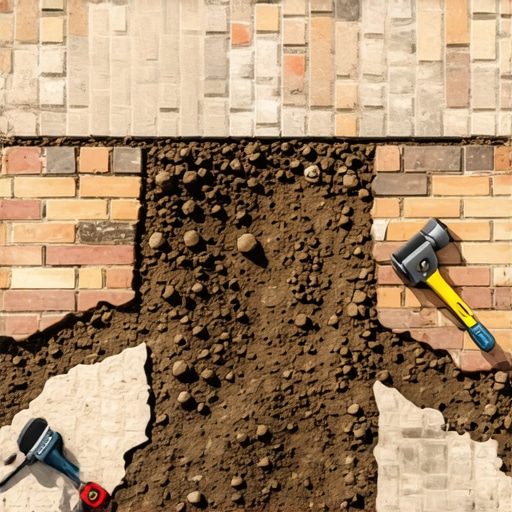
- Excavation: Dig to a depth of 7 to 8 inches. This accounts for 4 inches of base, 1 inch of sand, and the 2.25-inch thickness of a standard brick.
- Subgrade Compaction: Use a plate compactor on the raw soil. If the dirt is soft, your path will be soft.
- Fabric Placement: Lay down a non-woven geotextile. This prevents the gravel from migrating into the soil.
- Base Layering: Add gravel in 2-inch lifts. Compact each lift until the machine literally bounces off the surface.
- Screeding: Use 1-inch PVC pipes as guides to create a perfectly flat bed of coarse sand. Do not walk on the sand once it is leveled.
- Brick Laying: Set bricks in your desired pattern (Herringbone or Running Bond). Keep joints tight.
- Edge Restraints: Install plastic or metal edging to keep the bricks from spreading laterally.
- Joint Sand: Sweep polymeric sand into the cracks. Mist with water to activate the polymers.
“A retaining wall or walkway doesn’t fail because of the stone; it fails because of the water trapped behind or beneath it.” – Hardscape Engineering Axiom
In side gardens, you often deal with roof runoff. If a downspout is dumping water near your new path, you need a French drain. Pipe that water away. Never assume the ground will soak it up fast enough. The $350 budget is tight, but it is achievable if you source used bricks. Many people give away old chimney or patio bricks for free or cheap. Just ensure they are “severe weather” rated if you live in the North. Interior bricks will crumble in one winter. They will rot. Don’t skip the quality check on the material. Use a 4-foot level constantly. If you see a dip, fix it now. It won’t get better later.

![Build a $600 Flagstone Patio on a Sand Base [2026 DIY]](https://lawnmajesty.com/wp-content/uploads/2026/05/Build-a-600-Flagstone-Patio-on-a-Sand-Base-2026-DIY.jpeg)