5 2026 Best Perennials for High Sun Privacy Screening DIY
Engineering the Living Wall: Soil Grading and Systemic Foundation
I always drill into my new crew members: if you don’t fix the soil grading first, every plant you put in the ground is just expensive compost. You can buy the most expensive seven gallon nursery stock available, but if the root flare is suffocated by three inches of heavy clay or the site grade directs water into a stagnant pool at the base of your screen, those plants will rot within two seasons. I have seen countless DIY homeowners attempt to build a privacy barrier by digging individual holes in compacted, construction-grade fill dirt. This creates a bathtub effect where water sits in the loose soil of the hole, unable to penetrate the surrounding hardpan, effectively drowning the vascular system of the plant. Before we even talk about plant species, we talk about civil engineering on a micro scale. You must ensure a two percent slope away from structural foundations and check your soil bulk density. If you cannot drive a screwdriver six inches into the ground with moderate hand pressure, your perennials will never establish the deep root systems required to support six feet of vertical biomass under the punishing 2026 summer sun.
Selecting the Best Perennials for 2026 Privacy Screens
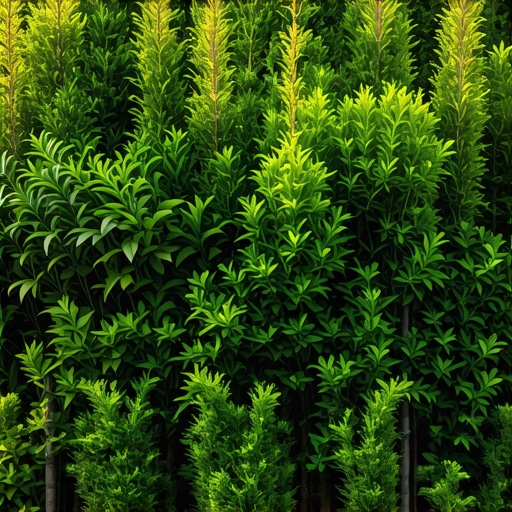
The best perennials for 2026 privacy screening in high sun include specific cultivars of Panicum virgatum, Eupatorium, Hibiscus moscheutos, Miscanthus sinensis, and Baptisia, selected for their vertical habit, drought tolerance, and structural integrity during the peak solar cycles of the late growing season. These species provide a biological alternative to traditional fencing, utilizing high transpiration rates to cool the local micro-climate while offering visual occlusion. [IMAGE_PLACEHOLDER]
1. Panicum virgatum Northwind (The Structural Sentinel)
This is not your average ornamental grass. Northwind is a cultivar of native switchgrass that has been bred for a strictly upright, columnar growth habit. While other grasses flop over after a heavy thunderstorm, Northwind remains a vertical spire. It reaches five to six feet in height with a narrow footprint, making it ideal for tight property lines. In terms of biology, its deep fibrous root system can extend ten feet into the earth, allowing it to tap into deep water reserves during August droughts. You must space these thirty inches on center to allow for mature crown expansion without overcrowding. Crowding leads to poor air circulation and rust fungus. Don’t skip the spacing. The blue-green foliage turns a tawny gold in winter, providing screening even when the plant is dormant.
2. Hibiscus moscheutos Berry Awesome (The High-Biomass Bloomer)
If you need height and density, the hardy hibiscus is a powerhouse. Unlike tropical varieties, these are hardy down to zone 4. The Berry Awesome cultivar reaches four feet in height and nearly five feet in width by mid-summer. It produces massive eight inch flowers, but from a landscaping perspective, its value lies in its leaf density. The foliage is thick enough to block a neighbor’s direct line of sight completely. However, these are thirsty plants. They require a consistent moisture profile. If you have a low spot in the yard where water collects, this is your solution. I often integrate these near the discharge point of a French drain system where they can process excess runoff through high transpiration.
“The success of any perennial planting depends on the physical and chemical properties of the soil, specifically bulk density and pore space.” – USDA Agronomy Manual
3. Eutrochium maculatum Gateway (Joe Pye Weed)
Joe Pye Weed is the titan of the perennial border. The Gateway cultivar is slightly more compact than the straight species but still easily hits six to seven feet. This plant is a nectar factory for pollinators, but its engineering value is its stiff, wine-red stems. These stems are thick enough to resist wind-loading in open, high-sun areas. It thrives in alkaline soils where other plants struggle. If your soil test comes back with a pH above 7.2, Gateway is your primary candidate. It creates a massive wall of foliage from July through October. Plant it in the back-of-border position. It will dominate any smaller plants nearby.
4. Helianthus salicifolius (Willow-leaved Sunflower)
For a DIY screen that looks like a fountain of fine-textured foliage, this is the expert’s choice. It grows up to eight feet tall. The leaves are narrow and weeping, resembling a willow tree but in a perennial form. It spreads via rhizomes, so you must be careful about where you place it. I recommend installing a root barrier or using it in a large, dedicated bed. The sheer volume of stems it produces creates a visual mesh that is almost impossible to see through. It is a late bloomer, producing small yellow sunflowers in October. Its real job is the seven months of solid green wall it provides before the flowers even appear.
5. Baptisia australis (False Indigo)
Baptisia is the long-game plant. It takes three years to fully establish because it puts all its energy into a massive taproot first. This taproot makes it nearly immortal once established. It reaches four feet in height and width with a shrub-like habit. In early spring, it provides beautiful blue flowers, but for the rest of the year, its dense, clover-like foliage serves as a mid-height screen. It is a nitrogen-fixer, meaning it actually improves the soil chemistry around it by hosting symbiotic bacteria. It is the perfect anchor for the ends of your privacy screen. Do not try to move it once it is planted. You will break the taproot and kill the plant. Measure twice, plant once.
“A retaining wall doesn’t fail because of the stone; it fails because of the water trapped behind it.” – Hardscape Engineering Axiom
How fast do privacy perennials grow?
Most high-sun privacy perennials will reach 50 percent of their mature height in the first year and 100 percent by the end of the second growing season. This is significantly faster than most evergreen shrubs. Unlike woody plants, perennials die back to the ground each winter, meaning they must regenerate their entire height every single spring. This requires high nitrogen availability in early April.
What is the best perennial for full sun privacy?
The best overall performer for full sun privacy is Panicum virgatum Northwind due to its narrow upright habit and resistance to lodging. It provides the most vertical height per square foot of garden space. It also requires the least amount of supplemental irrigation once the root system reaches a depth of three feet.
| Plant Species | Max Height (ft) | Spacing (in) | Water Need | Soil pH |
|---|---|---|---|---|
| Panicum Northwind | 6 | 30 | Low | 5.5-7.5 |
| Hardy Hibiscus | 4 | 48 | High | 6.0-7.0 |
| Joe Pye Weed | 7 | 36 | Medium | 6.5-8.0 |
| Willow-leaved Sunflower | 8 | 40 | Medium | 6.0-7.5 |
| Baptisia | 4 | 36 | Low | 5.5-7.0 |
- Call 811 to mark underground utility lines before any excavation.
- Test soil pH and adjust with elemental sulfur or lime three weeks before planting.
- Dig holes twice as wide as the nursery pot but no deeper than the root ball.
- Expose the root flare to ensure it is not buried by excess mulch or soil.
- Install a drip irrigation line with 1.0 GPH emitters at the base of each plant.
- Apply a 2 inch layer of arborist wood chips, keeping the mulch 3 inches away from the stems.
The Technical Execution of Planting
Installation is where most DIY projects fail. When you take the plant out of the pot, look at the roots. If they are circling the pot, they are girdled. You must use a sharp knife to make four vertical cuts through the root ball to break that memory. If you don’t, the roots will continue to grow in a circle, eventually choking the plant to death as it grows. This is common with big-box store plants that have sat in plastic pots too long. I prefer sourcing from local nurseries where the turnover is higher. When backfilling the hole, do not use peat-based potting soil. Use the native soil you dug out. If the native soil is pure clay, mix in 15 percent compost, but no more. You want the plant to get used to the real soil conditions of your yard immediately. Tamp the soil down with your hands to remove air pockets, but do not use your feet. Using your body weight will over-compact the soil and prevent oxygen from reaching the roots. Roots need air as much as they need water. Don’t skip the initial soak. Every new plant needs five gallons of water immediately after planting to settle the soil around the fine root hairs. Following the first year, you should follow a deep, infrequent watering schedule. One inch of water per week, delivered in one session, forces the roots to grow downward to find moisture. Daily light sprinkling creates shallow roots that will fry in the 2026 heatwaves. Long-term maintenance requires leaving the dead stalks standing until late March. This protects the crown from freeze-thaw cycles and provides a habitat for beneficial insects that will eat the aphids and mites that plague high-biomass screens. In April, cut the stalks back to 6 inches and apply a balanced 10-10-10 slow-release fertilizer. Your living wall will return stronger every year.{“type”:”FAQPage”,”mainEntity”:[{“@type”:”Question”,”name”:”How fast do privacy perennials grow?”,”acceptedAnswer”:{“@type”:”Answer”,”text”:”Most high-sun privacy perennials will reach 50 percent of their mature height in the first year and 100 percent by the end of the second growing season. This is significantly faster than most evergreen shrubs.”}},{“@type”:”Question”,”name”:”What is the best perennial for full sun privacy?”,”acceptedAnswer”:{“@type”:”Answer”,”text”:”The best overall performer for full sun privacy is Panicum virgatum Northwind due to its narrow upright habit and resistance to lodging. It provides the most vertical height per square foot of garden space.”}}]}
![Stop Killing 2026 Lavender: 3 Drainage Secrets [Zone 7]](https://lawnmajesty.com/wp-content/uploads/2026/06/Stop-Killing-2026-Lavender-3-Drainage-Secrets-Zone-7.jpeg)