Why Your Lavender Is Dying During the Winter
The Winter Autopsy: Why Your Lavender Is Gray and Brittle
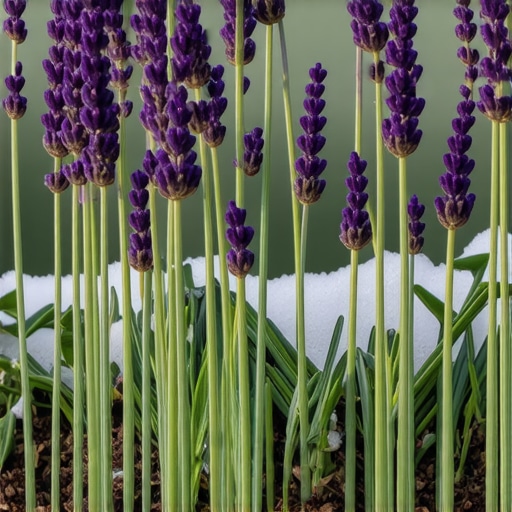
Lavender doesn’t typically die from cold temperatures; it is murdered by moisture and poor soil physics. When you see a once-vigorous Lavandula angustifolia turn into a mushy, gray skeleton by February, you aren’t looking at frost damage, you’re looking at a structural failure of the root zone. Most homeowners see a dead plant and blame the thermometer, but as a landscaper with two decades in the dirt, I can tell you the culprit is almost always anaerobic soil conditions. In the winter, transpiration slows to a crawl, yet the soil often stays saturated. This creates a literal drowning scenario for Mediterranean species.
The Apprentice Lesson: Soil Grading and Death Pockets
I always drill into my new crew members: if you don’t fix the soil grading first, every plant you put in the ground is just expensive compost. I remember a job in a high-end subdivision where the client had lost forty English lavenders in a single season. The previous contractor had dug individual holes in heavy clay, filled them with potting soil, and walked away. They created ‘death buckets.’ When the winter rains came, those holes acted like sumps, holding water against the root flare until the roots simply rotted away. We didn’t just replace the plants; we regraded the entire bed to a 2% slope and integrated a 4-inch deep gravel sub-base to ensure water had somewhere to go. If the water doesn’t move, the plant dies. It is that simple.
“Lavender species (Lavandula spp.) are highly susceptible to root rot in soils where drainage is less than 2 inches per hour during dormant cycles, particularly when soil temperatures remain between 35°F and 45°F.” – Agricultural Extension Agronomy Manual
What Causes Lavender to Die in Winter?
Lavender dies in winter primarily due to root rot (Phytophthora) caused by excessive soil moisture and hydrostatic pressure in heavy clay soils. While lavender is cold-hardy in many USDA zones, it cannot tolerate ‘wet feet’ during its dormancy period when its metabolic rate is low. The combination of saturated soil and freezing temperatures causes ice crystals to form in the root cells, which have already been weakened by a lack of oxygen in the soil macro-pores.
How to Diagnose Winter Root Rot
If you suspect your lavender is failing, don’t wait for spring to check the damage. Dig slightly around the base. Healthy roots should be firm and tan. If they are black, slimy, or peel away with a light touch, you have a drainage crisis. The smell is also a dead giveaway; anaerobic soil smells like sulfur or rotten eggs. This is the result of bacteria thriving in the absence of oxygen, a direct consequence of soil compaction and poor garden design.
| Soil Component | Drainage Rate | Lavender Survival Rate | Mitigation Required |
|---|---|---|---|
| Heavy Clay | <0.5 in/hr | Low (10-20%) | Full excavation or mounded beds |
| Sandy Loam | 1-2 in/hr | High (80%) | Minimal; check pH levels |
| Engineered Gravel Mix | >5 in/hr | Excellent (95%) | None; ideal for Mediterranean species |
How much modified gravel do I need for a lavender bed?
For a standard 10×10 foot lavender bed in heavy clay, you need at least 1.5 cubic yards of 3/4-inch clean crushed stone to create a 4-inch drainage layer beneath 8 inches of amended soil. Do not use pea gravel; it shifts too much and doesn’t provide the structural interlocking needed for stable soil. You want angular stone that facilitates capillary break, preventing groundwater from wicking upward into the root zone.
The Chemistry of Winter Survival
Lavender thrives in a pH range of 6.5 to 7.5. Many people kill their lavender by applying acidic wood mulches. As those mulches break down over the winter, they lower the soil pH and hold moisture directly against the crown. I tell my clients to stop using cedar or hardwood mulch around lavender. Instead, use a 1-inch layer of white pea gravel or poultry grit. This reflects light back up into the plant, keeps the crown dry, and prevents the fungal spores from splashing up onto the foliage during winter rains.
“A planting bed doesn’t fail because of the plant; it fails because of the water trapped within the soil structure, leading to root asphyxiation.” – Hardscape Engineering Axiom
Winter Maintenance Checklist
- Check the Root Flare: Ensure the plant hasn’t settled too deep. You should see the top of the root ball level with the soil surface.
- Prune Late, Not Early: Never prune lavender in late fall. This stimulates new growth that will be killed by the first hard frost. Wait until you see green shoots in spring.
- Stop the Irrigation: Turn off your drip lines by October. Lavender needs to harden off.
- Monitor Soil pH: Apply lime in the fall if your soil is naturally acidic to keep the levels near 7.0.
Can I save a dying lavender plant in the winter?
If the damage is localized, you can try to save the plant by immediately improving the surface drainage. Dig a small trench away from the plant to allow standing water to escape. However, if the main crown is soft and black, it’s over. Pull it out and fix the soil before you plant again. Don’t be a ‘mow-and-blow’ hack who just sticks a new plant in the same dead hole. Excavate. Amend. Improve. It is the only way to succeed in landscaping and lawn care management.
Designing for the Future
When planning your garden design, treat lavender like a hardscaping element. It needs the same base considerations as a paver patio. Compacted sub-grade is the enemy. If you are building a retaining wall, plant your lavender near the edge where the hydrostatic pressure is lowest and the drainage is highest. Deep, infrequent watering—even in summer—forces the roots to grow downward, making them more resilient when the winter freeze-thaw cycles begin. It will rot if you treat it like a tropical fern. Respect the biology of the plant, or keep your checkbook ready for replacements every spring.
![5 Native Shrubs for Zero-Water Privacy in 2026 [Zone 8]](https://lawnmajesty.com/wp-content/uploads/2026/05/5-Native-Shrubs-for-Zero-Water-Privacy-in-2026-Zone-8.jpeg)
![4 Native Groundcovers for 2026 Clay Soil [No-Mow]](https://lawnmajesty.com/wp-content/uploads/2026/07/4-Native-Groundcovers-for-2026-Clay-Soil-No-Mow.jpeg)
![5 Deer-Proof Shrubs for 2026 Privacy Hedges [Full Sun]](https://lawnmajesty.com/wp-content/uploads/2026/05/5-Deer-Proof-Shrubs-for-2026-Privacy-Hedges-Full-Sun.jpeg)