How to Clean 2026 Paver Stains with This Oxygen Bleach DIY
How to Clean 2026 Paver Stains with This Oxygen Bleach DIY
I recently got called out to tear up a $30,000 patio that was sinking because the previous contractor failed to address the hydrostatic pressure and sub-grade compaction, but the real crime was the surface. The homeowner had tried to clean oil and leaf tannins with straight pool chlorine. They didn’t just clean the pavers; they structurally compromised the concrete matrix. The surface was pitted, the color was bleached out, and the polymeric sand had turned into a gummy, ineffective mess. This is the reality of hardscaping: if you treat your high-end stone like a bathroom tile, you will destroy your investment. Understanding the chemistry of oxygen bleach is the only way to restore a 2026 hardscape without causing irreversible degradation to the cementitious bonds.
The Anatomy of a Compromised Paver: Why Stains Are More Than Cosmetic
To clean 2026 paver stains effectively, you must identify if the blemish is organic (tannins, algae, mold) or inorganic (rust, oil, efflorescence) to apply the correct pH-neutralizing agent. Oxygen bleach, specifically sodium percarbonate, works by releasing active oxygen that lifts debris without etching the stone surface.
When you look at a paver, you aren’t looking at a solid block. You are looking at a porous network of aggregates and binders. In the world of hardscaping, these pores are magnets for environmental contaminants. In 2026, we are seeing more aggressive fungal strains and higher particulate matter in urban runoff. If you let a leaf sit on a paver, the tannins seep into the top 2-3mm of the surface. This isn’t a surface stain; it is an internal structural coloration. High-pressure washing is the amateur’s first instinct, but it’s a mistake. Blasting a paver with 4000 PSI just opens the pores wider, making them more susceptible to the next round of grime. It will rot if you don’t seal it, but you can’t seal a dirty stone. We use oxygen bleach because it operates on a molecular level, breaking the carbon bonds of the stain without reacting with the calcium carbonate in the concrete. Don’t skip the diagnosis phase. If you see white, crusty powder, that’s efflorescence—a salt migration issue—and oxygen bleach won’t touch it. But for everything else, the DIY oxygen bleach solution is your primary weapon.
“A retaining wall doesn’t fail because of the stone; it fails because of the water trapped behind it.” – Hardscape Engineering Axiom
Why Chlorine Bleach is the Enemy of Your Hardscape
Chlorine bleach, or sodium hypochlorite, is a harsh oxidizer that causes premature fading of iron oxide pigments in pavers and can chemically alter the binders that hold the concrete together. It also creates toxic runoff that alters soil pH, killing the microbiology in your surrounding garden design.
I see it every season. A homeowner thinks they are being efficient by spraying 10% bleach on their walkway. They don’t realize they are essentially acid-washing their investment. Concrete is alkaline. Chlorine is highly reactive. When you introduce it to a colored paver, you are initiating a chemical divorce between the pigment and the cement. The result is a chalky surface that will never regain its original luster. Furthermore, think about where that runoff goes. It hits your turf. It hits the root zones of your $500 specimen trees. Oxygen bleach, conversely, breaks down into water, oxygen, and soda ash (sodium carbonate). Soda ash is actually used in some soil remediation processes. It’s safe. It’s smart. It’s what a professional uses when they care about the long-term health of the entire landscaping ecosystem.
How much modified gravel do I need for a patio base?
While cleaning is the focus, the stability of your pavers determines how much stain-carrying water sits on the surface. For a standard pedestrian patio, you need a minimum of 4 to 6 inches of compacted 21A or 57-stone modified gravel. Without this drainage layer, water wicks upward through the pavers, bringing salts and minerals that create permanent staining. The base is the lungs of your patio; it must breathe.
Oxygen Bleach: The Chemical Mechanic’s Solution for 2026
The DIY oxygen bleach solution for 2026 involves mixing 1 cup of 100% sodium percarbonate powder per gallon of warm water, allowing the solution to fully dissolve before application. This creates a high-foaming action that pushes deep into the paver pores to lift organic matter and atmospheric soot.
| Cleaner Type | Active Ingredient | PH Level | Impact on Plants | Effectiveness on Tannins |
|---|---|---|---|---|
| Oxygen Bleach | Sodium Percarbonate | Neutral (10.5) | Safe/Eco-Friendly | High |
| Chlorine Bleach | Sodium Hypochlorite | High Alkaline (12+) | Toxic/Lethal | Medium (Blasts) |
| Muriatic Acid | Hydrochloric Acid | Highly Acidic (1) | Highly Toxic | None (Corrosive) |
| Pressure Only | Water | Neutral (7) | Safe | Low (Surface Only) |
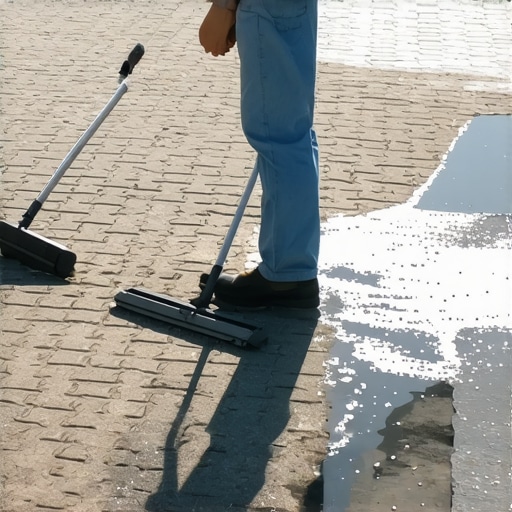
To get the best results, you need to understand the dwell time. This isn’t a spray-and-rinse job. The oxygenation process takes time—usually 15 to 20 minutes. You’ll see it fizzing. That’s the oxygen doing the heavy lifting. If the pavers dry out during this time, the process stops. You must keep the surface wet. I tell my crew: “If the stone is thirsty, it will drink the stain back in.” Use a stiff-bristled nylon brush—never wire—to agitate the surface. Wire brushes leave microscopic metal fragments that will turn into rust spots by next spring.
Will oxygen bleach kill my surrounding landscape plants?
No, oxygen bleach is generally safe for plants when used at recommended concentrations because it rapidly breaks down into non-toxic components. However, I always recommend pre-wetting your grass and shrubs. A hydrated plant leaf is less likely to absorb any concentrated soda ash residue. Rinse the foliage after the job is done just to be safe.
The Master Hardscaper’s Cleaning Prep Checklist
- Test a small, inconspicuous area to check for color fastness.
- Sweep the entire surface with a stiff broom to remove loose detritus.
- Clear all furniture and ensure no metal objects are in the splash zone.
- Ensure the ambient temperature is between 50°F and 85°F; too hot and the solution evaporates too fast.
- Check the 24-hour forecast; you need a dry window for the pavers to settle post-clean.
- Identify the stain type; use a degreaser first for heavy oil before using oxygen bleach.
- Wear gloves and eye protection; sodium percarbonate is a skin irritant.
- Pre-saturate the joints to prevent the sand from absorbing too much cleaner.
“The use of high-pressure washing can erode the surface paste of concrete pavers, exposing aggregates and increasing vulnerability to future staining.” – ICPI Maintenance Guide
Protecting the Joint Sand and Sub-Base Post-Clean
Once the oxygen bleach has been rinsed away and the pavers are bone dry, you must inspect the joint sand levels to ensure the structural integrity of the interlocking system. If the sand has washed out, you must replenish it with high-quality polymeric sand to prevent weed growth and moisture infiltration.
The biggest mistake people make after a deep clean is forgetting the sand. The sand is what creates the friction that keeps the pavers from shifting. If you’ve used a hose to rinse away your oxygen bleach, you’ve likely displaced some of that sand. In 2026, we use stabilized sands that resist erosion. If you see gaps, fill them. Sweep the sand in, vibrate it down if possible, and blow off the excess. Then, and only then, consider a breathable silane-siloxane sealer. This doesn’t create a plastic film; it creates a hydrophobic barrier inside the pores. Water will bead off like it’s on a waxed car. This makes your next cleaning cycle 90% easier. It will rot the base if you use a non-breathable sealer that traps moisture beneath the stone. Always check the breathability rating. Professional grade only.