
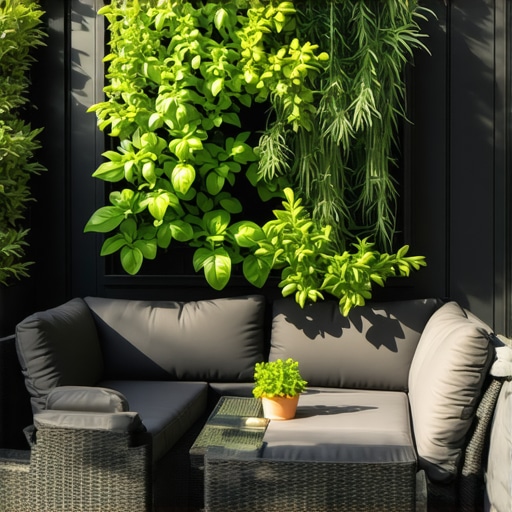
Build a $200 Vertical Herb Wall for 2026 Small Patios
The Engineering Behind Vertical Horticulture
To build a $200 vertical herb wall for a small patio, you must integrate rot-resistant cedar, galvanized hardware, and a high-porosity growing medium. This structural approach ensures the unit handles hydrostatic pressure and weight-load distribution while providing 4.5 square feet of growing space on a minimal footprint. Building a wall isn’t about aesthetics; it’s about managing water and weight. I always drill into my new crew members: if you don’t fix the soil grading and structural load first, every plant you put in the ground is just expensive compost. Most DIY enthusiasts see a pretty picture on social media and ignore the physics of 60 pounds of wet soil hanging off a brick wall. That is how you end up with shattered masonry and dead basil.
The Structural Reality of Vertical Weight
A standard 4-foot vertical herb wall holds roughly 2 cubic feet of soil. When dry, that is light. When saturated, you are looking at significant shear stress on your anchors. If you are mounting this to a 2026-style urban balcony or a small patio, you have to understand the substrate. Don’t use plastic anchors in brick. They fail. Use 3/16-inch Tapcon screws or wedge anchors for concrete. We aren’t just hanging a picture; we are building a cantilevered biological system. The frame must be 1×6 rough-sawn cedar. Why? Because cedar tannins naturally resist the fungal pathogens that thrive in high-moisture environments. Pine will rot in two seasons. Don’t waste your time with it.
“A retaining wall doesn’t fail because of the stone; it fails because of the water trapped behind it.” – Hardscape Engineering Axiom
Material Breakdown and Cost Analysis
Staying under a $200 budget requires precision. You cannot afford to buy excess lumber or high-end retail potting mixes that are mostly peat moss. You need to source aggregate and raw materials like a contractor. Below is the logistical breakdown for a professional-grade 4-tier vertical system.
| Material Item | Specifications | Estimated Cost |
|---|---|---|
| Rough-Sawn Cedar | (4) 1″x6″x8′ Boards | $85.00 |
| Galvanized Fasteners | 2.5″ Deck Screws (1lb) | $12.00 |
| Landscape Liner | 40-mil Polyethylene | $22.00 |
| Hardware Cloth | 1/2″ Galvanized Mesh | $18.00 |
| Potting Medium | Perlite/Coir/Compost Mix | $45.00 |
| Herb Starts | 4-inch Nursery Pots | $18.00 |
Total project cost: $200. This assumes you have basic tools like a miter saw and a drill. If you don’t, rent them. Don’t buy cheap hand tools that will strip your screws.
Why Most Vertical Gardens Fail: The Oxygen Problem
Plants don’t just need water; they need gas exchange. When you cram herbs into a vertical wall, the soil tends to compact under its own weight. This creates anaerobic conditions at the bottom of each tier. The roots drown. To prevent this, you must use a soil-less medium. My recipe is 40% coconut coir, 40% coarse perlite, and 20% aged leaf mold. This provides the capillary action needed to pull water upward while maintaining the macropores required for oxygen to reach the root tips. If the soil smells like rotten eggs, you’ve failed. Throw it out. Start over.
How do I build a vertical garden for cheap?
Building a vertical garden for under $200 requires self-sourcing cedar lumber, using galvanized hardware cloth for structural support, and mixing your own high-drainage substrate. Focus on vertical load-bearing joints and avoid expensive pre-fabricated plastic kits that degrade under UV exposure and crack during freeze-thaw cycles.
Which herbs grow best in vertical walls?
The best herbs for vertical walls are trailing rosemary, creeping thyme, and compact mint varieties. These species tolerate the rapid drainage of vertical systems. Avoid deep-taproot plants like dill; they require more soil depth than a standard 6-inch tier provides, leading to root girdling and stunted growth.
Installation Protocol: Step-by-Step
- Level the Base: Even if wall-mounted, ensure the bottom tier is level. Use a 24-inch I-beam level. Don’t eyeball it.
- Pre-Drill Everything: Cedar splits easily. Use a 1/8-inch bit for all screw holes.
- Liner Installation: Staple the 40-mil liner to the interior of the tiers. Leave the bottom open but covered with hardware cloth for drainage.
- The 1-Inch Rule: Leave exactly 1 inch of headspace at the top of each tier for watering. Overfilling leads to soil washout.
- Anchoring: Secure the frame to the wall using 3-inch structural screws into studs or masonry anchors.
It will rot if you don’t line it. Do not skip the liner. The constant moisture against the wood, even cedar, will eventually degrade the cellulose structure. We want a 10-year lifespan, not a 10-month one.
The Irrigation Reality: Don’t Trust the Rain
Vertical walls have a small surface area for catching rain. They are essentially umbrellas for their own roots. You must hand-water or install a 1/4-inch drip line. In a 2026 small patio environment, thermal gain from the building will bake the soil. Check the moisture daily. Stick your finger two inches into the medium. If it feels like a wrung-out sponge, you are gold. If it’s dusty, you’re killing the plants. Herbs like oregano and sage are drought-tolerant, but they aren’t immortal. They need 70% field capacity to produce the essential oils that give them flavor.
“In containerized systems, the volume of available water is directly proportional to the surface area of the air-to-soil interface, necessitating high-frequency, low-volume irrigation.” – Penn State Agricultural Extension
The Biological Maintenance Cycle
Herbs are heavy feeders when they are confined to small volumes of soil. By mid-summer, the nutrients in your compost will be leached out by the drainage. You need a water-soluble 5-5-5 NPK fertilizer every two weeks. Don’t use the blue stuff from the big box store. Use an organic kelp-based emulsion. It supports the soil microbiology rather than just dumping salts into the medium. If you see yellowing on the lower leaves of your basil, that is nitrogen deficiency. Fix it immediately or the plant will go to seed and become bitter. Prune the flower heads. We want leaves, not flowers. This is a production wall, not a centerpiece. Keep the shears sharp. Ragged cuts lead to Botrytis. Clean cuts heal fast. Respect the biology and the physics, and your $200 investment will pay for itself in three months of grocery bills.
![Build a $100 Modern Rock Garden for 2026 [DIY]](https://lawnmajesty.com/wp-content/uploads/2026/06/Build-a-100-Modern-Rock-Garden-for-2026-DIY.jpeg)