Why Your 2026 Vegetable Garden Soil is Low on Nitrogen
Diagnosing the Nitrogen Deficit in Your 2026 Garden Bed
I always drill into my new crew members: if you don’t fix the soil grading first, every plant you put in the ground is just expensive compost. This is a technical wisdom born from twenty years of excavating failed landscapes. Last season, I walked onto a property where the client had spent five figures on organic starters only to watch them turn a sickly, pale yellow by June. They thought they had a pest problem. I looked at the soil structure and the drainage patterns and knew instantly: their nitrogen had literally washed away due to poor site engineering. Soil isn’t just a medium; it is a biological reactor. If you treat it like an afterthought, your 2026 harvest will fail before the first seed germinates. Nitrogen is the engine of plant growth, and in a vegetable garden, it is the first element to disappear. Unlike phosphorus or potassium, which tend to hang around, nitrogen is highly mobile and volatile. It leaves your soil through leaching, gasification, and the simple act of growing a heavy feeder like corn or tomatoes. If you are staring at stunted growth and spindly stems, you are looking at a chemical bankruptcy.
The Visible Symptoms of Nitrogen Depletion
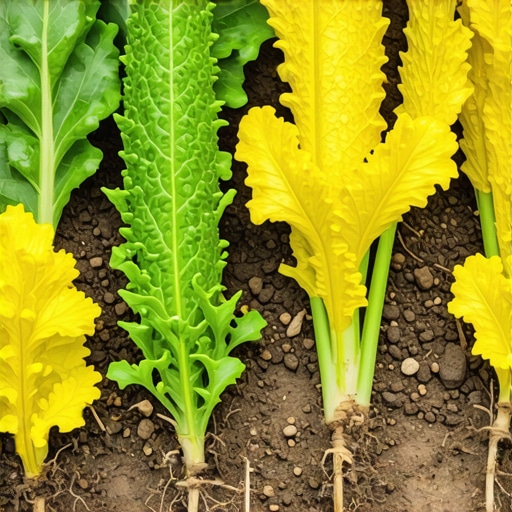
Nitrogen deficiency in 2026 garden soil manifests as chlorosis, where older leaves turn pale yellow while the rest of the plant remains light green. This occurs because nitrogen is a mobile nutrient; the plant actively pulls atoms from older tissue to support new growth at the terminal buds, leading to stunted development and poor yields. You will see this first in your brassicas and corn. The leaves will lose that deep, forest-green hue and take on a translucent, sickly quality. It is a slow death. The plant cannot photosynthesize effectively without sufficient nitrogen to build chlorophyll molecules. If the stems are thin and the plant looks like it is stretching for light even in full sun, your soil is empty. You cannot fix this with a quick spray of a big-box store liquid fertilizer. That is like putting a band-aid on a severed artery. You need to understand the nitrogen cycle at a molecular level.
“Nitrogen is the most limiting nutrient in most vegetable production systems due to its high mobility and the variety of pathways for loss.” – Cornell University Agricultural Extension
The Physics of Nitrogen Leaching and Micro-climate Impacts
Nitrogen leaching occurs when nitrate ions, which carry a negative charge, fail to bond with negatively charged soil particles and are washed away by water. In 2026, increased rainfall volatility means your well-drained sandy loam might actually be working against you by flushing nutrients into the subsoil. This is why site grading and hardscaping matter even in a vegetable patch. If your garden is at the bottom of a slope, you aren’t just getting water; you are getting the runoff from every chemical treatment applied uphill. Conversely, if your beds are raised but lack proper organic matter, they drain too fast. You need a cation exchange capacity that can actually hold onto the ammonium. We talk about this in hardscaping all the time regarding hydrostatic pressure. In the garden, the pressure isn’t just moving walls; it is moving your fertility. It is a constant battle against gravity and solubility.
How do I test soil nitrogen at home?
To accurately test nitrogen levels, you must use a professional lab kit rather than cheap color-changing strips. Nitrogen levels fluctuate daily based on temperature and moisture, so a professional test provides a baseline of the Total Kjeldahl Nitrogen (TKN) and available nitrates to help you calculate exact amendment requirements. Don’t trust a $10 plastic probe. They are junk. You need a core sample taken from six inches down in at least five spots. Mix them in a clean bucket. Send them to a university extension. That is the only way to get real data.
| Amendment Type | Nitrogen Content (N-P-K) | Release Speed | Best Use Case |
|---|---|---|---|
| Blood Meal | 12-0-0 | Fast | Mid-season rescue for heavy feeders |
| Feather Meal | 12-0-0 | Slow | Pre-planting soil prep in early spring |
| Alfalfa Meal | 2.5-0.5-2 | Moderate | Improving soil tilth and microbial health |
| Finished Compost | 1-1-1 (Varies) | Very Slow | Long-term structural nitrogen bank |
Does mulch steal nitrogen from my garden?
Mulch can cause nitrogen immobilization if you use high-carbon materials like fresh wood chips or sawdust that aren’t fully decomposed. Soil microbes will consume available nitrogen to break down the carbon, effectively stealing the nutrient from your vegetable roots until the decomposition process is complete. This is why we use straw or finished compost as mulch. If you put fresh pine bark in your tomato bed, you are starving your plants. The microbes will win that fight every time. They have better access to the soil than your root hairs do. It is basic biological warfare. Use the right cover.
The Organic Fix: Remediating Depleted Soil
Remediating nitrogen-depleted soil requires a multi-phase approach including the application of high-nitrogen organic meals, the integration of leguminous cover crops, and the consistent addition of well-aged compost. You must focus on the Carbon-to-Nitrogen (C:N) ratio of your amendments to ensure you are adding bioavailable nutrients rather than locking them up. For 2026, I recommend a heavy application of feather meal in the late winter. It takes time for the soil biology to
![Stop 2026 Pine Needle Drop [Soil Nutrition Fix]](https://lawnmajesty.com/wp-content/uploads/2026/07/Stop-2026-Pine-Needle-Drop-Soil-Nutrition-Fix.jpeg)