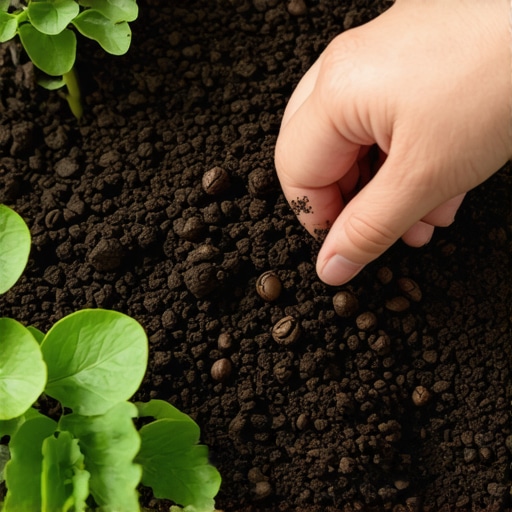
The Truth About Using Coffee Grounds in Your Soil
Walk onto a job site where a homeowner has been dumping five-gallon buckets of Starbucks waste into their flower beds, and you will smell it before you see it. It is the scent of anaerobic decomposition and fungal rot. Most people think they are being green by tossing spent coffee grounds (SCG) directly onto their plants, but they are often just creating a hydrophobic mat that suffocates the soil. As someone who has spent two decades excavating failed gardens and repairing structural soil damage, I see the same mistake weekly. People treat their soil like a trash can instead of a biological reactor. If you do not understand the carbon-to-nitrogen ratio or the physical particle size of what you are putting in the ground, you are not gardening; you are just littering in your own yard.
The Answer Capsule: Do Coffee Grounds Actually Help Your Soil?
Spent coffee grounds serve as a nitrogen-rich organic amendment that improves soil structure only when properly composted or integrated at low volumes. Raw grounds are not an immediate fertilizer; they require microbial breakdown to release nutrients like nitrogen, phosphorus, and potassium while potentially inhibiting seed germination if applied too thickly.
The Chemical Nightmare: A Case Study in Soil Burn
A homeowner called me in a panic last spring after they completely torched their front lawn and perennial beds by applying a three-inch layer of uncomposted coffee grounds they got for free from a local cafe. They thought they were ‘feeding’ the soil. Within two weeks, the turf was yellowing, and the perennials were wilting despite heavy rain. When I arrived, I took a spade to the bed. The grounds had fused into a solid, oily crust. Underneath, the soil was bone dry. The rain couldn’t penetrate the barrier, and the high concentration of caffeine remaining in the grounds was acting as an allelopathic agent, literally poisoning the root systems of the younger plants. We had to scrape off the top two inches of ‘black gold’ and mechanically aerate the entire area just to get oxygen back to the roots. It was an expensive lesson in chemistry. Raw organic matter is not plant food; it is a liability until the bacteria get a hold of it.
“A soil amendment’s value is determined by its ability to enhance the biological, chemical, and physical properties of the root zone without inducing phytotoxicity or nitrogen sequestration.” – Agronomy Manual of Standards
The Science of SCG: Nitrogen, pH, and Particle Size
To understand why your garden is struggling with coffee grounds, you have to look at the numbers. Most DIY blogs tell you that coffee is acidic. That is a half-truth. While coffee beans are acidic, the acid is water-soluble. Once you brew the coffee, most of that acidity is in your mug. The spent grounds usually have a pH between 6.5 and 6.8, which is nearly neutral. If you are trying to turn your hydrangeas blue or satisfy an acid-loving blueberry bush, coffee grounds are not the tool for the job. You need elemental sulfur for that. The real value of SCG is the 2 percent nitrogen content by volume. However, that nitrogen is tied up in complex proteins. It is not bioavailable. You need Nitrosomonas and Nitrobacter bacteria to convert that nitrogen into nitrates that roots can actually drink. Without that process, the grounds just sit there, consuming oxygen as they slowly rot.
How do I apply coffee grounds to my garden without killing plants?
The key to using coffee grounds is the 20 percent rule. Never let grounds make up more than 20 percent of your total compost pile or soil volume. You must mix them thoroughly into the top six inches of the soil profile. Surface-dressing with grounds is a recipe for disaster because the fine particles settle and lock together like microscopic shingles. This creates a surface tension that repels water. In the industry, we call this a hydrophobic condition. If you want to use them safely, toss them in the compost bin first. Let the heat of the pile break down the residual caffeine and volatile oils. Your soil will thank you. Your plants will actually live.
[image placeholder]
Structural Comparison: Raw Grounds vs. Composted Amendments
| Feature | Raw Coffee Grounds | Composted Grounds (Finished) | Peat Moss / Traditional Mulch |
|---|---|---|---|
| Nitrogen Availability | Low (Locked) | High (Bioavailable) | Very Low |
| Water Infiltration | Poor (Hydrophobic) | Excellent | Good |
| Caffeine Content | Present (Growth Inhibitor) | Trace (Safe) | None |
| Soil Structure Impact | Compaction Risk | Improved Porosity | Aeration Focus |
The Forensic Autopsy of a Failed Bed
When I see a bed where coffee grounds have been misused, the symptoms are unmistakable. First, you see the mold. A thick, white or green fungal mat usually develops on top of the grounds. This is not the ‘good’ mycorrhizal fungi we want for root health; it is saprophytic mold that thrives on the sugars left in the bean. This mold further seals the soil surface. Second, we look at the root flares. If you have piled grounds around the base of a tree, you are creating a ‘mulch volcano.’ This holds moisture against the bark, leading to rot and providing a highway for wood-boring insects. Don’t do it. Keep the root flare visible. Soil engineering requires airflow. If the soil cannot breathe, the roots will die of asphyxiation long before they starve for nutrients.
“Spent coffee grounds can improve soil tilth but must be managed to avoid high C:N ratios that temporarily deplete soil nitrogen during the decomposition phase.” – Oregon State University Extension Service
Do coffee grounds make soil acidic?
No. As mentioned, the water-soluble acids are removed during the brewing process. Extensive testing by agricultural extension offices shows that spent grounds are generally close to pH neutral. Relying on them to lower soil pH is a common horticultural error. For legitimate pH adjustment in large-scale landscaping, we use granulated sulfur or aluminum sulfate based on a lab-verified soil test. Stop guessing with your soil chemistry.
The Professional Application Checklist
- Test Your Soil First: Never add nitrogen-rich material without knowing your baseline NPK levels.
- Limit Volume: Keep SCG to less than 20% of your organic matter mix.
- Avoid Seedlings: The caffeine in raw grounds can stunt the growth of new starts and prevents seed germination.
- Incorporate Deeply: Use a garden fork to mix grounds into the soil; never leave them as a top layer.
- Monitor Moisture: Check if water is actually penetrating the ground or just beads off the surface.
Engineering the Long-Term Solution
If you are serious about soil health, stop looking for ‘one weird trick’ from a lifestyle blog. Healthy soil is a result of consistent, science-based management. Coffee grounds are a tool, not a miracle. Use them to feed your compost pile. Let the worms do the heavy lifting. When you see the grounds transformed into dark, crumbly humus, then they are ready for the field. Until then, they are just waste. Landscaping is about building a foundation that lasts decades, not just until the next rainstorm. Hardscaping requires a solid base; planting requires a living one. Treat your soil with the same engineering discipline you would use for a retaining wall. Compaction is the enemy. Balance is the goal. Get it right, or you’ll be calling someone like me to dig it all out in three years.

![Stop Killing Your 2026 Azaleas: 3 Clay Soil Drainage Hacks [Zone 7]](https://lawnmajesty.com/wp-content/uploads/2026/05/Stop-Killing-Your-2026-Azaleas-3-Clay-Soil-Drainage-Hacks-Zone-7.jpeg)
![Why Your 2026 Drip Emitters Keep Clogging [Fix]](https://lawnmajesty.com/wp-content/uploads/2026/06/Why-Your-2026-Drip-Emitters-Keep-Clogging-Fix.jpeg)