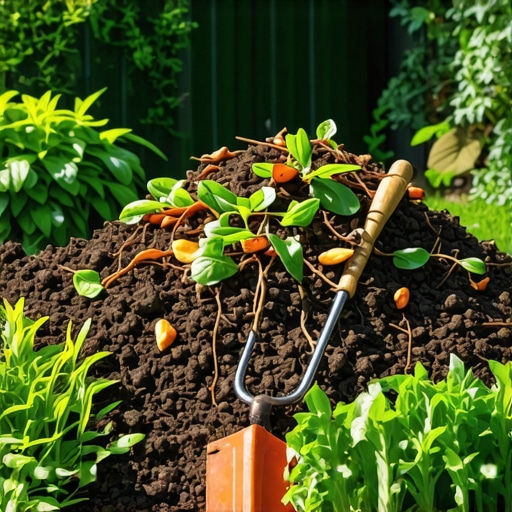
Why Your Compost Pile Isn’t Breaking Down Fast Enough
The Sensory Indicators of a Stalled Compost Pile
To fix a stagnant compost pile, you must balance the Carbon-to-Nitrogen ratio (aim for 30:1), maintain moisture levels similar to a wrung-out sponge (40 to 60 percent), and ensure constant oxygen flow through aeration. Stalling usually occurs when the pile is too dry, lacks nitrogen, or has insufficient internal volume to generate heat. I always drill into my new crew members: if you do not fix the soil grading and organic chemistry first, every plant you put in the ground is just expensive compost. I have seen guys throw thousands of dollars of nursery stock into holes filled with raw, un-aged mulch and wonder why the leaves turn yellow within a month. It is not magic; it is biology. When a compost pile sits there looking like a heap of dry trash for six months, it is because you have failed to provide the microbial workforce with the basic caloric and atmospheric requirements they need to do their jobs. You are running a biological reactor, not a trash can. If the internal temperature is not hitting 130 degrees Fahrenheit, your ‘engine’ is cold. I have walked onto job sites where the ‘compost’ was just a pile of anaerobic sludge smelling like rotten eggs because some ‘mow and blow’ hack thought they could just dump grass clippings in a corner and walk away. That is not landscaping; that is a health hazard.
“Composting is the biological decomposition of organic matter under controlled aerobic conditions into a relatively stable humus-like material.” – USDA Natural Resources Conservation Service
The Chemical Imbalance: Mastering the C:N Ratio
The primary reason for a slow pile is a lack of nitrogen, the ‘green’ fuel that feeds the bacteria. Most homeowners have way too much carbon. If your pile is 90 percent brown leaves and straw, it will stay that way for years. You need to hit a 30:1 ratio of carbon to nitrogen by weight. This is where the engineering comes in.
| Material | C:N Ratio | Operational Role |
|---|---|---|
| Grass Clippings | 15:1 | Nitrogen Fuel |
| Vegetable Scraps | 20:1 | Nitrogen Fuel |
| Dry Leaves | 60:1 | Carbon Bulk |
| Straw | 80:1 | Carbon Bulk |
| Wood Chips | 400:1 | Structural Carbon |
How long does it take for a compost pile to break down?
Under optimal conditions with active management, a compost pile can produce finished humus in four to eight weeks. However, if the pile is neglected, lacks moisture, or is too small to retain heat, the process can take one to two years or stall entirely.
The Physics of Porosity and Aeration
Bacteria are like us; they need oxygen. When a pile settles or gets too wet, the air pockets collapse. This shifts the process from aerobic (clean decomposition) to anaerobic (fermentation and rot). I tell my crew that a pile needs ‘structure.’ You cannot just have fine powder. You need small twigs or coarse stalks to create chimneys for air to rise through the center. If you are not turning that pile with a pitchfork once a week, you are suffocating your microbes. It is that simple. The pile needs to breathe. If it smells like ammonia, you have too much nitrogen. If it smells like sulfur, you have too much water and zero oxygen.
Moisture Management: The Wring-Out Test
Water is the transport medium for nutrients in the pile. Too little, and the bacteria go dormant. Too much, and they drown.
“Microbial activity in a compost pile is most efficient when the moisture content is between 40 and 60 percent by weight.” – Cornell Waste Management Institute
You should be able to take a handful of material from the center and squeeze it. It should feel like a damp sponge. If a drop or two of water comes out, you are perfect. If it is bone dry, you need to irrigate the pile while you turn it. If it is dripping wet, you need to add dry carbon bulk like straw to soak up the excess.
The Thermophilic Phase and Critical Mass
A pile needs to be at least 3 feet by 3 feet by 3 feet to insulate itself. Anything smaller loses heat too fast to the atmosphere. You are looking for ‘thermophilic’ activity. This is where specialized bacteria thrive at temperatures between 130 and 160 degrees. These temperatures are necessary to kill weed seeds and pathogens. If your pile is cold, it is either too small or too dry.
Should I add worms to my compost pile?
Adding red wiggler worms is only effective for vermicomposting, which is a cold process. In a high-heat thermophilic pile, the temperatures will kill the worms or force them to flee into the soil. Let the bacteria do the heavy lifting first; worms are for the finishing stage.
Hardscape Integration and Drainage
In my 20 years of building high-end landscapes, I have seen too many DIY compost bins placed in low spots. If the base of your pile is sitting in standing water, it will go anaerobic and rot your bin. You need a well-drained site. Often, we install a small French drain or a 4-inch layer of modified gravel under a compost area to ensure excess leachate can exit. This is civil engineering 101. Do not let the liquid sit.
Mandatory Compost Maintenance Checklist
- Check internal temperature weekly with a long-stem thermometer.
- Turn the pile every 7 to 10 days to introduce fresh oxygen.
- Perform the ‘Squeeze Test’ to monitor moisture levels.
- Shred large materials like corn stalks to increase surface area for bacteria.
- Add a handful of finished compost or garden soil to ‘seed’ the pile with microbes.
The microscopic reality of your yard is a battlefield. If you do not provide the right environment, the wrong microbes win. It will rot. It will smell. You will fail. Stick to the ratios, monitor the heat, and keep it damp. Stop buying bags of cheap soil and start building your own gold.