How to Clean Red Wine Stains off Your Paver Patio
Why Red Wine Stains Concrete and Natural Stone Pavers
To clean red wine stains off your paver patio, you must neutralize the tannins and chromophores using a combination of surfactants, oxidizing agents, or pH-balanced cleaners before they bond with the porous substrate of the concrete or natural stone. Failure to act quickly allows the liquid to penetrate the capillary pores of the material, making removal significantly more difficult without damaging the surface integrity.
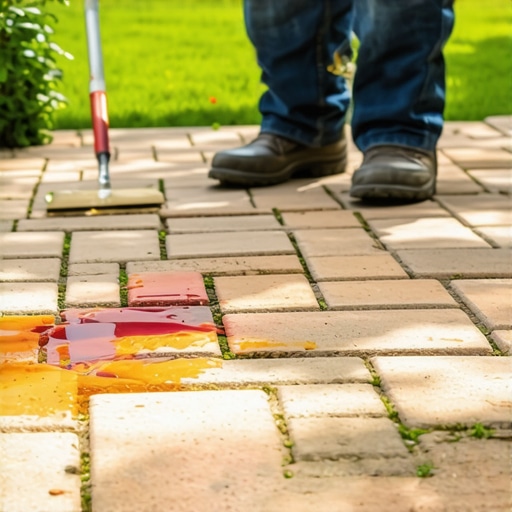
I recently got called out to tear up a $30,000 patio that was sinking because the previous contractor didn’t understand base-layer compaction, but while I was there, the homeowner was in tears because a bottle of Cabernet had shattered during a party the night before. This client had used a ‘big-box’ cheap sealer—or worse, maybe none at all. When you look at a paver under a microscope, it’s not a solid block. It’s a series of interconnected voids. Concrete pavers are essentially a sponge made of stone. When that wine hits, gravity and capillary action pull those pigments deep into the matrix. If you don’t understand the chemistry of the stain and the geology of the stone, you’re just going to etch the surface and make it look worse. Don’t be the homeowner who grabs a wire brush and starts scrubbing like a maniac. You’ll just destroy the finish.
“The porosity of concrete masonry units and interlocking concrete pavers dictates the rate of fluid absorption; high-density units with low water-cement ratios provide superior resistance to permanent staining.” – Interlocking Concrete Pavement Institute (ICPI) Technical Manual
How do I remove deep-set stains from my patio?
Deep-set stains require a poultice method or a high-grade oxygenated cleaner that can dwell on the surface to draw the pigment out of the stone’s pores. You need to create a vacuum effect. By mixing a cleaning agent with an absorbent powder, you create a medium that pulls the wine back up as it dries. It’s not magic; it’s physics. If the stain has been there for a week, a simple spray-and-wipe isn’t going to cut it. You have to get into the ‘pores’ of the hardscape.
The Chemistry of Tannin Removal
Red wine contains organic compounds called tannins. These are the same things that stain your teeth and your wood deck. On a paver, they act as a dye. To break them down, you need an oxidizer. Sodium percarbonate (found in products like OxiClean) is often the safest bet for DIYers because it breaks down into hydrogen peroxide and soda ash. It’s effective but won’t kill your surrounding boxwoods or fescue if you rinse it properly. However, if you’re dealing with high-end travertine or limestone, you have to be extremely careful with pH levels. Acidic cleaners will eat the calcium carbonate right out of the stone, leaving you with a permanent dull spot that no amount of scrubbing will fix. It’s called etching. It’s permanent.
| Cleaning Agent | pH Level | Best For | Risk Factor |
|---|---|---|---|
| Dish Soap (Dawn) | 7 (Neutral) | Fresh stains / Surface tension reduction | Low – Safe for all stone |
| Sodium Percarbonate | 10.5 (Base) | Deep tannin extraction | Moderate – Rinse well |
| TSP (Trisodium Phosphate) | 12 (Strong Base) | Heavy organic breakdown | High – Can irritate skin/plants |
| Muriatic Acid | 1 (Highly Acidic) | Efflorescence only | Extreme – Will destroy pavers |
What is the best cleaner for concrete pavers?
The best cleaner for concrete pavers is a pH-neutral high-viscosity surfactant designed specifically for hardscapes, or a specialized organic stain remover containing sodium hypochlorite in a stabilized form. Avoid using straight bleach, as it can degrade the polymeric sand in your joints. You want something that stays wet on the surface for at least 15 minutes to allow the chemical reaction to complete. If the cleaner dries out, the stain just redeposits. It’s a waste of time.
The Step-by-Step Remediation Process
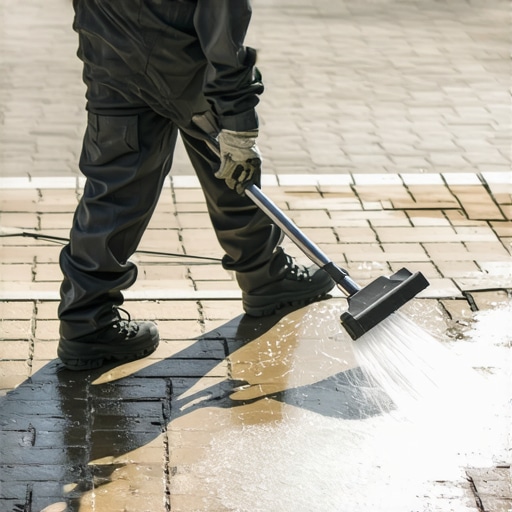
If you’ve spilled wine, follow this protocol. Don’t skip steps. Don’t get creative. 1. Blot, don’t scrub. Use a microfiber cloth to soak up the excess. Scrubbing pushes the wine deeper into the capillary fringe. 2. Dilute. Flush the area with clean water immediately. This lowers the concentration of the tannins. 3. Apply the cleaner. Mix your oxygenated cleaner with water to form a paste or heavy liquid. 4. Dwell time. Let it sit for 15 to 20 minutes. Keep it misted with water so it doesn’t dry. 5. Agitate gently. Use a nylon-bristled brush. Never use steel wool or wire brushes on pavers. You’ll leave metal fragments that will rust and create a whole new nightmare. 6. Rinse. Use a garden hose, not a 4000 PSI pressure washer. High pressure can blow out your joint sand and scar the face of the paver.
- Always test a small, inconspicuous area first to check for color fading.
- Keep pets and children off the area until the rinse water has dried.
- Check the integrity of the polymeric sand after cleaning; you may need to top it off.
- Ensure 811 utility lines aren’t a concern if you’re doing heavy excavation nearby, though for cleaning, it’s irrelevant.
- Water your nearby perennials before and after to dilute any chemical runoff.
“Surface tension and the molecular weight of the contaminant determine the depth of penetration into the concrete matrix; immediate dilution is the primary defense against permanent discoloration.” – Agronomy and Soil Science Quarterly
The Role of Polymeric Sand and Joint Integrity
When you’re cleaning a patio, you aren’t just dealing with the stone. You’re dealing with the jointing material. Most modern patios use polymeric sand—a mix of graded sand and binders that hardens when caffeinated. If you use harsh chemicals or too much water pressure, you’ll soften those polymers. Once they’re soft, they wash away. Now you’ve got gaps. Gaps lead to weed growth (like crabgrass or dandelion) and, eventually, hydrostatic pressure issues where water gets under the pavers and causes heaving during the freeze-thaw cycle. It will rot the foundation of your patio. If you see sand washing out while you’re cleaning that wine stain, stop. Let it dry, and replace the sand. Don’t ignore it. A patio without proper joints is just a pile of expensive bricks waiting to move.
Long-Term Prevention: Sealers and Breathability
The reason that wine stained so badly is likely a failure of the sealer. There are two types: film-forming and penetrating. Film-forming sealers sit on top like a coat of plastic. They look ‘vibrant’ (a word I hate, but homeowners love) for about six months, then they start to peel. Penetrating sealers, like silane-siloxanes, go into the pores and create a hydrophobic barrier. Water and wine will bead up on the surface like it’s a waxed car. This is what you want. It allows the stone to breathe—meaning water vapor can escape from the soil below—while preventing liquid from entering from the top. If you don’t seal your patio every 3-5 years, you’re just asking for trouble. It’s the difference between a 20-year patio and a 5-year patio. Maintenance isn’t optional. It’s the job.
How much modified gravel do I need for a patio base?
For a standard paver patio, you need a minimum of 6 inches of compacted modified gravel (2A or CR-6) for the base, plus 1 inch of bedding sand. To calculate the volume, multiply the square footage by the depth in feet (e.g., 0.5 ft for 6 inches) and divide by 27 to get cubic yards. If you skip the base to save money, your patio will shift, and those wine spills will be the least of your problems. The base is the engineering heart of the project. Compaction should be done in 2-inch lifts with a plate compactor. It should literally bounce off the ground when you’re done. That’s how you know it’s solid.