The Best Way to Mow a Steep Hill Safely
The Best Way to Mow a Steep Hill Safely
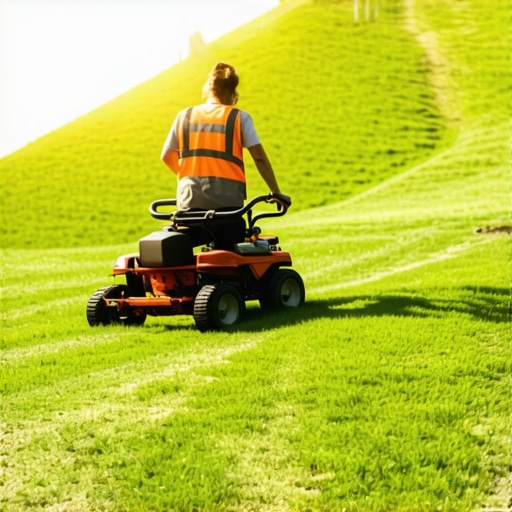
Mowing a steep incline is not just a chore: it is a high-stakes interaction between mechanical physics and soil biology. To mow a steep hill safely, you must utilize specialized slope equipment or low-growth groundcovers while always mowing perpendicular to the slope with a walk-behind or vertically with a tractor to prevent roll-overs. Maintaining a 3:1 slope ratio is critical for operator safety and turf health. If you treat a 30-degree incline like a flat suburban lot, you are asking for a hospital visit and a ruined lawn. Gravity is a relentless contractor, and it never loses a lawsuit.
The Apprentice Lesson: Why Gravity Wins
I always drill into my new crew members: if you don’t fix the soil grading first, every plant you put in the ground is just expensive compost. I remember a green kid named Mike who thought he could outrun physics. He tried to take a standard 60-inch zero-turn mower up a 22-degree clay embankment after a light rain. Within seconds, the drive tires lost static friction against the wet fescue blades. The machine did not just slide: it pivoted on its center of gravity and began a lateral roll. He jumped clear, but that $12,000 mower was scrap metal. That is the cost of ignoring slope physics. It is not just about the machine: it is about the shear strength of the soil and the moisture content of the turf canopy. You have to respect the grade or the grade will break you.
Understanding Slope Physics and Soil Shear
The safest way to manage a hill begins with a clinometer, not a starter cord. A hill that looks ‘doable’ often exceeds the 15-degree limit set by most manufacturers for riding equipment. When you exceed this, the hydrostatic transmission faces immense pressure, and the oil can overheat, leading to brake failure. Furthermore, the Center of Gravity (CoG) on a standard mower is too high for lateral movement on steep grades.
“The primary cause of tractor-related fatalities on residential properties is the side rollover, often occurring on slopes exceeding a 20 percent grade where the center of gravity shifts outside the wheelbase.” – OSHA Agricultural Safety Standards
This is why commercial crews use dual-hydro walk-behind mowers or remote-controlled units for anything over 20 degrees. The lower the profile, the safer the cut. Don’t skip this measurement. It is the difference between a clean cut and a catastrophic flip.
What is the safest degree of slope for a zero-turn?
Most commercial zero-turn mowers are rated for a maximum of 15 degrees. Exceeding this angle shifts the weight off the uphill tires, causing a loss of traction and steering control. If the hill is steeper than 15 degrees, you must switch to a walk-behind mower or a string trimmer to ensure operator safety and prevent turf tearing. Traction is everything.
| Mower Type | Max Safe Slope (Degrees) | Max Safe Slope (Percentage) | Risk Factor |
|---|---|---|---|
| Standard Zero-Turn | 10-15 | 17-26% | High (Rollover) |
| Walk-Behind (Commercial) | 15-20 | 26-36% | Medium (Sliding) |
| Slope Mower (Remote/Spider) | 40-50 | 84-119% | Low |
| String Trimmer | 60+ | 170%+ | Minimal |
The Forensic Autopsy of a Failed Slope
I often see hills that are ‘dying’ from the top down. The homeowner thinks it is a lack of water, but it is actually a mowing height error combined with hydrostatic runoff. When you mow a hill too short, you scalp the crown of the grass. This exposes the soil to direct UV radiation, which bakes the microbial life in the top inch of the dirt. On a slope, once that grass dies, there is nothing holding the soil in place. Gravity pulls the water down before the roots can drink, a phenomenon known as infiltration deficiency. The result? The turf slides off the hill like a cheap rug on a hardwood floor. You are left with a muddy mess and a structural nightmare. To fix this, you have to increase your mowing height to at least 4 inches. This encourages deep root penetration, which acts like biological rebar for your hill.
A Professional Checklist for Slope Mowing
- Check Soil Moisture: If your boots leave a wet print, the mower will slide. Wait for the evapotranspiration to dry the blades.
- Verify Tire Pressure: Low PSI on one side changes the mower’s balance point. Ensure even inflation for maximum lateral stability.
- Inspect for ‘Heaving’: Frost heaves or rodent tunnels can catch a caster wheel and initiate a roll.
- Identify the Exit Route: Always know where you will steer if the machine starts to slide. Never mow toward a retaining wall or water feature.
How do you stop grass from sliding on a hill?
To prevent grass from sliding, you must maintain a high mowing height to promote deep root growth and use aeration to reduce soil compaction. If the slope is too steep for turf, replacing it with native groundcovers or hardscaping like a tiered retaining wall is the only permanent solution to soil erosion. Biology beats gravity.
The Hardscape Pivot: When Mowing is a Mistake
Sometimes the best way to mow a hill is to not mow it at all. In garden design, we look at the Angle of Repose. If your hill is steeper than 30 degrees, it shouldn’t be turf grass. It is a maintenance liability and a safety hazard. This is where hardscaping and landscaping engineering come in.
“A retaining wall doesn’t fail because of the stone; it fails because of the water trapped behind it.” – Hardscape Engineering Axiom
By installing a series of boulder terraces or timber walls, you can turn a dangerous slope into manageable, flat planting beds. Use modified gravel (2A or 2B) for the base and ensure you have a French drain behind the wall to manage hydrostatic pressure. This removes the need for a mower entirely and increases the structural integrity of your property. It costs more upfront, but it is cheaper than a lawsuit or a trip to the ER. It will rot if you use cheap wood: use stone or pressure-treated timber rated for ground contact. Don’t cut corners on the drainage stone.
The Biological Reality of Hillside Turf
The Nitrogen cycle on a hill is skewed. Fertilizer often washes down to the bottom, leaving the top of the hill nutrient-starved. I recommend using slow-release granular fertilizers with a high Cation Exchange Capacity (CEC). This helps the nutrients ‘stick’ to the soil particles despite the pull of gravity. Also, consider the species of grass. Kentucky Bluegrass is great for flat areas, but Tall Fescue or Creeping Red Fescue have deeper root systems that are better suited for holding onto a 15-degree grade. They are more resilient to the heat stress that hillsides face. If you are struggling with a brown hill, stop dumping water on it. The water just runs off. Instead, use a surfactant to break the surface tension of the soil so the water actually reaches the roots. It is simple science, but most ‘mow-and-blow’ guys haven’t a clue.
How much modified gravel do I need for a patio base?
To calculate the gravel needed for a stable base on a slope, you need 6 inches of compacted modified gravel for the foundation. For a 10×10 area, this is approximately 2.5 to 3 tons of stone. Always compact in 2-inch lifts to ensure the base doesn’t settle and cause the hill to shift. Compaction is non-negotiable.