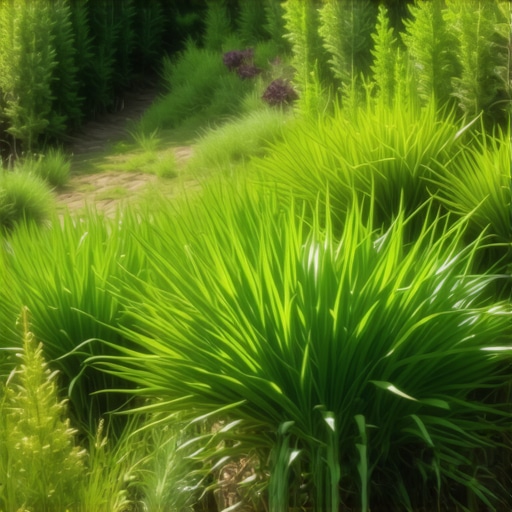
7 Shade-Loving 2026 Perennials for Dry Soil
Why Dry Shade is a Landscape Engineering Problem
Dry shade landscaping requires managing low light intensity combined with hydrophobic soil conditions caused by mature tree canopies that intercept rainfall and aggressive root systems that deplete soil moisture. Solving this requires a technical understanding of evapotranspiration rates and soil capillary action to ensure plant survival in high-competition zones. Most contractors fail here because they treat the symptoms rather than the site physics.
I always drill into my new crew members: if you don’t fix the soil grading and organic composition first, every plant you put in the ground is just expensive compost. I’ve seen thousands of dollars in nursery stock wasted because a foreman thought he could just ‘dig a hole’ in compacted clay under an oak tree. It doesn’t work that way. You are fighting for every drop of water in those conditions. Dry shade isn’t just a lack of light; it is a resource war between the 30-foot maple and your 4-inch perennial. The maple usually wins unless you engineer the site to favor the understory.
“Soil compaction is the single most common cause of plant failure in urban landscapes, as it restricts gas exchange and prevents root penetration in dry, shaded environments.” – Agricultural Extension Agronomy Manual
How much organic matter do I need for dry shade soil?
For dry shade environments, you must incorporate 2 to 3 inches of decomposed organic matter to a depth of 6 inches to improve cation exchange capacity and water retention. Use a mixture of leaf mold and composted pine bark to mimic the natural forest floor without altering the pH too drastically for native species.
The Ground-Up Build: Site Preparation Protocol
Success starts with site forensics. We don’t just look at the dirt; we analyze the micropores. In 2026, the industry is moving toward biochar integration to manage moisture in these high-stress zones. Before a single shovel hits the ground, we perform a percolation test. If the water sits in the hole for more than four hours in the shade, you don’t have dry shade; you have a drainage failure disguised as a planting problem. You must address the hydrostatic pressure and soil density before selecting your cultivars.
Avoid the temptation to rototill under large trees. You’ll sever the feeder roots of the canopy, leading to branch dieback or pathogen entry. Instead, we use pneumatic soil excavation or ‘air-spades’ to loosen the ground without damaging the structural roots. This creates macro-voids that allow your new perennials to establish turgor pressure without competing immediately with the established giants. It is about precision, not power. Use a penetrometer to ensure you’ve reached a PSI of less than 300 in the planting zone. Anything higher and those roots are hitting a brick wall.
| Botanical Name | Common Name | USDA Zone | Root Strategy |
|---|---|---|---|
| Epimedium x versicolor | Barrenwort | 4-9 | Rhizomatous Spreading |
| Helleborus orientalis | Lenten Rose | 4-9 | Deep Taproot System |
| Carex pensylvanica | Oak Sedge | 3-8 | Fibrous Matting |
| Geranium macrorrhizum | Bigroot Geranium | 4-8 | Surface Rhizomes |
| Polygonatum biflorum | Solomon’s Seal | 3-9 | Fleshy Storage Roots |
| Heuchera villosa | Hairy Alumroot | 4-9 | High Stomatal Control |
| Tiarella cordifolia | Foamflower | 3-8 | Low-Profile Stolons |
7 High-Performance Perennials for 2026 Dry Shade Installs
These selections represent the gold standard for 2026 landscape design, prioritized for drought resilience and chlorophyll efficiency in low-light environments.
1. Epimedium x versicolor ‘Sulphureum’ (Barrenwort)
This is the ultimate ‘bulletproof’ plant for dry shade. Its waxy cuticle prevents transpiration loss, making it nearly immune to drought once established. It spreads via slow-growing rhizomes that don’t choke out neighboring plants. It is tough. We use it for erosion control on shaded slopes. Don’t skip the spring cut-back; it keeps the foliage dense.
2. Helleborus orientalis (Lenten Rose)
Hellebores are the engineers of the perennial world. Their thick, leathery leaves are a physical adaptation to moisture stress. In 2026, we are seeing more interspecific hybrids that offer longer bloom times, but the classic orientalis remains the king of the dry, shaded root zone. They are deer-resistant because of the alkaloids in their tissue. Plant them once and leave them alone. They hate being moved.
3. Carex pensylvanica (Pennsylvania Sedge)
Think of this as your ecological carpet. It thrives in the dry duff under oaks and maples where turf grass goes to die. It doesn’t need mowing. It handles low nitrogen levels with ease. We use it to create a ‘living mulch’ that suppresses weeds while keeping the soil temperature stable. It is a workhorse, not a showhorse.
4. Geranium macrorrhizum (Bigroot Geranium)
The name says it all. The thick rhizomes store water, allowing this plant to survive weeks without a drop of rain. It emits a scent that deters rabbits and deer. In the fall, the foliage turns a deep bronze, providing seasonal interest without requiring supplemental irrigation. It fills gaps fast. It is aggressive but manageable.
5. Polygonatum biflorum (Solomon’s Seal)
For vertical architecture in the shade, nothing beats Solomon’s Seal. Its arching stems create depth. It is highly efficient at nutrient cycling in poor soils. We plant these in clusters to create a sense of scale against large hardscape elements like retaining walls or boulder outcrops. They are remarkably drought-tolerant once the fleshy roots are established.
6. Heuchera villosa ‘Autumn Bride’ (Hairy Alumroot)
Unlike the fancy, colorful hybrids that melt in the heat, the villosa species is built for work. The ‘hairs’ on the leaves trap moisture and reflect excess heat. It is one of the few perennials that can handle the high humidity and dry soil combo found in the Mid-Atlantic and South. It stays semi-evergreen in many zones. It is a structural anchor.
7. Tiarella cordifolia (Foamflower)
This is the native specialist for 2026. It has been bred for increased stolon vigor, allowing it to colonize dry, shaded areas where other groundcovers fail. It provides early-season pollen for native insects while maintaining a compact, tidy form. It prefers a slightly acidic pH, so it is perfect for the dry soil under conifers.
How do I water plants under mature trees?
You must use drip irrigation with pressure-compensating emitters placed at the drip line and throughout the planting bed to ensure water reaches the perennial root balls without being intercepted by the tree canopy. Water deeply and infrequently—aim for 1 inch of water per week delivered in a single session—to force the roots to grow deeper into the soil profile.
“A retaining wall doesn’t fail because of the stone; it fails because of the water trapped behind it, but a planting bed fails because of the water that never reaches the roots.” – Hardscape Engineering Axiom
Installation Checklist for Dry Shade Success
- Verify soil pH (target 6.0 to 7.0 for most perennials).
- Decompact soil to 8 inches using hand tools or air-shovels near trees.
- Incorporate 10% leaf compost by volume into the top 4 inches.
- Check root flares of existing trees to ensure no soil is added on top.
- Install drip tubing beneath a 2-inch layer of arborist wood chips.
- Ensure all perennials are planted at grade level; do not bury the crowns.
- Saturate the root zone immediately after backfilling to eliminate air pockets.
- Apply a pre-emergent herbicide if the seed bank is high.
- Monitor turgor pressure in leaves for the first 90 days.
- Inspect for root girdling on nursery stock before planting.
Maintaining the Shade Ecosystem
Don’t be a ‘mow-and-blow’ hack. In the fall, leave some of the leaf litter. It breaks down into humus, which is the lifeblood of dry shade gardening. The nitrogen cycle in a shaded bed is slower than in full sun. You don’t need heavy synthetic fertilizers; you need microbial activity. Avoid high-nitrogen ‘lawn food’ near these beds, as it can burn the fine feeder roots of both the perennials and the trees. Check your soil moisture with a tensiometer. If the soil is dry 3 inches down, it is time to irrigate. Otherwise, let them hunt for water. It makes them stronger. It is applied biology, not magic.