Stop 2026 Garden Fungi with Better Airflow
The Forensic Autopsy of a Stagnant Garden
I smell it before I see it. That sour, damp earth scent that tells me a client’s five thousand dollar perennial border is about to become a petri dish. Most homeowners see a spot on a leaf and reach for a bottle of fungicide from a big-box store. That is a band-aid on a gunshot wound. You are treating the symptom, not the environment. I always drill into my new crew members: if you do not fix the soil grading and air movement first, every plant you put in the ground is just expensive compost. You can buy the highest-grade nursery stock in the state, but if you cram it into a stagnant corner, the spores win every time. I recently walked a property where the boxwoods were melting from the inside out. The owner had installed a solid six-foot privacy fence and planted the shrubs twelve inches apart. It was a horticultural death trap. No wind could penetrate the canopy, and the humidity stayed at ninety percent for three days after a light rain. This is the reality of fungal pathogens: they do not just appear; they are invited by poor engineering. To survive 2026, your garden design must prioritize the movement of gases and the management of moisture at the microscopic level.
The Physics of Fungal Proliferation
Garden fungi thrive in high-humidity microclimates where air movement is less than 0.5 miles per hour. By increasing canopy penetration and reducing stagnant pockets through strategic pruning and spacing, you disrupt the spore-attachment cycle and lower leaf-surface moisture duration.
“Relative humidity above 85% is the primary driver of fungal spore germination on leaf surfaces. Without consistent air exchange, the boundary layer of air surrounding the leaf remains saturated, preventing the plant from cooling itself and providing an ideal medium for pathogen growth.” – Agricultural Extension Agronomy Manual
Fungal spores like powdery mildew or botrytis require a film of water or extreme humidity to germinate. In a garden with poor airflow, the dew point is reached earlier and stays longer. This is the boundary layer effect. If the air is still, the water molecules clinging to the leaf stomata do not evaporate. You end up with a saturated environment where the plant cannot breathe or transpire. When transpiration stops, the plant’s internal cooling mechanism fails, and its immune system weakens. That is when the fungi strike. It is a structural failure of the landscape design, not a lack of chemicals.
How do I stop powdery mildew in a crowded garden?
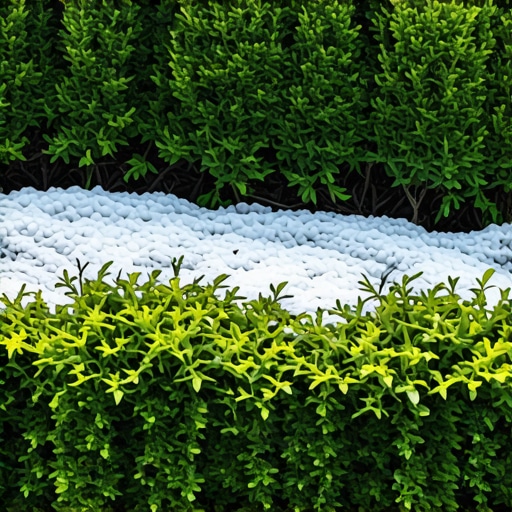
To stop powdery mildew in crowded spaces, you must implement selective thinning and crown reduction to ensure that every leaf has access to moving air. This involves removing the weakest interior stems of a plant to create a more open architecture, allowing wind to carry away excess moisture from the center of the shrub. [IMAGE_PLACEHOLDER] This is not just about looks; it is about survival. I see it constantly in garden design: people want instant privacy so they over-plant. Within three years, the plants are fighting for the same cubic foot of air. The result is a canopy so thick that sunlight cannot reach the interior, and the air stays dead. You must think like a civil engineer. If the air cannot flow through the landscape, the moisture will settle. This is especially true for hardscaping projects. A solid stone wall might look great, but if it is positioned perpendicular to the prevailing summer winds, it creates a dead zone where fungi will thrive. I suggest using permeable fencing or open-lattice hardscape elements to break the wind without stopping it entirely.
| Garden Condition | Airflow Speed | Disease Risk Level | Remediation Action |
|---|---|---|---|
| Dense Monoculture | < 0.2 mph | Extreme (Powdery Mildew) | Remove 30% of interior biomass |
| Layered Border | 0.5 – 1.2 mph | Moderate (Leaf Spot) | Increase spacing between species |
| Engineered Open Canopy | > 2.5 mph | Low (Healthy Transpiration) | Maintain structural pruning annually |
Will thin mulch prevent fungal growth?
Thin mulch layers alone do not prevent fungi, but properly aged organic mulch applied at a depth of two inches will suppress soil-borne spores while allowing the soil to breathe. Avoid “mulch volcanoes” around tree trunks, which trap moisture against the bark and invite root rot and wood-decaying fungi.
“Planting density must account for the mature width of the species to ensure adequate light and air penetration. Over-crowding is the number one cultural cause of landscape failure in residential settings.” – USDA Forest Service Standards
When you pile mulch high against a plant, you are creating a wick for moisture. This leads to hydrostatic pressure at the root flare, which is a death sentence for most ornamentals. The root flare must be exposed to the air. If it is buried, the bark rots, and the vascular system of the plant is severed. I have seen fifteen-year-old oaks die because a landscaper kept adding two inches of mulch every year without removing the old stuff. It is a slow suffocation. In 2026, we need to move toward a more scientific approach to ground cover. Use pine nuggets or large-format mulch that allows air to penetrate to the soil surface. Fine-grind mulch often mats together, creating a waterproof and airproof crust that is detrimental to soil microbiology.
The 2026 Garden Sanitation Checklist
Preparation for the 2026 season starts now with a focus on structural integrity and sanitation. Follow these steps to ensure your landscape is not a breeding ground for disease.
- Sanitize Pruning Tools: Use 70% isopropyl alcohol between every plant to prevent the spread of fungal spores.
- Inspect the Root Flare: Ensure the base of all trees and shrubs is visible and not buried by soil or mulch.
- Thin the Interior: Remove crossing or rubbing branches to increase the Reynolds number of airflow through the canopy.
- Monitor Grading: Ensure water is moving away from the foundation and not pooling in garden beds.
- Remove Debris: Clear away all fallen leaves from the previous season, as they harbor dormant spores.
The goal is a garden that breathes. If you walk into your yard on a humid July morning and the air feels heavy and still, you have work to do. You need to open up the sightlines. You need to create channels for the wind. This is where landscaping meets engineering. We are not just making things look pretty; we are managing a biological system. If you fail to respect the air, the fungi will reclaim the space. It is that simple. Don’t be the homeowner who spends thousands on fungicide when a few well-placed pruning cuts and a better fence design would have solved the problem for free. Focus on the soil, focus on the air, and the plants will take care of themselves. It is about the long game. It is about the 2026 season and beyond.