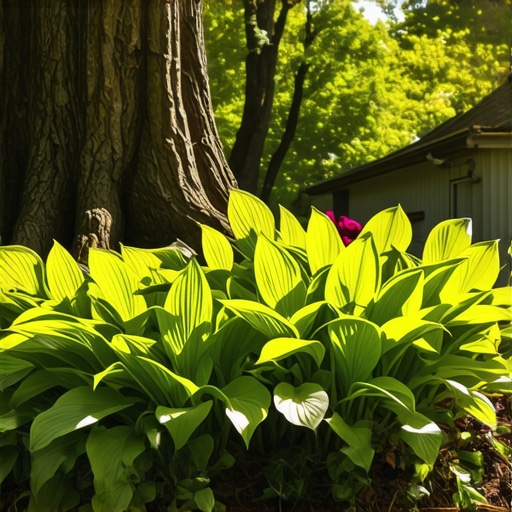
Best 2026 Shade Perennials for Under Oak Trees
The Planning Phase: Why 80% of Shade Gardening Happens Before the Dig
To successfully establish shade perennials under oak trees, you must first calculate the critical root zone and evaluate the soil moisture availability. Success depends on selecting drought-tolerant species that can compete with the massive evapotranspiration rates of a mature Quercus species. I always drill into my new crew members: if you don’t fix the soil grading first, every plant you put in the ground is just expensive compost. I once saw an apprentice drive a spade through a 3-inch lateral root of a White Oak just to fit a 1-gallon hosta. That is not just bad gardening; it is structural sabotage of a 100-year-old organism. We do not use power augers under oaks. We use hand trowels and we respect the buttress roots. If the soil is too compacted for a hand trowel, your tree is already dying. You need to address the soil oxygen levels before you worry about the aesthetics of the garden bed. Oaks are sensitive to changes in grade. Adding more than 2 inches of soil over an existing root system can lead to root suffocation and eventual decline. This is why we focus on small starts (plugs) rather than large nursery pots. Smaller holes mean less root damage.
“Soil compaction under the canopy of a mature tree is the primary cause of long-term physiological stress and eventual mortality.” – University of Illinois Extension
Why Planting Under Oaks Requires a Biological Strategy
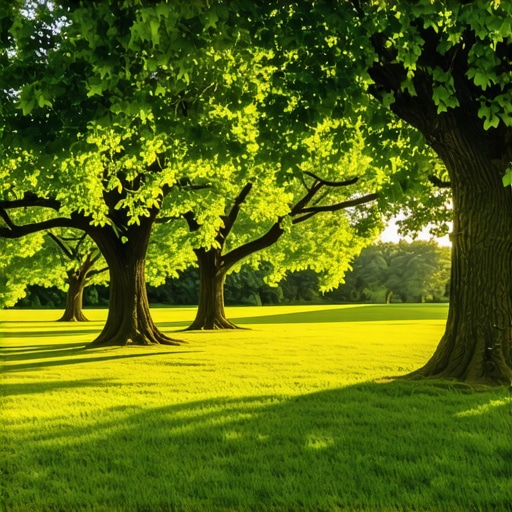
The micro-ecosystem beneath an oak tree is defined by dry shade, allelopathic tannins, and intense root competition for nitrogen and water. You must select shade-tolerant perennials that possess rhizomatous or stoloniferous root systems capable of navigating the existing tree root matrix. Oak trees are not just passive structures; they are active biological pumps. A large oak can move over 100 gallons of water a day. This creates a zone of permanent water deficit for understory plants. Furthermore, the leaf litter from oaks is high in tannins, which can slightly acidify the top layer of soil as it decomposes. This is a benefit for certain plants but a death sentence for others. You are not just building a garden; you are joining a pre-existing chemical war. Your job is to choose allies that can survive the barrage. We look for plants with waxy cuticles or fuzzy leaves, which are physical adaptations to low-water environments. If a plant has large, thin leaves, it will wilt the moment the oak starts its mid-day water draw.
How much distance should I keep from the oak trunk?
You should maintain a minimum distance of 6 to 10 feet from the trunk flare of an oak tree to prevent crown rot and protect the buttress roots. Planting directly against the trunk traps moisture and creates a fungal bridge for pathogens like Armillaria. Keep your density low in this inner circle. Ideally, use a light organic mulch like pine needles or shredded hardwood in this zone rather than living plants. As you move toward the drip line, you can increase plant density. This is where the highest concentration of fine feeder roots exists, so even here, shallow planting is mandatory. Never use a rototiller. You will strip the tree of its ability to uptake nutrients.
| Plant Species | Root Structure | Drought Tolerance | Growth Habit |
|---|---|---|---|
| Epimedium (Barrenwort) | Rhizomatous | Extreme | Clumping Groundcover |
| Helleborus (Lenten Rose) | Deep Fibrous | High | Evergreen Mound |
| Carex pensylvanica | Stoloniferous | High | Grass-like Turf |
| Polystichum acrostichoides | Crown-based | Medium | Upright Fronds |
| Geranium macrorrhizum | Thick Rhizome | Extreme | Spreading Groundcover |
The 2026 Material Breakdown: Defending Quality Investments
The nursery stock you select for 2026 must prioritize root-to-shoot ratios over top-growth height to ensure survival in resource-depleted soil. Avoid big-box store plants that have been pushed with high-nitrogen fertilizers; these plants have soft tissue that cannot handle the hydrostatic stress of life under an oak. When you buy a plant, tip it out of the pot. If you see a solid wall of white roots circling the plastic, put it back. That plant is root-bound and will struggle to break out into the heavy, un-amended soil of an oak canopy. You want plants that are slightly under-developed in the pot. They are hungry. They are ready to hunt for nutrients in the soil. For 2026, we are seeing a shift toward native cultivars (nativars) that have been selected for increased drought resistance. Specifically, Heuchera villosa hybrids are the workhorses of the shade garden. Unlike the older, finicky cultivars, the villosa lineage handles humidity and dry spells without melting into a pile of grey mold. We also use Epimedium. It is the only plant I know that can grow in what is basically concrete and still produce delicate flowers.
“A retaining wall doesn’t fail because of the stone; it fails because of the water trapped behind it.” – Hardscape Engineering Axiom
How to install perennials without damaging oak roots?
Use a sharp hand trowel to scout for small openings between feeder roots and avoid using any tool that requires two hands to operate. If you hit a root thicker than a pencil, move your planting hole over 4 inches. It is better to have an irregular planting pattern than a compromised tree. Fill the hole with the native soil you removed, perhaps mixed with a tiny handful of compost. Do not over-amend. If you create a pocket of rich, fluffy potting soil, the plant roots will never want to leave that hole, and the tree roots will grow into it and choke the perennial within two seasons. We call this the “pot-in-pot” trap. It kills plants every time.
The Installation Process: Sensory Checks and Execution
During installation, the tamping pressure applied to the soil should be firm enough to remove air pockets but not so heavy as to crush the soil macropores. You are looking for a firm resistance. The soil should not feel like a sponge; it should feel like a well-set paver base. Once the plants are in, do not use a standard sprinkler. Use drip irrigation with emitters placed specifically at the base of each new perennial. This delivers water to the target without encouraging fungal leaf spot on the oak or wasting water on the tree’s thick bark. The first year is the “settling in” period. You will think the plants are doing nothing. They are actually growing roots. In the second year, they creep. In the third year, they leap. If you try to force them to leap in year one with heavy fertilizer, you will burn the mycorrhizal fungi that the oak depends on for survival. Don’t be a hack. Patience is a horticultural requirement.
- Step 1: Clear the leaf litter by hand to expose the soil surface.
- Step 2: Identify the main structural roots and mark them with chalk or flags.
- Step 3: Hand-dig small 4-inch diameter holes for plugs.
- Step 4: Backfill with native soil and water in immediately.
- Step 5: Apply 1 inch of aged arborist wood chips as mulch.
- Step 6: Set a timer for deep, infrequent watering cycles.
The Settling In Period: Maintenance and Long-Term Success
The nitrogen cycle in a shade garden is slow, so avoid the temptation to over-fertilize during the first growing season. You will rot the crowns. Instead, focus on soil pH monitoring. Oaks tend to keep the soil on the acidic side, which is fine for Christmas Ferns but might require a light application of pelletized lime if you are trying to grow certain Hellebores. By year two, the perennials should have established enough of a root system to survive on natural rainfall alone, except in extreme drought. Watch for mulch volcanoes. If I see mulch piled up against the trunk of your tree, I know you don’t know what you’re doing. It traps moisture against the bark, leads to girdling roots, and kills the tree. Keep the mulch 6 inches away from the trunk. This is non-negotiable. Real landscaping is about stewardship, not just making a pretty picture for a brochure. Your 2026 garden should look like it has been there for a decade. That is the mark of a master horticulturist.”