Repairing Frost Heave in Your 2026 Walkway
The Brutal Reality of Frost Heave in Your Hardscape
To repair frost heave in your 2026 walkway, you must excavate the failed area to a depth of at least 12 inches, replace contaminated soil with open-graded crushed stone, and install a non-woven geotextile fabric to prevent future capillary action. Frost heave is not a cosmetic issue; it is a structural failure caused by the expansion of water in the subgrade during freeze-thaw cycles.
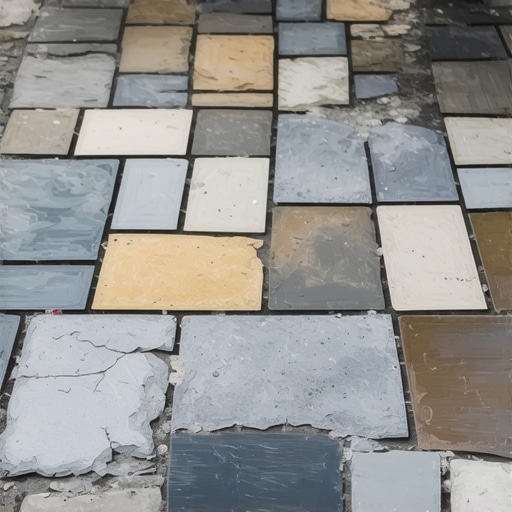
I recently got called out to tear up a $30,000 patio that was sinking and buckling like a topographical map of the Himalayas. The previous contractor had used a ‘modified’ stone base but skimped on the fines and, more importantly, ignored the drainage. They didn’t understand that when water gets trapped in a dense-graded base that can’t drain, it turns into an ice lens. That lens expands by 9% in volume, exerting upwards of 30,000 PSI of pressure. No paver or stone on earth can withstand that. It is basic civil engineering, yet most ‘landscape pros’ treat it like it’s a mystery. They blame the weather. I blame the base.
“A retaining wall or walkway doesn’t fail because of the stone; it fails because of the water trapped behind or beneath it.” – Hardscape Engineering Axiom (ICPI Standards)
The Forensic Diagnosis: Why Your Walkway Jumped
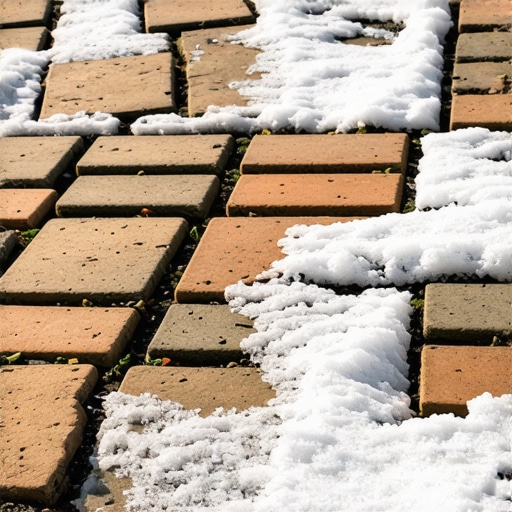
Frost heave occurs when three specific conditions are met: freezing temperatures, a supply of water, and frost-susceptible soil (usually silts or clays). If you see a paver sticking up an inch higher than its neighbor, you are looking at a localized ice lens. The silt in your soil acts like a wick, drawing moisture up from the water table through capillary action. When that moisture hits the frost line, it freezes. It doesn’t just freeze in place; it grows. It pulls more water up, making the ice thicker. This is what lifts your walkway. Don’t just hammer it down. It won’t work.
| Material Layer | Function in Frost Prevention | Compaction Target (Proctor) |
|---|---|---|
| Sub-base (Native) | Load bearing; must be sloped | 95% Standard Proctor |
| #57 Crushed Stone | Provides 40% void space for drainage | N/A (Self-consolidating) |
| Non-woven Geotextile | Separates fines from clean stone | N/A |
| Polymeric Sand | Locks joints; resists water ingress | N/A |
How deep should a walkway base be to prevent frost heave?
In most northern climates, a standard walkway requires a minimum base depth of 6 to 8 inches of compacted aggregate, but for 2026 standards, we recommend 12 inches if you are dealing with heavy clay soil. This depth ensures that the area where water might collect is well below the primary freeze zone and can drain away into the sub-base before it has a chance to expand.
The Remediation Process: A Step-by-Step Recovery
- Excavation: Remove the affected pavers and dig out the old base. You must go 4 inches deeper than the original install.
- Soil Evaluation: If you see ‘muck’ or gray-streaked clay, you have an anaerobic drainage issue. It must be removed.
- Fabric Laydown: Use a 4-ounce non-woven geotextile. This isn’t weed fabric. It’s an industrial separator.
- The Stone Logic: Use 3/4-inch clean crushed stone (#57s). Avoid ‘Crusher Run’ or DGA in frost-prone spots because the ‘fines’ in those mixes hold water. Clean stone has void spaces. Water can freeze in those spaces without moving the stone.
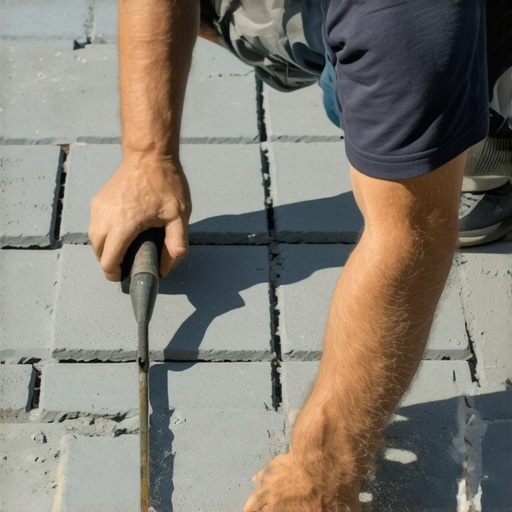
- Compaction: Use a plate compactor with at least 4,000 lbs of centrifugal force. One pass isn’t enough. Four passes are the minimum.
Can you fix frost heave without digging everything up?
No. Attempting to ‘reset’ pavers by just adding more sand is a fool’s errand that will fail by next February. Without addressing the subgrade moisture and the capillary rise of water, the physics of the freeze-thaw cycle will simply repeat the heave. You must remove the frost-susceptible material and replace it with a well-draining aggregate. Do it once. Do it right.
“Effective sub-surface drainage is the primary defense against frost-related displacement in modular pavement systems.” – USDA Agricultural Engineering Manual
When you are relaying the pavers, check your pitch. Every walkway needs a 2% slope. That is a 1/4-inch drop for every foot of width. If your walkway is flat, you are just building a long, skinny pond that will freeze and heave. I see it every day. Contractors forget the transit at the shop and ‘eye-ball’ it. The result? A buckled mess that ruins the curb appeal and creates a trip hazard. Use a laser level. Don’t be a hack. Compaction is king. Drainage is queen. Everything else is just decoration.