
Fixing 2026 Gaps in Your Privacy Hedge
Why Privacy Hedge Gaps Appear by 2026
Gaps typically form due to light starvation, root competition, and nutrient deficiencies caused by improper spacing and species selection. By 2026, many fast-growing hedges installed in 2023 or 2024 will hit a resource ceiling, leading to lower-branch die-back and structural thinning that compromises privacy screening and garden design.
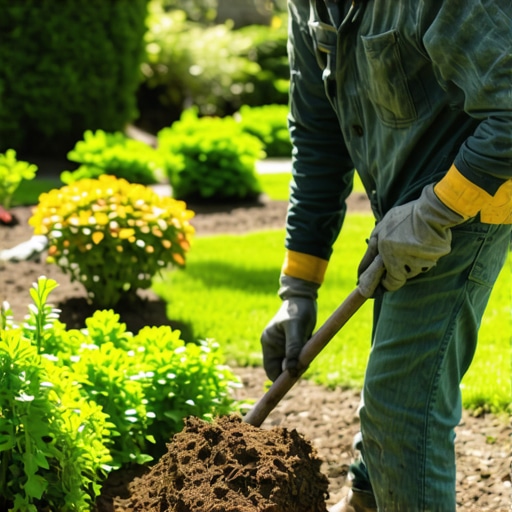
I always drill into my new crew members: if you don’t fix the soil grading and the subsurface drainage first, every plant you put in the ground is just expensive compost. I have seen three-year-old Arborvitae screens worth ten thousand dollars turn into brown skeletons because some hack didn’t check the percolation rate of the clay subsoil. By 2026, the gaps in your hedge are not just aesthetic failures; they are biological warnings that your site prep was negligent. When a homeowner calls me to fix a ‘leaky’ hedge, the first thing I do is grab a shovel and look at the root flare. Nine times out of ten, they are planted four inches too deep, suffocating the rhizosphere. This leads to a slow decline that manifests exactly three years after installation, right when the warranty expires. We are going to fix that by looking at the engineering behind the biology.
“Evergreen hedges fail when internal shading causes the plant to shed lower needles to conserve energy, a process often accelerated by poor nitrogen availability in compacted soils.” – Penn State Agricultural Extension
The Science of Spacing and Phototropism
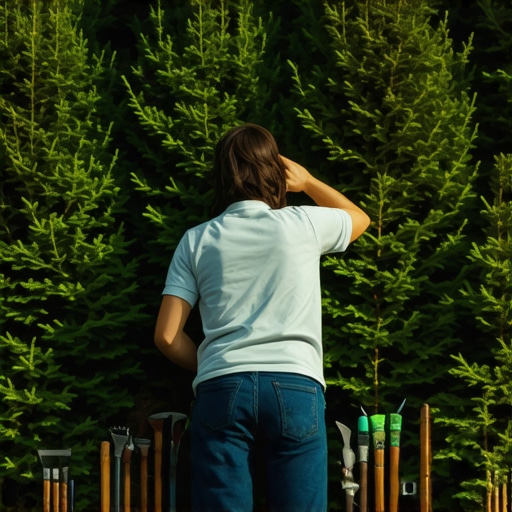
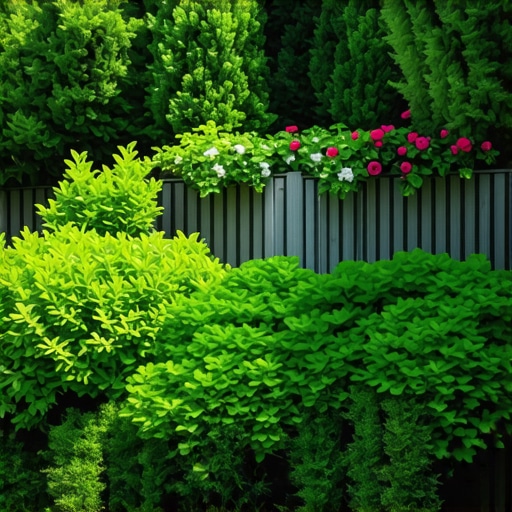
Proper spacing prevents intraspecific competition by ensuring that each individual plant has adequate access to photosynthetically active radiation across its entire vertical surface. When you jam Thuja ‘Green Giant’ plants three feet apart to get an instant screen, you are essentially signing a death warrant for the lower three feet of foliage by 2026. As the canopy closes, the lower branches are shaded out. The plant, sensing a negative energy return on those leaves, undergoes abscission. You end up with a ‘lollipop’ effect: green on top, bare sticks on the bottom. To fix this, you must understand the mature width of your species. If a tree matures to 8 feet wide, planting on 5-foot centers is the absolute minimum for long-term health. [IMAGE_PLACEHOLDER_1]
How deep should I plant a privacy hedge?
You must plant the tree so the root flare—the point where the trunk widens at the base—is 1 to 2 inches above the surrounding soil grade. Planting deeper than this creates anaerobic conditions that rot the bark and invite Phytophthora root rot. Don’t bury the flare.
Soil Engineering: Beyond the Big-Box Bag
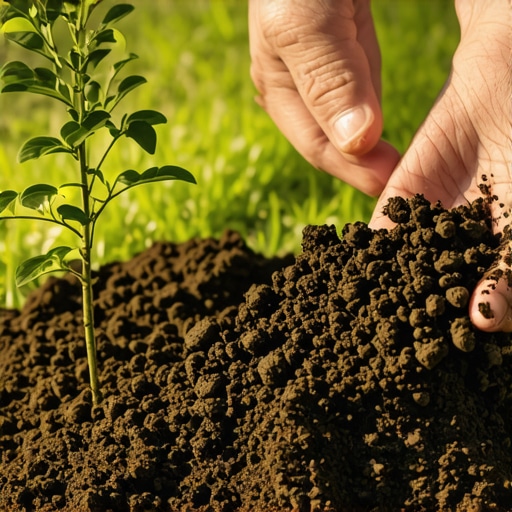
Successful landscaping requires managing the Cation Exchange Capacity (CEC) and soil structure to ensure that nutrients are actually bioavailable to the hedge roots. Most new construction sites have compacted subsoil with a bulk density higher than 1.6 g/cm³, which is impenetrable for fine feeder roots. If you are staring at gaps in 2026, your soil is likely a dead zone. You need to introduce mycorrhizal fungi and organic matter, but skip the cheap ‘topsoil’ which is often just screened construction debris. You need a mix of 70% native soil and 30% high-quality compost to maintain the capillary action of the water table. If you change the soil texture too drastically in the planting hole, you create a ‘bathtub effect’ where water sits in the hole and drowns the plant.
| Species | 2026 Growth Goal | Soil Preference | Primary Threat |
|---|---|---|---|
| Thuja ‘Green Giant’ | 36-48″ / Year | Loamy/Well-drained | Bagworms / Crowding |
| Ilex Nellie Stevens | 12-24″ / Year | Acidic (pH 5.5-6.0) | Scale Insects |
| Prunus laurocerasus | 12-24″ / Year | Partial Shade | Shot-hole Fungus |
| Juniperus virginiana | 12-18″ / Year | Alkaline/Rocky | Cedar-Apple Rust |
What is the best fertilizer for privacy trees?
Use a slow-release granular fertilizer with a 4-1-2 NPK ratio, such as a 12-4-8 blend, specifically formulated with micronutrients like iron and magnesium. Avoid high-salt quick-release fertilizers that burn the mycorrhizal networks and cause 2026 needle drop.
The Hardscape Connection: Drainage and Retaining Walls
Integrating hardscaping with a privacy hedge requires managing hydrostatic pressure and ensuring that runoff does not pool at the base of the root zone. If your hedge is planted behind a retaining wall, you must have a functional French drain system with 1-inch clean crushed stone and a non-woven geotextile fabric. Without this, the soil stays saturated, the roots die from lack of oxygen, and you get the dreaded ‘yellowing’ that leads to 2026 gaps. Water must move through the soil, not sit in it. I have seen million-dollar garden designs ruined because the contractor didn’t account for the 2% slope needed to move surface water away from the hedge line.
“A retaining wall doesn’t fail because of the stone; it fails because of the water trapped behind it, which also happens to be the primary killer of the plants sitting above it.” – Hardscape Engineering Axiom
Remediation Checklist for 2026 Gaps
- Expose the root flare: Remove excess mulch and soil until the first lateral root is visible.
- Core aeration: Use a plug aerator 3 feet out from the drip line to reduce soil compaction.
- Vertical Mulching: Drill 2-inch holes 12 inches deep and fill with perlite and compost to get oxygen to the roots.
- Corrective Pruning: Thin the top 20% of the canopy to allow light to hit the inner and lower branches.
- Drip Irrigation Audit: Ensure emitters are delivering 5-10 gallons per inch of trunk diameter weekly.
Irrigation Logic: Deep Watering vs. Surface Misting
Surface watering with a standard oscillating sprinkler is a waste of resources and a primary cause of fungal pathogens like Cercospora needle blight. To fix gaps, you need to force roots to grow deep by using drip irrigation. By 2026, the root system should extend well beyond the original planting hole. Place your drip lines at the drip line of the foliage, not against the trunk. You want to apply 1 inch of water per week in a single, deep soaking. This prevents the shallow root development that makes hedges susceptible to winter burn and drought stress. It will rot if you keep the trunk wet. It will thrive if you keep the deep roots hydrated. Don’t skip the 2-inch layer of arborist wood chips to regulate soil temperature, but never build a ‘mulch volcano’ against the bark. It is a death sentence.
![Building a Hidden Trash Can Screen [DIY 2026]](https://lawnmajesty.com/wp-content/uploads/2026/09/Building-a-Hidden-Trash-Can-Screen-DIY-2026.jpeg)