Best Low-Light Shrubs for 2026 Privacy Fences
The Reality of Shaded Privacy Screens
Selecting shade-tolerant privacy shrubs involves more than picking a green plant; it requires an understanding of foliar density, stomata efficiency, and root-to-shoot ratios in low-light environments. Most residential yards suffer from ‘structural shade’ caused by fences or buildings, which restricts photosynthetically active radiation (PAR) to less than 4 hours daily. For a privacy screen to function in 2026, you must prioritize species that maximize chlorophyll B production to survive in the understory. I always drill into my new crew members: if you don’t fix the soil grading and drainage first, every plant you put in the ground is just expensive compost. I have seen too many $10,000 installs fail because the contractor ignored the bulk density of the soil near a new fence line. Heavy equipment used to install the fence often leaves the soil at a PSI that roots cannot penetrate. We test every site with a penetrometer. If it reads over 300 PSI, we don’t plant. We excavate. Shade doesn’t just mean less light; it means slower evaporation and higher fungal pressure. You need a plant that can handle ‘wet feet’ or a site design that moves water away from the root flare.
“Planting depth is the single most critical factor in long-term woody plant survival; burying the root flare leads to anaerobic conditions and secondary pathogen infection.” – Arboriculture Standard ANSI A300
Top Shade-Resilient Shrub Species for 2026
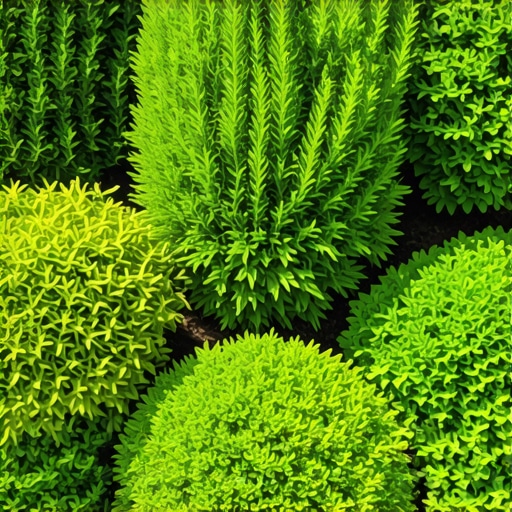
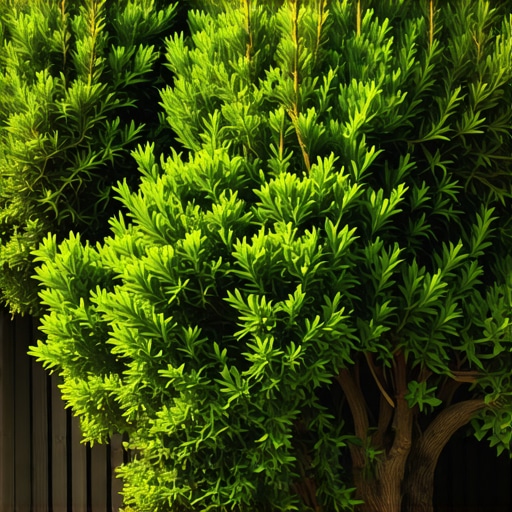
The most effective privacy shrubs for shade in 2026 are Taxus x media ‘Hicksii’, Prunus laurocerasus, and Ilex crenata, which offer high opacity even with limited solar gain. These selections are chosen for their ability to maintain a tight branching habit without ‘stretching’ toward the light, a common failure in sun-loving species like Arborvitae when planted in the dark.
| Species | Max Height | Growth Rate | USDA Zone | Light Requirement |
|---|---|---|---|---|
| Hicks Yew | 10-12 ft | Slow | 4-7 | Deep Shade to Sun |
| Skip Laurel | 10-15 ft | Medium-Fast | 6-9 | Part Shade |
| Sky Pointer Holly | 8-10 ft | Medium | 6-9 | Part Shade |
| Leatherleaf Viburnum | 10-15 ft | Fast | 4-8 | Full Shade to Sun |
How many shrubs do I need for a 50-foot fence?
To calculate the number of shrubs, divide the total linear footage by the mature width of the selected species, minus 20% for foliage overlap. For a 50-foot run using Skip Laurels (5-foot mature width), you would space them at 4 feet on center, requiring 12 to 13 plants. Don’t crowd them. Over-planting leads to powdery mildew and scale insects due to poor airflow. It will rot. You need space for air to move. Many ‘hacks’ will tell you to plant them touching for ‘instant privacy.’ This is a death sentence for the interior foliage. In three years, the bottom 4 feet of your screen will be bare sticks because no light or air reached the center. We use a staggered double-row if immediate opacity is required, which maintains plant health while blocking the neighbor’s view.
What is the best fertilizer for privacy shrubs in shade?
Shade shrubs require a low-nitrogen fertilizer with an NPK ratio of roughly 4-12-12 or 5-10-10 to prevent succulent growth that is susceptible to aphid infestations and frost damage. In low light, the plant’s vascular system cannot support rapid, nitrogen-forced limb extension.
“Shade-grown plants require 30-50% less nitrogen than those in full sun to prevent succulent growth that attracts pests.” – University Extension Soil Management Guide
Focus on mycorrhizal inoculants. These fungi form a symbiotic relationship with the root system, extending the plant’s reach for phosphorus and micronutrients. We apply a humic acid drench at installation to jumpstart soil microbiology. It works. Don’t use those cheap spikes from the big-box store. They create ‘hot spots’ of salt that burn feeder roots.
The Ground-Up Installation Protocol
The success of a 2026 privacy screen starts with site physics, specifically managing hydrostatic pressure and soil compaction around the fence footings. When a fence is installed, the concrete pucks around the posts can interfere with lateral root spread. We offset our planting line at least 36 inches from any solid panel fence to allow for thermal regulation and air circulation.
- Soil pH Testing: Use a calibrated meter to ensure a range of 6.0 to 7.0 for most evergreens.
- Hole Geometry: Dig the hole 3 times wider than the root ball but no deeper.
- Root Flare Visibility: The ‘flare’ (where the trunk widens at the base) must be 1 inch above the finish grade.
- Scarification: Use a 3-pound sledge and a spade to break up the ‘glaze’ on the sides of the hole.
- Initial Saturation: Apply 10 gallons of water per inch of trunk diameter immediately after backfilling.
The tamper should literally bounce off the compacted base if you are doing hardscape, but for plants, we want macropores. If you stomp the dirt down with your boots, you are killing the plant. You are squeezing out the oxygen. Roots need to breathe. We use water to settle the soil, not our feet. It’s more precise. If the plant settles too deep after watering, pull it up. A buried flare is a slow death. It might take three years, but the bark necrosis will eventually girdle the tree. Avoid mulch volcanoes. Mulch should never touch the bark. It holds moisture against the trunk and invites voles and fungal cankers. Keep mulch 3 inches away from the stem.
Maintenance and Long-Term Foliar Health
In the first year, irrigation management is the difference between a screen and a row of brown sticks. Use a drip-line system with 0.9 GPH emitters spaced every 12 inches. Do not use overhead oscillating sprinklers; wetting the foliage in a shaded environment is an invitation for Cercospora leaf spot. The water needs to hit the soil, not the leaves. During 2026’s projected weather patterns, we recommend deep, infrequent watering. Once a week for 4 hours is better than 15 minutes every day. You want to force the roots to chase the moisture down into the subsoil. This builds drought resistance. Monitor for deer pressure. In shaded corridors, deer use privacy screens as ‘browsing highways.’ Use a systemic repellent containing putrescent egg solids. It smells, but it works. Don’t skip the fall application. That is when the most damage occurs. If you follow these engineering steps, your screen will be a functional biological barrier for decades.