The trick to getting dark green grass in July
The Chemical Nightmare: A Lesson in Nitrogen Toxicity
A homeowner called me in a panic last July after they completely torched their front lawn by applying a high-nitrogen ‘turf builder’ during a heatwave. They wanted that deep emerald look they saw on Instagram, but instead, they got a scorched, straw-colored disaster that looked like a toasted marshmallow. When I arrived, the soil temperature was 92 degrees Fahrenheit, and the salt index of the synthetic fertilizer had literally sucked the moisture out of the grass blades through osmotic stress. This wasn’t a lack of water; it was a chemical burn caused by an amateur mistake. I spent the next three weeks trying to flush the soil and rebalance the microbiology before the crown of the plants completely died. It was a $4,000 mistake that could have been avoided with a $20 soil test. If you want dark green grass in July, you have to stop thinking like a weekend warrior and start thinking like an agronomist.
Why is my grass turning brown despite watering?
Dark green grass in July is achieved by managing plant respiration, soil microbiology, and micronutrient levels—specifically iron—rather than pushing growth with high-nitrogen fertilizers. When temperatures exceed 85 degrees, cool-season grasses enter a semi-dormant state to conserve energy; forcing growth during this period via nitrogen creates weak, succulent tissue that is highly susceptible to Pythium blight and Brown Patch.
“A lawn does not need more nitrogen when it is heat-stressed; it needs the metabolic support to maintain chlorophyll density without the energy cost of rapid cell division.” – Agronomy Manual for Professional Turf Managers
The Iron Secret: Green Without Growth
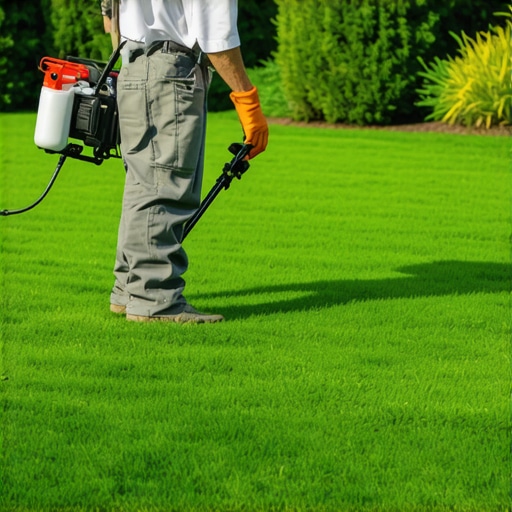
Most homeowners reach for nitrogen (the first number on the fertilizer bag) when they want green. In July, that is a fatal error. Nitrogen forces the plant to produce new blades. New growth requires massive amounts of water and energy. In the heat of summer, the plant’s roots are already struggling to keep up with evapotranspiration. Instead of nitrogen, the pros use Chelated Iron (Fe). Iron is a key component of the chlorophyll molecule, but it does not trigger the same metabolic growth spike as nitrogen. By applying a foliar iron spray, you can achieve a deep, blue-green hue without forcing the plant to grow an inch. This keeps the plant’s energy focused on root survival rather than blade extension.
How much water does a lawn really need in July?
The average lawn requires exactly 1 inch of water per week, delivered in a single or double deep-soaking session rather than daily light misting. Daily watering keeps the top half-inch of soil wet, which encourages shallow root systems and fungal growth. You want to force those roots to chase the water down 6 to 8 inches into the soil profile. This is where the engineering comes in. You should measure your sprinkler output using ‘tuna cans’ to ensure you are hitting that 1-inch mark. If you have heavy clay soil, you may need to break this into two half-inch sessions to avoid runoff, but never water every day. It will rot the crown of the plant. Don’t skip the measurement step.
The Role of Soil pH and Cation Exchange Capacity
If your soil pH is above 7.2 or below 6.2, your grass cannot physically absorb the nutrients you are giving it. It’s like trying to drink through a straw that’s been pinched shut. In July, the Cation Exchange Capacity (CEC) of your soil determines how well it holds onto water and minerals. Sandy soils have a low CEC and lose nutrients fast; heavy clays have a high CEC but often suffer from poor oxygen exchange. I always tell my crew: we aren’t growing grass, we are managing soil biology. If the soil is compacted, the roots can’t breathe. This leads to anaerobic conditions that kill off the beneficial mycorrhizal fungi the grass needs to survive the summer heat.
| Treatment Type | Action in July | Scientific Reason |
|---|---|---|
| High-Nitrogen (46-0-0) | AVOID | Causes desiccation and salt burn in heat. |
| Chelated Iron | RECOMMENDED | Increases chlorophyll without growth stress. |
| Potassium (K) | RECOMMENDED | Strengthens cell walls and regulates stomata. |
| Heavy Aeration | AVOID | Increases soil temperature and moisture loss. |
What is the best fertilizer for green grass in summer?
The best summer fertilizer is a slow-release organic base with a high potassium (K) content and supplemental iron. Look for a ratio like 5-0-20. The potassium helps the plant regulate its stomatal conductance—basically, it helps the grass close its ‘pores’ to stop losing water. Avoid any synthetic fast-release products that use urea or ammonium nitrate. These are salts. In 90-degree weather, salts are poison to your turf’s root system. You want the nutrients to trickle into the soil, not flood it.
“During periods of high heat, cool-season turfgrasses like Kentucky Bluegrass and Tall Fescue shift their energy from root development to survival, making the management of soil moisture and canopy temperature critical.” – Penn State Agricultural Extension
How much modified gravel do I need for a patio base?
While this article focuses on turf, remember that hardscaping affects your lawn’s health. If you are building a patio near your grass, you need a minimum of 6 inches of compacted 21A or 411 modified gravel. Why? Because poor drainage from a patio will drown the adjacent grass. The water has to go somewhere. If your patio isn’t pitched at 1/4 inch per foot away from the lawn, you will have a muddy, fungal mess where the stone meets the sod. Proper landscaping requires an integrated approach to civil engineering and biology.
The July Green Checklist
- Set mower height to 4 inches to shade the soil surface.
- Check for 1 inch of water per week using a rain gauge.
- Apply 2-4 ounces of chelated iron per 1,000 square feet.
- Sharpen mower blades; dull blades tear the grass, increasing water loss.
- Avoid any herbicide applications when temps are above 85 degrees.
- Check for ‘grub’ activity by pulling on brown patches to see if they lift like carpet.
The Engineering of the Mow
One of the biggest mistakes hacks make is ‘scalping’ the lawn. They think if they cut it short, they don’t have to come back as often. In July, that’s a death sentence. Every fraction of an inch of blade height provides thermal mass that shades the soil. If the soil stays cooler, the roots stay alive. I mandate a 4-inch minimum height for all my clients in the summer. It might not look like a golf course putting green, but it will be the only green yard on the block when the drought hits. The physics are simple: more leaf surface equals more photosynthesis with less stress. It will survive. Don’t touch the height adjustment until September.