Stop 2026 Lawn Grub Attacks with Organic Milky Spore Hacks
The Anatomy of a Dying Lawn: Identifying Early Grub Damage
Lawn grub damage presents as irregular brown patches of turf that can be pulled back easily like a piece of loose carpet because the root system has been completely severed at the soil line. To stop 2026 lawn grub attacks, you must identify the presence of Japanese Beetle larvae (Popillia japonica) during their peak feeding cycles in late summer or early spring before the soil temperatures drop below 50 degrees Fahrenheit. If you can lift the sod and see more than five to ten white, C-shaped larvae per square foot, your lawn care strategy has already failed.
A homeowner called me in a panic last season after they completely torched their front lawn by applying three different brands of synthetic ’24-hour’ grub killers in a single week. The lawn didn’t die from the grubs alone; it died from a chemical nightmare that altered the soil pH so drastically that the remaining grass blades literally carbonized. They were chasing a quick fix for a biological problem. This is where most people fail in garden design and landscaping. They treat the symptom, not the soil. Grubs are simply the byproduct of a landscape that lacks biological checks and balances. When you rely solely on synthetic neurotoxins, you kill the beneficial predatory mites and nematodes that naturally keep beetle populations in check. You create a vacuum, and nature always fills a vacuum with something you do not want.
“The milky disease organism, Paenibacillus popilliae, is a bacterium that occurs naturally in the soil and is specifically lethal to the larvae of the Japanese beetle.” – USDA Agricultural Research Service Manual
How do I know if I have grubs or just drought?
Drought-stressed turf will usually recover its elasticity and color within 24 hours of deep watering, whereas grub-damaged turf remains brown and detached from the soil regardless of moisture levels. To confirm a grub infestation, use a spade to cut a one-square-foot section of turf and peel it back to inspect the top three inches of soil. Look for the white, translucent bodies and tan heads of the larvae. If the grass comes up with zero resistance, the grubs have already consumed the primary root mass. It is too late for a ‘hack’ at that point; you are looking at a full lawn care renovation.
The Science of Organic Milky Spore Application
Organic Milky Spore (Paenibacillus popilliae) works by infecting the grubs as they feed, causing a lethal blood disease that turns their internal fluids a milky white color before they die and release billions of new spores back into the soil. This is not a temporary chemical barrier. It is a self-perpetuating biological warfare agent that can protect a property for up to 15 to 20 years if established correctly. The key is the ‘inoculation’ phase. You aren’t just spreading powder; you are seeding a living colony into your landscaping. Most ‘mow-and-blow’ contractors don’t understand this because it doesn’t offer the instant gratification of a chemical burn.
| Treatment Type | Efficacy Duration | Environmental Impact | Target Pest |
|---|---|---|---|
| Chemical (Imidacloprid) | 3-4 Months | High (Kills Bees) | Broad Spectrum |
| Milky Spore Powder | 15-20 Years | Zero (Host Specific) | Japanese Beetle Larvae |
| Beneficial Nematodes | 1 Season | Low | All Soil Larvae |
To maximize the efficacy of Milky Spore for the 2026 season, you must apply it when the grubs are actively feeding near the surface. This typically happens when soil moisture is consistent. If the soil is bone dry, the grubs dive deep, often 8 to 12 inches down, to find moisture. Your spores will sit on the surface doing nothing. You need to time your application with a rain event or a heavy irrigation cycle of at least 0.5 inches of water. Don’t skip this. If the powder stays on the grass blades, the UV rays from the sun will eventually degrade the bacteria before it reaches the target zone.
“Successful establishment of Paenibacillus popilliae requires a dense population of host larvae to act as a vector for spore multiplication within the soil profile.” – Penn State Extension Agronomy Guide
When is the best time to apply milky spore in 2026?
The optimal window for applying Milky Spore is between July and late September when the new generation of grubs is small and feeding voraciously near the thatch layer. Applying in the dead of winter is a waste of money because the larvae are dormant and the bacteria cannot infect a non-feeding host. For the best results in 2026, plan for three applications: one in spring, one in summer, and one in fall for two consecutive years to ensure the spore count in the soil reaches the necessary density to trigger a localized epidemic among the beetle population.
Professional Hardscaping and Drainage Considerations
Grub infestations are often worse in areas with poor drainage or excessive soil compaction because the moisture levels stay high enough to keep the eggs from desicating. When we design a high-end hardscaping project, we look at how the water moves across the turf. If you have a low spot near a retaining wall where water pools, you are essentially building a nursery for Japanese beetles. Proper soil grading is not just about keeping your basement dry; it is about managing the micro-climate of your lawn. A compacted lawn with a 1/2 inch thatch layer is a fortress for grubs. We use core aeration to break that compaction, allowing the Milky Spore to penetrate the root zone where it actually belongs.
- Step 1: Test Soil pH. Ensure your soil is between 6.0 and 7.0; extreme acidity can inhibit bacterial growth.
- Step 2: Core Aeration. Remove 3-inch plugs of soil to provide a direct path for the spores to reach the root zone.
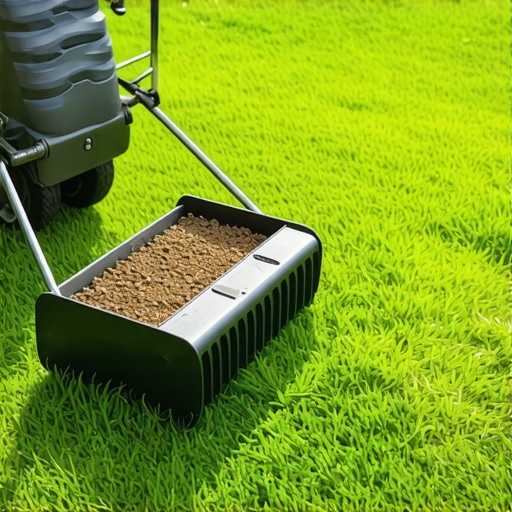
- Step 3: Spot Application. Use a dispenser tube to apply one teaspoon of powder every four feet in a grid pattern.
- Step 4: Immediate Irrigation. Lightly water for 15 minutes to wash the powder off the grass and into the soil.
- Step 5: Cease Chemical Use. Stop using synthetic fungicides, as they can sometimes interfere with the natural microbial balance required for the spore to thrive.
Stop looking for ‘landscape design’ tips that focus on pretty flowers while your foundation is being eaten from underneath. A lawn is a living system. If you ignore the subsurface biology, you are just decorating a corpse. Milky Spore isn’t a quick fix. It is a long-term engineering solution for your property. It requires patience. It takes time to build up the CFU (Colony Forming Units) per gram of soil. But once it is there, you can stop the cycle of buying bags of poison every spring. Your soil becomes a hostile environment for pests, and a thriving home for the roots that keep your landscape structural and sound.