Why you should stop bagging your grass clippings
Why Bagging Your Grass is Starving Your Soil
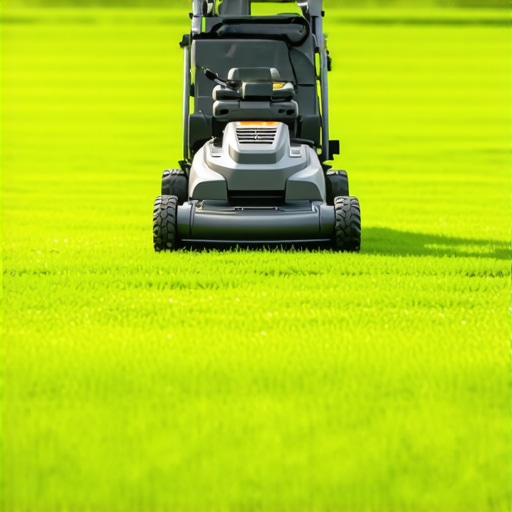
To stop bagging your grass clippings is to implement a closed-loop nutrient cycle that returns up to 25% of a lawn’s required nitrogen back to the soil profile. This practice, known as grasscycling, improves soil microbiology, increases organic matter, and reduces the need for synthetic fertilizers by utilizing the natural decomposition of cellulose and lignin within the turf canopy.
I see it every Saturday morning: the neighborhood is lined with plastic bags filled with green gold, destined for a landfill. To a veteran horticulturist, this is painful to watch. You are literally paying for fertilizer, applying it, and then paying a waste management company to haul it away. It makes zero sense from a garden design or landscaping perspective. The reality of lawn care isn’t about the aesthetic of a vacuumed carpet; it’s about managing a biological system that requires constant carbon and nitrogen inputs to survive the stresses of heat, foot traffic, and pathogens.
The Chemical Nightmare: A Case Study in Soil Burn
A homeowner called me in a panic last July after they completely torched their front lawn. They had been bagging their clippings for five years straight, effectively mining every last bit of nitrogen and potassium out of the dirt. To compensate for the pale, stunted growth, they dumped a massive dose of high-nitrogen synthetic weed-and-feed during a 95-degree heatwave. Without the buffering organic matter that clippings provide, the soil pH plummeted and the salts in the fertilizer desiccated the root zones. The lawn didn’t just turn brown; it turned grey. It was dead. We had to core aerate to a depth of 4 inches and top-dress with a compost tea just to restart the microbial activity. This could have been avoided if they had simply let their mower do its job.
“Grass clippings contain approximately 4 percent nitrogen, 0.5 percent phosphorus, and 2 percent potassium. Returning clippings to the lawn is the equivalent of one or two fertilizer applications per year.” – University of Missouri Extension
The Microscopic Reality of Grasscycling
When you leave clippings on the lawn, you aren’t just leaving debris. You are feeding earthworms and microorganisms like bacteria and fungi. These organisms break down the grass blades, which are 80% to 85% water, almost immediately. Within weeks, the NPK (Nitrogen, Phosphorus, Potassium) ratios are absorbed back into the root zone. This process increases the cation exchange capacity (CEC) of your soil, meaning your soil becomes better at holding onto nutrients instead of letting them leach into the groundwater.
How much nitrogen is in grass clippings?
Grass clippings provide roughly one pound of nitrogen per 1,000 square feet per season. For a standard 5,000-square-foot lawn, this is the equivalent of five 50-lb bags of high-quality organic fertilizer over a three-year period. It is a slow-release mechanism that prevents the growth surges associated with synthetic urea.
Will grass clippings cause thatch buildup?
No. This is the most persistent myth in landscaping. Thatch is composed of rhizomes and stolons—the woody parts of the grass—not the soft leaf tissue. Clippings decompose far too quickly to contribute to a thatch layer. In fact, the increased microbial activity from grasscycling can actually help break down existing thatch. If you have a thatch problem, it’s likely due to over-watering or over-fertilizing, not your mower settings.
The Performance Specs: Bagging vs. Grasscycling
| Feature | Bagging Clippings | Grasscycling (Mulching) |
|---|---|---|
| Nitrogen Return | 0% | 25% – 30% Annual Need |
| Soil Organic Matter | Decreases over time | Increases 0.1% per year |
| Water Retention | Lower (exposed soil) | Higher (mulch layer) |
| Labor Time | High (emptying bags) | Low (continuous mowing) |
| Waste Output | High (landfill load) | Zero Waste |
The Professional Mowing Protocol
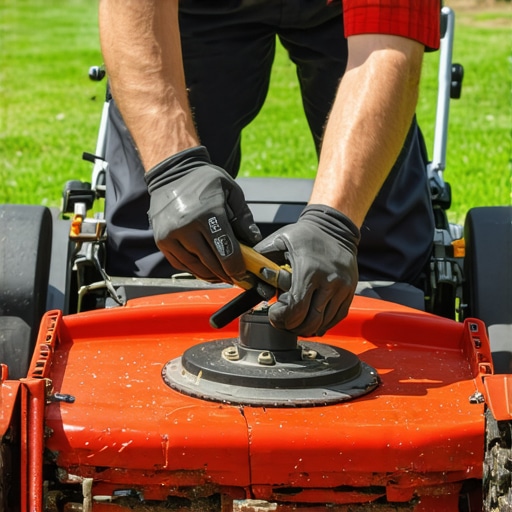
To do this right, you can’t just mow whenever you feel like it. You need to follow the One-Third Rule. Never remove more than one-third of the grass blade height in a single cutting. If your turf is 4 inches tall, set your deck to 3 inches. This ensures the clippings are small enough to fall through the canopy and reach the soil surface. Use a dedicated mulching blade. These blades have a high-lift tooth design that recirculates the grass inside the deck, chopping it into fine particles. It will rot. Quickly. If you wait three weeks and mow a hay field, you’ll leave clumps. Clumps are bad. They block sunlight and invite pythium blight. If you miss a mow, double-cut it at a higher setting first.
- Keep blades sharp: A dull blade tears the grass, increasing surface area for disease.
- Mow when dry: Wet clippings clump and won’t filter down to the soil.
- Check your height: Most cool-season grasses thrive at 3 to 4 inches.
- Monitor pH: Grasscycling works best when soil pH is between 6.0 and 7.0.
“A healthy soil ecosystem requires the constant recycling of organic materials to maintain the aggregate stability needed for deep root penetration and water infiltration.” – USDA Soil Biology Primer
Hardscaping and Grasscycling Synergy
In hardscaping, we worry about hydrostatic pressure and drainage. Believe it or not, your lawn health affects your retaining walls. A lawn that is bagged constantly becomes compacted and hydrophobic. Rainwater doesn’t soak in; it runs off. This runoff increases the water load against your paver patios and stone walls. By grasscycling, you build a
![Stop 2026 Nitrogen Burn on Yellow Fescue [3-Step Fix]](https://lawnmajesty.com/wp-content/uploads/2026/05/Stop-2026-Nitrogen-Burn-on-Yellow-Fescue-3-Step-Fix.jpeg)