
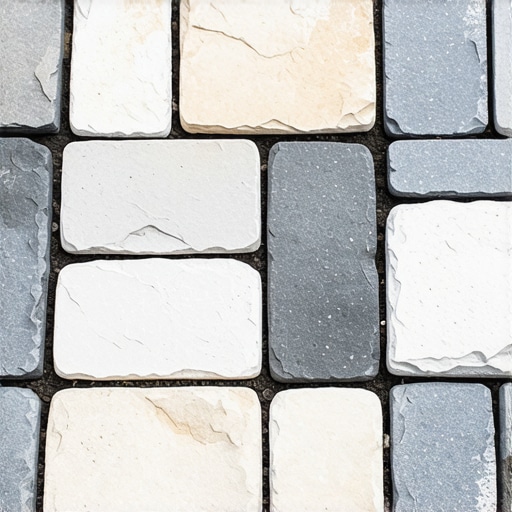
Why Your Paver Patio Needs Polymeric Sand
Why Your Paver Patio Needs Polymeric Sand: The Engineering Behind Joint Stability
I recently got called out to tear up a $30,000 patio that was sinking because the previous contractor used basic Mason sand in the joints instead of a high-performance polymeric. Within two seasons, the rain washed the sand out, ants moved in to excavate the bedding layer, and the pavers began to shift like loose teeth. It was a complete structural failure caused by a $200 shortcut. This is the reality of hardscaping: if you don’t respect the physics of jointing, your investment will literally slide away. We are going to look at the microscopic reality of why polymeric sand is the only acceptable material for a professional-grade installation. Do not let a mow-and-blow hack tell you that stone dust is just as good. It isn’t.
What is Polymeric Sand and Why is it Critical for Pavers?
Polymeric sand is a calibrated mixture of graded sand and high-tech polymers that, when activated with water, forms a powerful, flexible bond between hardscape pavers. This chemical activation prevents joint erosion from heavy rain, blocks weed growth from taking root in the joints, and ensures the structural integrity of the entire patio surface by creating a unified pavement system. It is the glue that holds your outdoor living space together. Without it, you are just laying stones in the mud.
“A retaining wall doesn’t fail because of the stone; it fails because of the water trapped behind it.” – Hardscape Engineering Axiom
How Polymeric Sand Creates Frictional Interlock
In the world of civil engineering, we talk about frictional interlock. This is the phenomenon where individual units (your pavers) act as a single, rigid slab because of the material wedged between them. Polymeric sand is designed with specific angularity. These aren’t round beach grains; they are jagged microscopic shards that bite into the sides of the pavers. When the polymer additives—usually acrylic or polyurethane binders—dry, they create a semi-flexible bridge. This is vital. A patio needs to move. Soil expands when it freezes and shrinks when it dries. If your joints are too rigid, like mortar, they crack. If they are too loose, like play sand, they wash out. Polymeric sand hits the sweet spot. It offers the flex of a rubber band with the strength of a deadbolt.
The Biological Defense: Stopping Weeds and Pests
Most homeowners think weeds grow from the soil beneath the pavers. They don’t. Most weeds grow from seeds that drop into the cracks from above. Regular sand is a perfect nursery for dandelion and crabgrass seeds. Polymeric sand, once cured, is essentially a plasticized barrier. Seeds cannot penetrate the surface to find moisture. Furthermore, it stops the common pavement ant from mining the sand. Ants are a major cause of patio settling. They tunnel through the joints, bringing up the bedding sand from underneath. This creates voids. Voids lead to tipping. Polymeric sand is too hard for them to excavate, protecting the 21A modified gravel base you spent so much time compacting.
| Feature | Polymeric Sand | Standard Mason Sand | Stone Dust |
|---|---|---|---|
| Erosion Resistance | Extreme – Water Resistant | Poor – Washes Out | Moderate – Cracks over time |
| Weed Inhibition | Yes – Solid Barrier | No – Promotes Growth | Minimal |
| Insect Prevention | Yes – Ant-Proof | No – Easy Excavation | No |
| Flexibility | High – Semi-Elastic | None – Loose Grains | Low – Brittle |
[IMAGE_PLACEHOLDER]
How to Apply Polymeric Sand Properly
Applying polymeric sand requires a surgical approach to moisture management and mechanical compaction to ensure the joints are filled to the bottom of the chamfer. You must ensure the pavers are 100 percent dry before spreading the sand, use a vibratory plate compactor to settle the grains, and meticulously blow off excess dust to avoid polymeric haze on the stone surface. One drop of water at the wrong time will ruin the entire finish. Precision is the difference between a 20-year patio and a 2-year disaster.
The Mandatory Checklist for Polymeric Installation
- Dryness Check: Pavers must be bone dry for at least 24 hours. Any moisture will activate the polymers prematurely, causing them to stick to the surface rather than the joint.
- Compaction: You cannot just sweep the sand in. You must run a plate compactor (with a protective mat) over the pavers. This vibrates the sand to the bottom, eliminating air pockets.
- Depth Requirement: Sand must be filled to about 1/8 inch below the paver edge (the chamfer). Overfilling leads to spillover and erosion.
- The Leaf Blower Technique: After sweeping, use a leaf blower on a low setting to remove every single microscopic grain of sand from the surface. If you see dust when you add water, you will have white spots forever.
- Controlled Hydration: Use a mist setting. You are not washing the patio; you are hydrating the sand. Water until it stops soaking in, then stop immediately.
“Proper drainage and joint stabilization are the two most overlooked components in residential hardscape design, leading to a 40 percent higher failure rate within the first five years.” – Agricultural Extension Engineering Bulletin
How long does polymeric sand last?
In a high-traffic environment with proper drainage, quality polymeric sand like Techniseal or Alliance G2 will last between 10 to 15 years. However, this lifespan is entirely dependent on the quality of the base. If your patio base was not compacted to a 98 percent Proctor density, the pavers will move too much, eventually shearing the polymer bonds. You can tell it is time to refresh the joints when you see significant cracking or if the sand has recessed more than 1/4 inch below the surface. Do not just pour new sand over the old. You must pressure wash the old material out to at least a 1-inch depth before reapplying.
Can I apply polymeric sand over wet pavers?
Absolutely not. This is the most common mistake made by DIYers and cheap contractors. Polymeric sand contains binders that turn into a sticky glue the moment they touch H2O. If the paver surface is damp, the sand will bond to the top of the stone rather than sliding into the joint. This creates a “polymeric haze” which is a milky, white film that is incredibly difficult to remove. It often requires specialized acid washes or even pressure washing with hot water to strip. If it rains before you finish the job, stop everything. Wait for the sun to bake that stone dry before you open another bag.
The Engineering of the Base: Why Sand Needs a Foundation
You can use the most expensive sand in the world, but if your base is garbage, the patio will fail. We use a 6-inch minimum of 21A or 411 modified gravel. This isn’t just rocks; it is a specific blend of sizes that lock together. When we hit that with a 5,000-pound vibratory compactor, it becomes as hard as concrete but stays permeable. We then use a 1-inch bedding layer of coarse concrete sand (not stone dust). Stone dust holds too much water and leads to the “pumping” effect where the pavers bounce. Polymeric sand is the final lock in this system. It keeps water from saturating that bedding layer. Water is the enemy of all hardscapes. By sealing the joints, you direct water to the surface drains or the lawn, keeping the structural base dry and stable. It is a system of water management, not just a patio.
Why we avoid the “Mow-and-Blow” method
Hacks will tell you to use stone dust because it’s cheap. Stone dust is a byproduct of rock crushing. It is essentially stone flour. When it gets wet, it turns into a slurry. When it gets dry, it becomes brittle and cracks. It has zero elastic memory. Polymeric sand is an engineered product designed for the specific stress of a backyard patio. It costs more per bag, but it saves you the $15,000 cost of a rebuild five years down the road. Quality is a choice. You can pay for the engineering now, or you can pay for the demolition later.
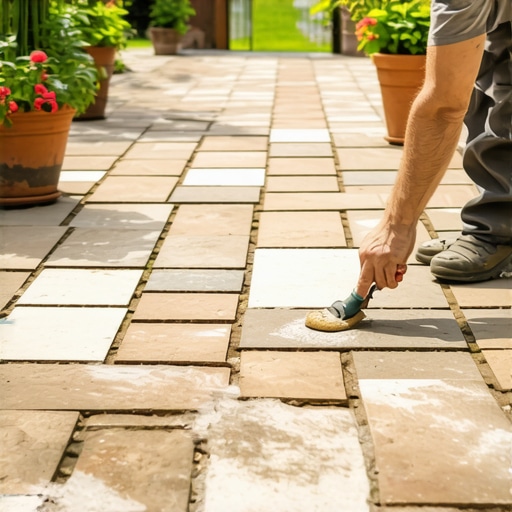
![Fix Sinking 2026 Paver Steps with Poly-Sand [DIY]](https://lawnmajesty.com/wp-content/uploads/2026/05/Fix-Sinking-2026-Paver-Steps-with-Poly-Sand-DIY.jpeg)
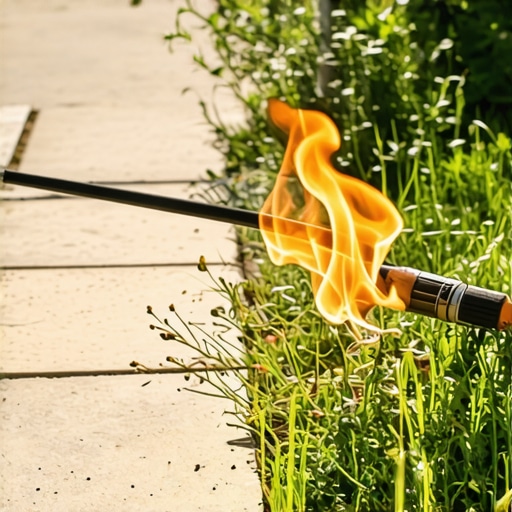
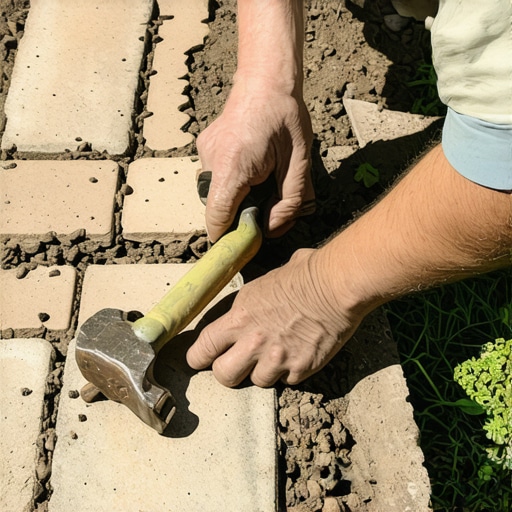
![Fixing 2026 Sinking Pavers with Polymeric Sand [DIY]](https://lawnmajesty.com/wp-content/uploads/2026/07/Fixing-2026-Sinking-Pavers-with-Polymeric-Sand-DIY.jpeg)