How to Create a Zen Garden in a Shady Corner
The Hardscape Foundation: Why Planning Trumps Aesthetics
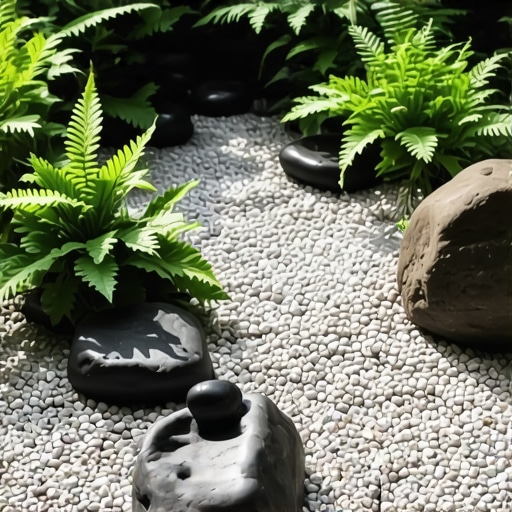
A Zen garden in a shady corner requires a strategic blend of non-organic hardscaping like decomposed granite and shade-tolerant bryophytes or ferns that thrive in low-UV environments while maintaining strict soil drainage to prevent root rot and fungal pathogens. Most amateur attempts fail because they ignore the hydrological reality of shade: water evaporates slower. If you don’t calibrate your site for this, your sanctuary becomes a swamp.
I always drill into my new crew members: if you don’t fix the soil grading first, every plant you put in the ground is just expensive compost. I remember a job in a low-lying suburb where the homeowner wanted a Japanese-inspired retreat. They had already bought $2,000 worth of Japanese Maples. The problem? The corner was a collection point for the entire neighborhood’s runoff. Without a French drain and a 2% slope adjustment, those trees would have been dead in a month. We spent three days on the sub-base before a single decorative stone touched the site. Professional landscaping is 80% what you don’t see. Excavation depth, soil density, and the specific gravity of your gravel are what make a garden last twenty years instead of twenty days.
The Engineering of the Base Layer
You cannot simply pour sand over dirt and call it a Zen garden. You must excavate 4 to 6 inches. The first 3 inches must be a compacted 2A modified gravel or #57 limestone. Use a plate compactor. The tamper should literally bounce off the compacted base. This creates a stable platform that prevents the ‘raked’ sand or gravel from sinking into the subsoil over time. After compaction, lay a 4oz non-woven geotextile fabric. This isn’t the cheap plastic from big-box stores; it’s a professional-grade barrier that allows water to pass but prevents soil fines from migrating up. Without this, your clean white granite will turn into grey mud within two seasons. Don’t skip this.
“A retaining wall doesn’t fail because of the stone; it fails because of the water trapped behind it.” – Hardscape Engineering Axiom
How much modified gravel do I need for a patio base?
To calculate your gravel base volume, multiply your total square footage by your desired depth in feet (e.g., 4 inches is 0.33 feet) and divide by 27 to get cubic yards. Always add a 15% ‘fluff factor’ for compaction loss. For a standard 10×10 shady corner, you’re looking at roughly 1.5 tons of modified stone to ensure a 4-inch structural base that resists frost heave and hydrostatic pressure.
| Material | Particle Size | Primary Function | Shade Performance |
|---|---|---|---|
| Decomposed Granite | 1/4″ minus | Raking surface | Excellent drainage |
| Mexican Beach Pebbles | 1″ to 3″ | Accent / Borders | Resists algae growth |
| Crushed White Quartz | 3/8″ | Brightening dark areas | High reflectivity |
| River Rock | 2″ plus | Dry creek beds | Directs runoff |
Vegetation Logic for Low-Light Biomes
In a shady corner, you aren’t fighting for sun; you’re fighting for airflow. Dense shade creates micro-climates with high humidity. Instead of traditional turf, which will inevitably thin out and succumb to Rhizoctonia solani (brown patch), you need to look at the ‘Karesansui’ plant palette. Ferns like Adiantum pedatum (Maidenhair Fern) or mosses such as Leucobryum glaucum (Pincushion Moss) are your best friends. These aren’t just ‘green fillers’; they are biological sponges that thrive in the 5.5 to 6.5 pH range common in forest-floor soils.
The Installation Checklist
- Site Survey: Check for utility lines (811) and measure the slope using a transit level.
- Excavation: Remove 6 inches of soil. Ensure the ‘floor’ of the pit is smooth.
- Drainage: Install a 4-inch perforated PVC pipe (French drain) if the corner collects standing water.
- Compaction: Apply gravel in 2-inch lifts, compacting each layer to 95% Standard Proctor Density.
- Fabric: Lay non-woven geotextile, overlapping seams by 12 inches.
- Edging: Install heavy-duty steel or aluminum edging to keep your raking medium contained.
- Stone Placement: Place ‘Sanzon-seki’ (triad stones) at 1/3 burial depth to mimic natural outcroppings.
[IMAGE_PLACEHOLDER]
What is the best sand for a Zen garden?
The best medium for a Zen garden is actually fine-crushed granite or decomposed granite rather than beach sand. Decomposed granite has angular edges that lock together, allowing you to rake deep, persistent ridges (纹) that don’t collapse in the wind or light rain, unlike round-grain silica sand.
Managing Hydrostatic Pressure and Moisture
In a shady corner, the biggest enemy is moisture retention against foundations. If your Zen garden abuts a house wall, you must ensure the grade falls away at a rate of 1 inch per every 4 feet. This prevents hydrostatic pressure from forcing water into your crawlspace or basement. We often use a ‘dead zone’ of larger 3-to-5-inch river rock against the foundation before starting the Zen raking area. This acts as a splash block and air gap. It will rot if you pile organic mulch against the siding. Keep the root flares of your Japanese Maples visible. Burying the flare is a death sentence; it leads to girdling roots and phloem necrosis. I see ‘mulch volcanoes’ every day, and they are the hallmark of a hack contractor. Strip it back. Let the tree breathe.
“Soil compaction is the hidden killer of urban landscapes; without macropores, roots suffocate regardless of how much you water.” – Agricultural Extension Manual
![Build a $200 Tiered Garden for 2026 Slopes [DIY]](https://lawnmajesty.com/wp-content/uploads/2026/06/Build-a-200-Tiered-Garden-for-2026-Slopes-DIY.jpeg)