How to Keep Your Deck From Rotting Under Heavy Planters
How to Keep Your Deck From Rotting Under Heavy Planters
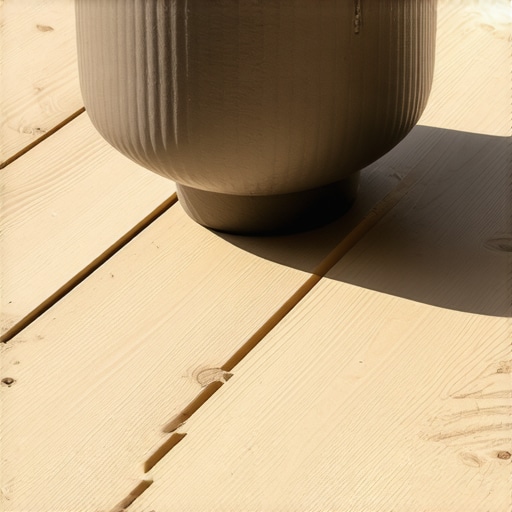
The average homeowner views a large terra cotta planter as a decorative addition. I see it as a structural liability. When you place a 150-pound ceramic vessel filled with saturated soil directly onto a wood deck, you aren’t just gardening; you are conducting a long-term experiment in wood delamination and fungal acceleration. Without a mechanical break between the pot and the board, you create a permanent moisture trap that bypasses the natural evaporation cycle of the wood.
Why Moisture Traps Kill Your Deck Structure
Heavy planters create a hydrostatic seal against deck boards, trapping moisture that cannot evaporate. This localized humidity encourages fungal colonization such as brown rot and wood fiber saturation, eventually compromising the structural integrity of your joists and beams by increasing the Wood Moisture Content above the critical 20 percent threshold. It is a slow death for your lumber.
I recently got called out to tear up a thirty thousand dollar ipe deck that was less than six years old. The owner had a row of massive stone troughs lining the perimeter. Because those troughs sat flush on the boards, the water from every irrigation cycle sat trapped underneath. When we pulled the boards, the joists beneath were the consistency of wet oatmeal. The previous contractor didn’t account for the dead weight or the drainage. That is a costly lesson in physics. You cannot fight biology with hope; you fight it with air gaps and engineering.
Wood is a hygroscopic material. It breathes. It expands and contracts based on the ambient humidity. When you place a heavy object on top of it, you stop that breathing. The cellulose and lignin in the wood cells become a buffet for microorganisms. Once the fungi take hold, they secrete enzymes that break down the very fibers that give your deck its strength. This is not just a cosmetic issue. This is a safety hazard. A rotted board under a heavy pot is a recipe for a structural collapse.
“Wood decay is the result of a complex biological process where fungi utilize the wood as a food source under specific conditions of moisture, temperature, and oxygen.” – USDA Forest Products Laboratory
The Microscopic Reality of Wood Decay
At the cellular level, the process begins when the Wood Moisture Content (WMC) stays above 19 percent for extended periods. In a typical deck scenario, the sun and wind dry the surface. But under a planter, the WMC can spike to 30 or 40 percent. This is the ‘danger zone.’ Soft rot fungi start the process, followed by the more aggressive basidiomycetes. These organisms literally eat the structure from the inside out. By the time you see the ‘squish’ on the surface, the interior of the board is already hollowed out.
Selecting the Right Materials for Weight and Drainage
Not all decking is created equal when it comes to supporting heavy loads and resisting rot. If you plan on having a container garden, your material choice is your first line of defense. Pressure-treated Southern Yellow Pine is the industry standard, but the chemicals (usually MCQ or CA) only penetrate so deep. If you trap water on the surface, the wood will still check and split, allowing water to reach the untreated core.
| Material Type | Rot Resistance | Load Bearing Capacity | Maintenance Level |
|---|---|---|---|
| Pressure Treated Pine | Moderate | High | High (Requires Sealing) |
| Western Red Cedar | High | Moderate | Moderate |
| Ipe (Brazilian Walnut) | Extreme | Very High | Low |
| Composite (PVC/Wood Fiber) | Immune to Rot | Varies (Requires tighter joist spacing) | Very Low |
If you are building new, Ipe is the gold standard. It is so dense it barely floats. It has a Class A fire rating and resists rot for decades. However, even Ipe can suffer from surface mold if you don’t allow for airflow. If you are using composite, remember that while the boards won’t rot, the wood joists underneath them certainly will. You must use joist tape (a butyl-based membrane) to protect the top of your framing from the water that drips through the gaps.
How much modified gravel do I need for a patio base?
For a standard paver patio, you need a minimum of 4 to 6 inches of compacted 21A or 3/4-inch modified gravel. This base provides the structural foundation and drainage required to prevent settling and frost heave. While this applies to hardscaping, it is a critical reminder that drainage is the foundation of all outdoor construction. If the ground under your deck doesn’t drain, your deck won’t either.
The Engineering of the Air Gap: Tools and Tactics
The only way to stop the rot is to break the contact. You need a minimum of 1/2-inch to 1-inch of clear air space between the bottom of the pot and the top of the deck board. This allows for cross-ventilation. It also allows you to see the deck surface to check for signs of trouble. I tell my crews that if you can’t see daylight under the pot, the pot shouldn’t be there.
- Pot Feet: Use heavy-duty ceramic or rubber risers. Avoid the cheap plastic ones that crack under UV exposure.
- Rolling Caddies: Choose stainless steel or high-density plastic. This allows you to move the weight around, preventing permanent compression of the wood fibers.
- Deck Protectors: Use breathable mesh mats rather than solid rubber mats. Solid rubber is just a giant sponge for moisture.
- Joist Reinforcement: If the planter exceeds 200 pounds, you must double up the joists beneath it to prevent sagging.
“Structural failure in timber often occurs at the connection points or where moisture accumulation is highest, leading to localized shear failure.” – International Code Council (ICC) Standards
What are the best planters for wood decks?
The best planters for wood decks are lightweight, UV-resistant resin or fiberglass containers with built-in drainage feet. These materials do not sweat or leach minerals like unglazed terra cotta or concrete. They also significantly reduce the dead load on your joists. If you must use heavy stone, you should install a dedicated structural ‘pedestal’ that transfers the weight directly to a post rather than the middle of a deck board span.
Advanced Drainage: Beyond the Saucer
Most people think a saucer solves the problem. It doesn’t. A saucer actually holds a reservoir of water against the pot, which then slowly seeps out through the bottom, keeping the deck surface wet for days after a rain. If you use a saucer, you still need pot feet underneath the saucer. Better yet, use a ‘pot-to-ground’ drainage system where a small hose carries the overflow directly off the deck or into a gutter system.
You also need to look at the pH of the runoff. Fertilizers are often acidic or salty. When that water leaches out of your pots, it can chemically strip the stain or sealer off your wood. This leaves the wood fibers exposed and raw. I recommend cleaning the area under your planters with a mild oxygen bleach solution twice a year to kill any nascent fungal spores. Do not use chlorine bleach; it breaks down the lignin in the wood and makes it fuzzy and weak.
The Forensic Maintenance Schedule
To keep your deck alive, you must be proactive. Every spring and fall, move every single planter. If you see a dark ring on the wood, the wood is staying too wet. You need to increase the elevation of the pot. Check the gaps between your deck boards. They should be at least 1/4-inch wide to allow debris to fall through. If they are clogged with pine needles and dirt, you are creating a ‘wick’ that draws water into the joists.
Check for ‘soft spots’ using a simple screwdriver test. If you can push the tip of a flathead screwdriver more than 1/8-inch into the wood with ease, you have rot. At that point, it is time to stop thinking about aesthetics and start thinking about structural repair. You might need to sister a new joist or replace the damaged boards before someone puts their foot through the deck. It is cheaper to buy a set of pot feet now than to replace a structural beam in five years.
Don’t be the homeowner who thinks a pretty garden is worth a collapsed deck. Respect the physics of water and the biology of wood. Keep it dry. Keep it elevated. Keep it moving. That is the only way to ensure your outdoor living space lasts as long as the house it is attached to. Wood is resilient, but it is not invincible against the relentless pressure of a wet, heavy planter.
![Build a $400 Flagstone Fire Pit [2026 Weekend Project]](https://lawnmajesty.com/wp-content/uploads/2026/06/Build-a-400-Flagstone-Fire-Pit-2026-Weekend-Project.jpeg)