
Why Your Outdoor Lighting Is Attracting Too Many Bugs
The Forensic Autopsy: Why Your Nightscape Is a Pest Magnet
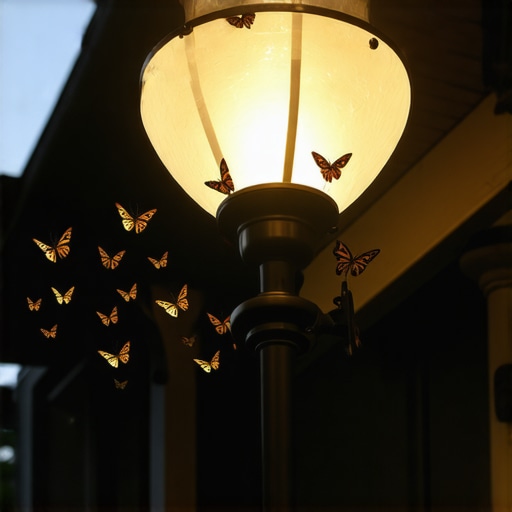
The visual symptom is unmistakable: a frantic, buzzing cloud of moths, beetles, and crane flies swirling around your porch light like a localized storm. You see the debris of dead insects piling up in the light fixtures and the oily residue they leave on your siding. It is not just an annoyance; it is a failure of system design. Most homeowners treat lighting as a ‘plug and play’ amenity without considering the biological consequences. When you install high-intensity, short-wavelength bulbs, you are essentially broadcast-signaling every phototactic insect within a half-mile radius to congregate on your property. This leads to increased spider populations, bat droppings on your hardscaping, and potential damage to your ornamental plants from concentrated herbivory.
The Chemical Nightmare: When Lighting Destroys Your Landscape Health
I recently got called out to a property where the homeowner had torched their own curb appeal by trying to be ‘efficient.’ They had installed industrial-grade, cool-white LED floodlights to illuminate a row of prize-winning hydrangeas. Within three months, the plants were infested with scale and spider mites. The intense, blue-heavy light spectrum was not only attracting every pest in the county, but it was also disrupting the plants’ photoperiodism. The plants couldn’t go into their natural state of dormancy at night because the light was mimicking daylight levels of blue radiation. This stress weakened the plants’ immune systems, making them easy targets. It was a classic case of improper hardware meeting a total lack of horticultural understanding. They spent $5,000 on plants and $20 on the wrong bulbs, effectively composting their investment in real-time.
“Most insects are attracted to short-wavelength light, specifically in the ultraviolet and blue-green regions of the spectrum. This phenomenon, known as positive phototaxis, is most pronounced when light sources emit significant radiation below 500 nanometers.” – Agricultural Extension Research Manual
The Spectral Trap: Why Your Bulbs Are Insect Magnets
Outdoor lighting attracts bugs because most standard bulbs emit high amounts of UV and blue light, which insects use for navigation. By switching to LEDs with a color temperature below 3,000 Kelvin, you significantly reduce the phototactic response of local insect populations while maintaining visibility. To understand why this happens, we have to look at the electromagnetic spectrum. Insects have compound eyes that are specifically tuned to see ultraviolet (UV), blue, and green light. They use the moon and stars for navigation, and your 5000K ‘Daylight’ bulb looks like a giant, stationary moon to them. This triggers a navigation error that causes them to spiral inward toward the source. If you are using incandescent or high-pressure sodium bulbs, you are also emitting significant heat, which attracts nocturnal heat-seeking predators.
What color light attracts the fewest bugs?
Warm-toned lights, specifically those in the yellow, orange, and red spectrum, attract the fewest insects. These wavelengths (600 to 700 nanometers) are largely invisible to most flying insects. When we talk about Kelvin (K) ratings, we are looking for 2200K to 2700K. Anything higher than 3000K enters the ‘blue’ zone, which is a dinner bell for pests. Yellow ‘bug lights’ work because they filter out the blue and UV wavelengths, making the light source much harder for the insect’s ocular system to detect. In a professional hardscape design, we use filtered LEDs to achieve this without the gaudy yellow look of cheap hardware store bulbs.
The Engineering of Light Placement and Shielding
It is not just about the bulb; it is about the fixture engineering. Unshielded bulbs allow light to spill in all directions, including upward and sideways, creating a massive ‘attraction sphere.’ Professional-grade fixtures use ‘cut-off’ designs that direct light exactly where it is needed: on the path, the wall, or the tree trunk. By shielding the light source, you minimize the amount of visible ‘glare’ that insects can see from a distance. If an insect cannot see the light source directly, it is much less likely to be attracted to it. We also look at ‘lumens per square foot.’ Over-lighting a space doesn’t make it safer; it just makes it a beacon. Most residential landscapes only need 1 to 3 foot-candles of light for safe navigation.
| Bulb Type | Wavelength Profile | Insect Attraction Level | Recommended Use |
|---|---|---|---|
| Mercury Vapor | High UV/Blue | Extreme | Avoid in Residential |
| Incandescent | High Heat/Broad Spectrum | High | Phase Out |
| Cool White LED (5000K) | High Blue Spike | High | Commercial Security Only |
| Warm White LED (2700K) | Low Blue/High Amber | Low | Standard Landscape |
| Yellow LED ‘Bug Light’ | Narrow Band Amber | Minimal | High-Traffic Entryways |
“A landscape lighting system that ignores the biological impact on local fauna is simply light pollution disguised as design. Proper shielding and spectral control are mandatory for ecological balance.” – International Dark-Sky Association Engineering Standards
The Remediation Process: How to De-Bug Your Lighting
Fixing a bug-infested lighting system requires a multi-step audit of your current hardware and placement. First, we check the Kelvin rating of every lamp. If it’s above 3000K, it’s gone. Second, we evaluate the ‘Light Spill.’ If you can see the bare bulb from 50 feet away, the fixture is poorly designed. We replace these with shielded ‘top-hat’ or ‘eyelid’ fixtures that keep the light focused on the ground. Third, we address the ‘Heat Signature.’ Traditional halogen bulbs get incredibly hot, creating a micro-climate that attracts spiders and mosquitoes. Moving to low-voltage (12V) LED systems reduces the heat output significantly, which in turn reduces the number of predatory insects that set up shop in your fixtures.
How far should lights be placed from the house?
To keep bugs away from your doors and windows, you should place your primary light sources at least 10 to 15 feet away from entry points. Use ‘offset’ lighting: instead of putting a bright light directly over the door, place a shielded light on a nearby path or landscape bed that directs light toward the door. This draws the insects away from the threshold where they can slip inside when you open the door. It is a simple shift in spatial logic that makes a massive difference in pest management. We also recommend using motion sensors for high-output security lights so they are only ‘active’ and attracting bugs when absolutely necessary.
The Maintenance Audit: Keeping the System Clean
Even the best system requires maintenance. Spiders love the buffet that lighting provides, and their webs will eventually block your light output and create unsightly messes. Every six months, you should perform a ‘Soft Wash’ on your fixtures. Don’t use harsh chemicals that can strip the finish or harm your plants. A simple solution of water and mild soap is enough to remove silk, egg sacs, and insect debris. While you’re at it, check the burial depth of your low-voltage lines. Frost heave can push wires to the surface, where they can be nicked by lawn equipment, leading to voltage drops that cause LEDs to flicker. A flickering LED is even more attractive to certain types of beetles than a steady light.
- Replace all bulbs over 3000K with 2700K or lower ‘Warm’ LEDs.
- Install shielded fixtures to prevent light spill into the atmosphere.
- Move light sources away from doors and windows to create ‘decoy’ zones.
- Use timers or motion sensors to reduce total ‘On’ time during peak insect hours.
- Check soil grading around fixtures to prevent water pooling and mosquito breeding.
- Clean fixture housings twice a year to remove spider webs and debris.
Landscape engineering is about managing the intersection of human comfort and biological reality. If you treat your yard like a laboratory, you get a clean, functional space. If you treat it like a big-box store showroom, you get bugs. It is that simple. Don’t skip the technical specs on your bulbs. Read the nanometer ratings. Understand the phototaxis of your local environment. Your patio should be a place for people, not a breeding ground for the local insect population.

![How to Build a $500 Flagstone Fire Pit Area [DIY 2026]](https://lawnmajesty.com/wp-content/uploads/2026/05/How-to-Build-a-500-Flagstone-Fire-Pit-Area-DIY-2026.jpeg)