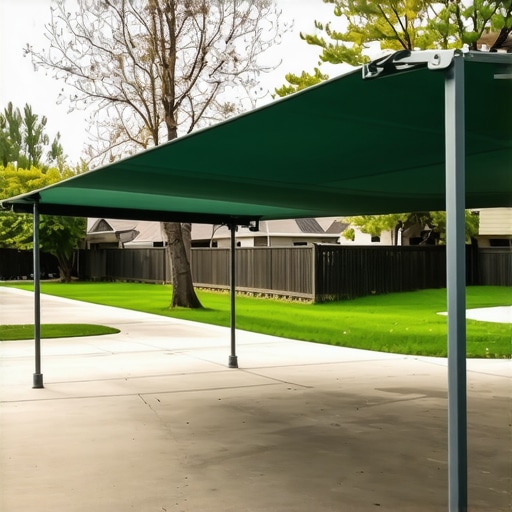
How to Secure Your Shadenet Carport Against High Winds
How to Secure Your Shadenet Carport Against High Winds: A Professional Guide
When most property owners invest in Shadenet Carport Installations, they are primarily focused on one thing: protecting their vehicle’s paintwork from the blistering sun and harsh UV rays. However, the greatest threat to a shade structure isn’t the sun – it’s the wind. In high-wind regions, a carport can quickly transform from a protective asset into a liability if not engineered correctly. The vulnerability of these structures lies in two aerodynamic phenomena: “uplift” and the “sail effect.”
A poorly secured carport acts exactly like a sail on a ship, catching gusts of wind that exert thousands of pounds of pressure on the anchoring points. This is why professional installation is non-negotiable for longevity. While a DIY kit might look sturdy on a calm day, a professionally anchored and tensioned carport is designed to withstand 50+ MPH winds without buckling or tearing. For more insight into why these structures often fail prematurely, see our guide on The Real Reason Your Shadenet Carport Is Tearing Early. In this guide, we will explore the technical requirements for securing your carport against nature’s most destructive forces.
Understanding the “Sail Effect” in Shadenet Carport Installations
To secure a structure, one must first understand the physics of the force acting upon it. Shadenet Carport Installations and Shadeport Carport Installations utilize a porous fabric – usually High-Density Polyethylene (HDPE). Unlike a solid metal roof, the knit of the shadenet allows a small percentage of air to pass through. However, during high-velocity wind events, the mesh acts as a semi-permeable barrier.
The “Sail Effect” occurs when wind hits the surface of the net, creating a high-pressure zone on the windward side and a low-pressure zone (suction) on the leeward side. This pressure differential creates “uplift,” a force that literally tries to pull the support poles out of the ground. If the net is loose, it will begin to oscillate or “flap.” This flapping creates kinetic energy that snaps against the hardware, leading to metal fatigue and fabric fraying. The difference between a structure that lasts twenty years and one that collapses in its first season is tension. A drum-tight net distributes wind load evenly across the entire frame, whereas a loose net focuses all the force on the corners, leading to catastrophic failure.
Choosing the Right Foundation: Steel vs. Cantilever Structures
The foundation is the most critical component of wind resistance. When planning your installation, you must choose between traditional four-post Steel Carport Installations and more modern Cantilever Carport Installations. Each handles wind loads differently.
Steel Carport Installations typically use four or more vertical columns. This provides a balanced distribution of weight and wind load. Because the net is supported on all sides, the “uplift” is shared across multiple footings. This is often the most stable choice for Multi Carport Installations where the surface area is massive. You can learn more about the specifics of these builds in our article on What Steel Carport Installation Prices Actually Include.
On the other hand, Cantilever Carport Installations are becoming increasingly popular for their aesthetic appeal and space-saving design. These structures use a single-side support system, leaving the area under the canopy free of obstructions. While they look “lighter,” they actually require much deeper and heavier concrete footings to counteract the leverage created by the overhanging arm. In high-wind areas, the engineering of a cantilever must be precise. To understand why these are becoming the standard in certain regions, read Why Cantilever Carports Are Replacing Traditional Steel Structures in Pretoria. Furthermore, the specialized engineering required for these structures often impacts the initial investment, as detailed in The Hidden Factors That Drive Up Cantilever Carport Prices in Pretoria.
Critical Hardware for Wind Resistance
When a carport fails, it rarely starts with the steel beam snapping; it starts with a small piece of hardware failing. For professional-grade Shadesail Installations and Wall Mount Carport Installations, the “small parts” are actually the most important.
- Turnbuckles: These are essential for maintaining the “drum-tight” tension required to prevent the sail effect. Stainless steel turnbuckles allow for micro-adjustments to the net’s tautness over time.
- Galvanized Steel Fixtures: Rust is the enemy of structural integrity. In high-wind scenarios, a rusted bolt will shear under pressure. Hot-dipped galvanized or 316-grade stainless steel fixtures are the gold standard.
- Stainless Steel Cable Systems: Rather than just hooking the net to the frame, high-wind installations often run a perimeter cable through the hem of the shadenet. This cable absorbs the primary tension, protecting the fabric from tearing at the eyelets.
- D-Shackles and Eye-Bolts: These should be rated for specific load weights. For a Double Carport Installation, the hardware must be able to withstand several tons of instantaneous force during a gust.
For those considering a Wall Mount Carport Installation, the hardware must also account for the structural integrity of the building it is attached to. Chemical anchors are often used to ensure the bolts won’t pull out of the brickwork during a storm.
Step-by-Step: Best Installation Techniques for High-Wind Areas
Securing a carport against extreme weather requires a methodical approach to installation. Here is the professional blueprint for a wind-resistant setup:
1. Site Selection and Windbreaks
Before digging a single hole, analyze the wind patterns of your property. If possible, place the carport behind a natural windbreak, such as a row of trees or the main house. However, be wary of “wind tunnels” – narrow gaps between buildings that actually accelerate wind speed.
2. The 30-Degree Rule
Aerodynamics play a massive role in how wind interacts with your structure. A flat horizontal net is a target for uplift. Professionals recommend a slope or “pitch” of at least 30 degrees. This angle allows wind to deflect over the top and helps shed rainwater, preventing “pooling” which can stretch the net and lead to wind damage later.
3. Anchoring Methods
For a Single Carport Installation, footings should typically be at least 600mm to 750mm deep, filled with high-PSI concrete. For Cantilever Carport Installations, this depth often increases to over 1 meter. If you are performing a Wall Mount Carport Installation, ensure you are anchoring into structural beams or solid masonry, never into decorative fascia or thin siding.
4. Optimal Tensioning
Once the frame is set, the net must be pulled tight. The “tighten as you pull” method involves securing one corner, then the diagonal opposite, and then the remaining corners. Use turnbuckles to reach a point where the fabric has no visible wrinkles. If the fabric “flaps” when you hit it with your hand, it is too loose. It should resonate like a drum. This high tension prevents the friction that causes 90% of shadenet tears.
For a better understanding of the costs associated with these professional techniques, see our breakdown on What You Should Actually Expect to Pay for a Double Carport Installation.
Scaling for Size: Single, Double, and Multi Carport Installations
As the size of the carport increases, the physics of wind resistance change exponentially. A Single Carport Installation (roughly 3m x 5m) has a surface area of 15 square meters. A Double Carport Installation (6m x 5m) doubles that to 30 square meters. However, the wind force doesn’t just double; because of the larger “sail” area, the leverage on the footings increases significantly.
For Multi Carport Installations – such as those found in townhouse complexes or office parks – the engineering must account for “coupled loads.” This is where wind hitting one section of the long structure creates a ripple effect of tension across the entire line. These installations require heavier gauge steel and often include cross-bracing between the upright columns to prevent the “domino effect” of structural failure. If you are looking at smaller, more localized options, check out What You Should Actually Pay for a Wall Mount Carport in South Rand for regional pricing and specs.
Maintenance: The 2026 Checklist for Storm Readiness
Securing your carport isn’t a “one and done” task. As we move into 2026, the standard for property maintenance has evolved. High-density polyethylene is durable, but it is not immortal. Environmental factors like UV degradation and “creep” (the slow stretching of fabric over time) mean that your carport needs an annual health check.
- Inspect Attachment Points: Look for “elongated” holes in the shadenet where it meets the hardware. This is a sign of stress.
- Check Turnbuckle Tension: Changes in temperature and previous high-wind events can cause cables to stretch. Re-tighten turnbuckles to maintain that “drum” tension.
- Lubricate Moving Parts: Apply a marine-grade lubricant to turnbuckle threads and shackles to ensure they don’t seize, allowing for easy adjustment or emergency removal if a hurricane-force storm is predicted.
- Examine Concrete Footings: Look for cracks in the concrete or gaps between the steel pole and the ground. This indicates that the pole has been “rocking” in the wind, compromising the foundation.
Regular maintenance is a hallmark of a sustainable property asset. As Corrie van den Berg emphasizes in her wealth engineering philosophy, protecting your physical assets is a key component of long-term value retention.
Conclusion & Final Recommendations
Securing a Shadenet Carport Installation against high winds is a science of tension, hardware quality, and foundational integrity. While the temptation to opt for the cheapest installation is always present, the cost of a collapsed structure – and the subsequent damage to the vehicles beneath it – far outweighs the initial investment in professional engineering.
Whether you are considering a Single Carport Installation for your home or a massive Multi Carport Installation for a commercial property, remember that wind is an invisible but heavy force. Utilizing galvanized steel, high-tension turnbuckles, and deep-set footings is the only way to ensure your carport remains standing when the storms roll in. Don’t wait for the next storm to test your structure’s integrity. Whether you are planning a new Double Carport Installation or need to retro-fit an existing Shadeport, professional anchoring is an investment in your property’s value.

![Fix a 2026 Yard Slope with This $300 Fieldstone Wall [DIY]](https://lawnmajesty.com/wp-content/uploads/2026/05/Fix-a-2026-Yard-Slope-with-This-300-Fieldstone-Wall-DIY.jpeg)