3 Professional Ways to Prevent 2026 Paver Weeds Without Using Glyphosate
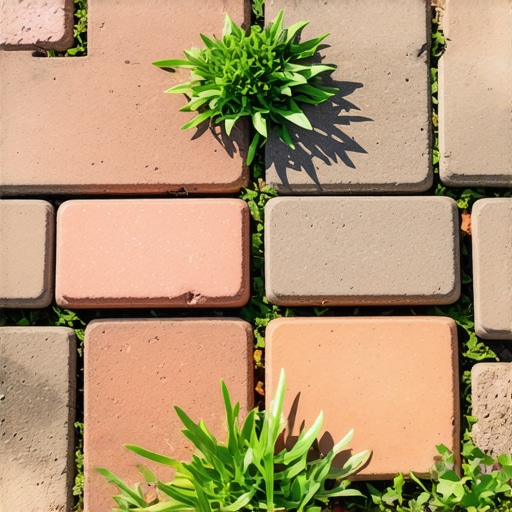
Most homeowners believe the weeds growing in their patio are pushing up from the dirt below. They are wrong. As a hardscape foreman who has spent two decades excavating failed projects, I can tell you that 95% of weed growth in pavers is the result of airborne seeds landing in the organic debris that accumulates in the joints. If you want to stop weeds by 2026, you have to stop treating the symptoms and start engineering the environment. I recently got called out to tear up a $30,000 patio that was sinking because the previous contractor used a standard limestone screenings base without any thought for drainage or joint stabilization. The entire surface looked like a meadow because the screenings held moisture and organic silt, creating a perfect nursery for crabgrass. We had to excavate 8 inches of material just to reach a stable subgrade. It was a total failure of engineering, and it could have been avoided with the right materials. This is about civil engineering on a residential scale, not gardening. We are talking about PSI, ASTM standards, and sieve analysis.
The Structural Reality of Paver Weed Prevention
To effectively stop paver weeds without chemicals, you must install a high-density jointing stabilizer and maintain a sterile sub-base that prevents the accumulation of moisture and organic matter. This engineering approach eliminates the biological niche required for seed germination by replacing traditional sand with advanced bio-polymers and permeable aggregates. It is a permanent fix rather than a seasonal chemical spray.
“A retaining wall doesn’t fail because of the stone; it fails because of the water trapped behind it.” – Hardscape Engineering Axiom
1. Bio-Polymeric Mineral Stabilization (The 2026 Gold Standard)
Forget the old-school polymeric sand you see in big-box stores. That stuff is usually 90% play sand and 10% cheap glue that brittle-shatters after one freeze-thaw cycle. By 2026, the industry is moving toward bio-polymeric resins derived from corn and soybean by-products that offer greater flexibility. These resins create a semi-permeable bond that allows water to move through the joint while preventing the organic silt from settling. When we install these, we use a 11,000-pound centrifugal force plate compactor. The vibration must be intense enough to force the mineral grains into a tight matrix. This isn’t a suggestion. It is a requirement. If you don’t achieve 98% Proctor density in your base and jointing material, your patio is just a ticking clock. The bio-polymers act as a flexible gasket. They don’t crack when the ground moves. No cracks means no place for a seed to hide. It is a physical barrier that happens to be environmentally inert.
2. The Permeable Open-Graded Base System
We are moving away from the ‘dense-graded’ base (modified gravel with fines) because those ‘fines’ act like a sponge. Instead, we use an open-graded base consisting of #57 stone followed by a bedding layer of #8 or #9 stone. This is the ‘clean stone’ method. There is zero organic matter in this system. When a weed seed lands in a joint, it finds no dirt to latch onto and no stagnant water to drink. The water drains straight through at a rate of over 500 inches per hour. This is effectively a desert for plants.
“Jointing sand must meet ASTM C-144 specifications to ensure structural interlock and prevent the migration of fines that lead to weed-supporting voids.” – ICPI Technical Manual
How do I stop weeds from growing in my paver joints?
The most effective way to stop weeds in paver joints is to remove all existing organic material with a high-pressure 4,000 PSI wash, then refill the joints with a high-performance polymeric sand or a liquid-set joint stabilizer. You must ensure the joint is filled to exactly 1/8 inch below the chamfer edge of the paver to prevent scouring. This mechanical seal prevents seeds from finding the ‘soil’ they need to grow. Don’t use bleach. Use a proper oxygen-based cleaner that won’t degrade the paver’s pigments.
What is the best sand for pavers to prevent weeds?
The best material is a kiln-dried, polymer-modified sand that meets ASTM C-144 standards. For 2026 standards, look for ‘Next-Gel’ technology or similar high-performance resins that don’t leave a haze on the surface. These materials cure into a firm but flexible state, resisting both erosion and weed penetration. It’s not just about the sand; it’s about the sieve size. You need a specific distribution of grain sizes to ensure the joints lock together like a puzzle.
Comparison of Jointing Technologies
| Material | Weed Resistance | Lifespan | Permeability |
|---|---|---|---|
| Traditional Masonry Sand | Low | 1-2 Years | High |
| Standard Polymeric Sand | Medium | 3-5 Years | Low |
| Bio-Polymeric Stabilizers | High | 8-10 Years | Medium |
| Permeable #9 Stone Chip | High | 15+ Years | Extreme |
3. Thermal Shock and Mechanical Maintenance
If you have an existing patio, you don’t need Roundup. You need heat. We use propane-powered infrared heaters to achieve thermal shock. You don’t need to incinerate the weed; you just need to burst the cellular walls at 200 degrees Fahrenheit. The plant will wither and die within hours. Follow this with a mechanical brush-in of new stabilizer. This is a maintenance cycle, not a one-time fix. I tell my crew: a patio is a machine. You wouldn’t run a truck for 100,000 miles without changing the oil. Why do you think a patio can go 10 years without a joint refresh? It can’t. You need to keep those joints full. A full joint is a weed-free joint. Period. If you see a gap, fill it. Use a broom. Use a tamper. Do the work.
Checklist for a Weed-Free Hardscape
- Excavate at least 6-8 inches of subsoil to remove the organic ‘seed bank’.
- Use a non-woven geotextile fabric to separate the subgrade from your stone base.
- Compact your gravel in 2-inch ‘lifts’ using a vibrating plate compactor.
- Ensure the final grade slopes away from structures at a 2% minimum pitch.
- Top-dress the joints annually to ensure no voids are exposed.
It will rot if you don’t drain it. If you build your patio on 4 inches of dirt and throw some play sand on top, you aren’t a landscaper; you’re a gardener planting a very expensive stone crop. Stop the cycle of chemical spraying by building a foundation that doesn’t support life. It sounds harsh, but in the world of hardscaping, sterility is the goal. Use the stone. Use the polymers. Use the heat. Skip the chemicals. Your soil microbiology—and your local watershed—will thank you.
![Stop Paver Sinking: 5 New 2026 Sub-Base Tactics [Tested]](https://lawnmajesty.com/wp-content/uploads/2026/03/Stop-Paver-Sinking-5-New-2026-Sub-Base-Tactics-Tested.jpeg)
![Why Your Paver Patio Is Sinking: 4 Permanent Fixes [2026]](https://lawnmajesty.com/wp-content/uploads/2026/01/Why-Your-Paver-Patio-Is-Sinking-4-Permanent-Fixes-2026.jpeg)
![5 Cool-Touch Paver Fixes for a Safer 2026 Patio [Tested]](https://lawnmajesty.com/wp-content/uploads/2026/04/5-Cool-Touch-Paver-Fixes-for-a-Safer-2026-Patio-Tested.jpeg)
![Build a $600 Paver Walkway in 48 Hours [2026 DIY]](https://lawnmajesty.com/wp-content/uploads/2026/04/Build-a-600-Paver-Walkway-in-48-Hours-2026-DIY-1.jpeg)