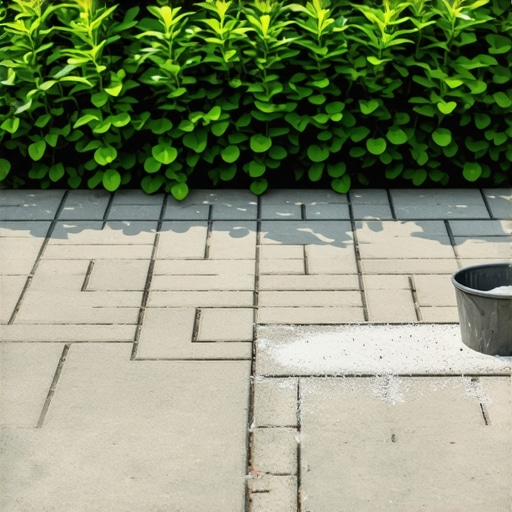
Tired of Paver Weeds? This $20 Sand Trick Keeps Them Away for Good
Why Your Paver Joints Are Growing a Small Forest
You spent thousands on a stone patio only to have it look like a neglected pasture within two seasons. The sight is unmistakable: green sprouts pushing through the gaps, ants mining out the bedding sand, and stones that have started to shift because the structural integrity of the joint has been compromised. Most homeowners think the weeds are growing up from the dirt beneath the patio. They aren’t. In 95% of cases, those weeds are the result of airborne seeds landing in the organic debris that collects in your paver joints. If your joints are soft, moist, and open, you’ve basically built a $15,000 planter box for dandelions. I recently got called out to tear up a $30,000 patio that was sinking because the previous contractor used play sand in the joints instead of a stabilized medium. The ants had literally excavated the base from under the pavers, and the lack of joint tension caused the entire field of stone to migrate. It was a structural autopsy that could have been avoided with twenty dollars worth of the right material.
“A retaining wall doesn’t fail because of the stone; it fails because of the water trapped behind it, and a paver system doesn’t fail because of the traffic; it fails because the joints allow water to destabilize the base.” – Hardscape Engineering Axiom
How Do Weeds Actually Get Between Pavers?
Paver weeds originate from seeds that land in the sand joints from the air or are carried by runoff. These seeds germinate when the jointing sand remains damp and lacks a chemical or physical barrier. To stop them, you must use a polymeric sand or a joint stabilizer that hardens into a water-resistant, weed-impenetrable seal. It is about creating an environment where biological growth is physically impossible. You need a material that achieves a specific ASTM C-144 gradation to ensure the particles lock together under vibration. Most hacks use whatever is cheap. Pros use what stays put.
The $20 Secret: High-Polymer Jointing Sands
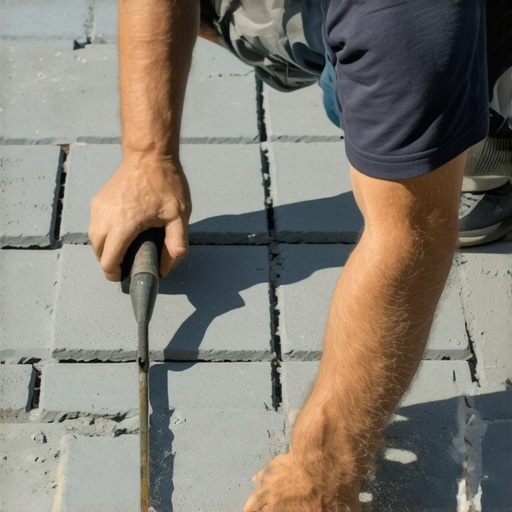
The trick isn’t a secret ritual; it’s a specific material application that costs about $20 to $30 per bag: high-performance polymeric sand. This isn’t your standard hardware store sand. It is a precise mixture of graded sand and high-tech binders (polymers) that turn into a substance similar to mortar but with the flexibility to handle freeze-thaw cycles. When you activate it with a fine mist of water, the polymers bind the sand grains together. This creates a hard