
Why Your Grass is Brown: 5 Soil Fixes That Actually Work
The Forensic Autopsy of a Dying Lawn
The ground is crunching under your boots. Instead of a resilient carpet of turf, you see a mosaic of straw-colored death and exposed dirt. Most homeowners see brown grass and reach for the hose or a bag of cheap 10-10-10 fertilizer. That is a mistake. I recently got called out to a property in the suburbs where a homeowner had completely torched their front lawn by applying a high-nitrogen ‘turf builder’ during a record-breaking heatwave without checking the soil moisture levels first. The grass did not just die; it was chemically cauterized. The salts in the fertilizer pulled every drop of moisture out of the root zone through osmotic stress. We had to excavate two inches of topsoil just to remove the salt crust. This is the reality of lawn care: if you do not understand the engineering of the soil, you are just throwing money into a pit.
Soil Compaction and the Oxygen Deficit
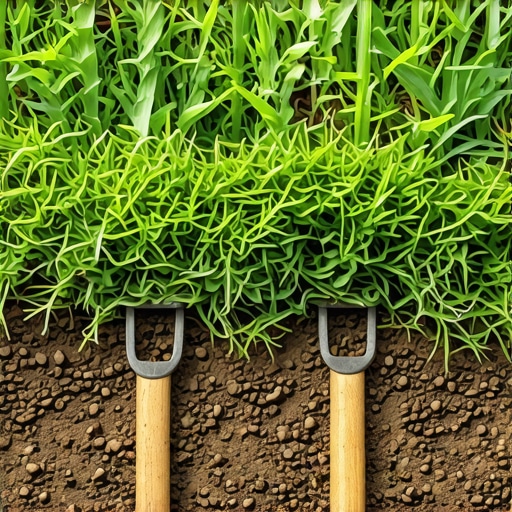
Soil compaction occurs when the pore space between soil particles is crushed, effectively suffocating the root system by preventing the exchange of oxygen and carbon dioxide. This physical barrier stops turfgrass from developing the deep root architecture needed to survive seasonal heat stress and drought conditions. Your lawn needs air as much as it needs water. When a lawn is compacted, the bulk density of the soil increases. In heavy clay soils, this density can reach levels that literally prevent roots from penetrating the earth. They grow sideways, become shallow, and die the moment the temperature hits eighty degrees. This is why your grass turns brown first near walkways or where the kids play. The traffic has turned your soil into concrete. [IMAGE_PLACEHOLDER]
“The physical property of bulk density determines the porosity and drainage capacity of a lawn’s root zone; once pore space is lost, the biological engine of the soil stalls.” – Cornell University Turfgrass Program
How much does professional core aeration cost?
Professional core aeration typically costs between $150 and $400 for a standard quarter-acre lot, depending on soil density and accessibility. This service removes thousands of soil plugs, roughly three inches deep, to instantly alleviate hydrostatic pressure and allow gas exchange within the rhizosphere. Do not settle for spike aerators. They actually increase compaction by pushing soil outward rather than removing it.
The pH Imbalance: Nutrient Lockout
Soil pH is a measure of the acidity or alkalinity of your soil, and it acts as the master key that either unlocks or glues shut the nutrients in your ground. If your soil pH is below 6.0 or above 7.5, your grass will starve regardless of how much fertilizer you apply. This is called nutrient lockout. In acidic soils, minerals like phosphorus become chemically bound to iron and aluminum, making them inaccessible to the plant. You can see the result: a sickly, yellow-brown hue that persists even after rain. It is not a lack of water; it is a metabolic failure. You need to apply calcitic lime to raise the pH or elemental sulfur to lower it. Stop guessing. A professional soil test is the only way to fix this.
| Amendment | Purpose | Application Rate | Best Season |
|---|---|---|---|
| Calcitic Lime | Raise pH / Calcium boost | 50 lbs per 1000 sq ft | Fall / Spring |
| Elemental Sulfur | Lower pH for alkaline soil | 5 lbs per 1000 sq ft | Early Spring |
| Gypsum | Reduce salt / Break clay | 40 lbs per 1000 sq ft | Anytime |
| Humic Acid | Boost nutrient uptake | Variable (Liquid/Granular) | Growing Season |
The Cation Exchange Capacity (CEC) Engine
Cation Exchange Capacity represents the soil’s ability to hold onto essential nutrients like potassium, calcium, and magnesium, preventing them from leaching away during heavy rains. Soils with high organic matter have a higher CEC, acting like a magnetic sponge for plant food. If your grass is brown and your soil is sandy, you likely have a CEC problem. The nutrients are just washing through the sand. To fix this, you must introduce organic matter. This is not a quick fix. You are building a biological battery. I tell my crew that we aren’t just planting grass; we are managing a sub-surface livestock of microbes. Without them, the turf is just on life support.
How do I test my soil pH at home?
To test soil pH accurately, use a professional-grade probe or a slurry kit from an agricultural extension office rather than cheap litmus strips. Collect samples from ten different spots in your yard at a depth of four inches, mix them in a clean plastic bucket, and submit the composite sample for a lab-grade analysis of NPK ratios and micronutrients.
The Thatch Barrier and Hydrophobia
Lawn thatch is a layer of living and dead organic matter—mostly stems and roots—that accumulates between the green vegetation and the soil surface. When this layer exceeds half an inch, it becomes a hydrophobic barrier that repels water like a raincoat. You can water for an hour, but the soil underneath will remain bone dry. This leads to localized dry spots where the grass turns a dull, bluish-gray before going completely dormant or dying. If you can peel your grass back like a carpet, you have a thatch problem. You need to mechanicaly power-rake or use biological dethatchers to break down the lignin and cellulose.
“A soil test is the only way to determine if your lawn is starving or simply unable to eat due to chemical imbalances in the root zone.” – University of Massachusetts Amherst Soil Testing Lab
The 5-Step Soil Recovery Checklist
- Mechanical Aeration: Perform a double-pass core aeration to break the surface tension and bulk density.
- pH Correction: Apply lab-recommended amounts of lime or sulfur to hit the 6.5 pH sweet spot.
- Organic Topdressing: Spread 1/4 inch of composted leaf mulch to jumpstart microbial activity and increase CEC.
- Deep Irrigation: Switch to watering 1 inch, once per week, at 4:00 AM to force roots to chase moisture deep into the profile.
- Nutrient Cycling: Use a slow-release, bridge-product fertilizer that contains both synthetic NPK and organic solids.
![Fixing 2026 Patchy Bermuda Grass [Fast Fix]](https://lawnmajesty.com/wp-content/uploads/2026/06/Fixing-2026-Patchy-Bermuda-Grass-Fast-Fix.jpeg)
![Why Your 2026 Grass Seed Isn't Growing [Soil Fix]](https://lawnmajesty.com/wp-content/uploads/2026/06/Why-Your-2026-Grass-Seed-Isnt-Growing-Soil-Fix.jpeg)