
Best 2026 Low-Maintenance Plants for Sun
Designing for Sunlight Resilience and Survival
The best 2026 low-maintenance plants for sun are selected based on their genetic resilience to heat stress, drought tolerance, and structural stability within a professional garden design. These species must withstand intense UV radiation while maintaining root health in well-drained soil profiles that prevent anaerobic conditions. I always drill into my new crew members: if you don’t fix the soil grading first, every plant you put in the ground is just expensive compost. A few years back, I saw a homeowner waste twelve thousand dollars on specimen perennials that drowned because they ignored a two percent grade sloping toward the foundation. We don’t just dig holes; we engineer biological environments. You have to understand bulk density and pore space before you even touch a shovel. If your soil is compacted to the point where it resists a half-inch rebar probe, your plants are essentially sitting in a concrete bowl. Low maintenance doesn’t mean zero effort; it means high-effort preparation to ensure long-term mechanical and biological success.
The Engineering of the Planting Bed
Success in full-sun landscaping starts with the base. We look at the soil as a structural foundation. If you are dealing with heavy clay, you are fighting a battle against hydrostatic pressure and poor gas exchange. You need to incorporate expanded shale or coarse sand to break those plate-like clay particles. If you don’t, the roots will hit that clay wall and start girdling themselves, essentially choking the plant to death within three seasons. I tell my guys to look at the root flare every single time. Planting too deep is the number one killer of nursery stock in high-sun environments. When that sun hits the exposed soil, it cooks the stem if the root flare isn’t at the right elevation. We use a transit level to ensure our beds are graded for a one-inch-per-ten-feet runoff. This prevents the crown rot that plagues so many ‘low-maintenance’ designs during the spring thaw.
“Soil health is the fundamental building block of any resilient landscape; without proper microbial activity and structure, even the heartiest species will fail under thermal stress.” – Agricultural Extension Agronomy Manual
Top 2026 Plant Selections for Full Sun
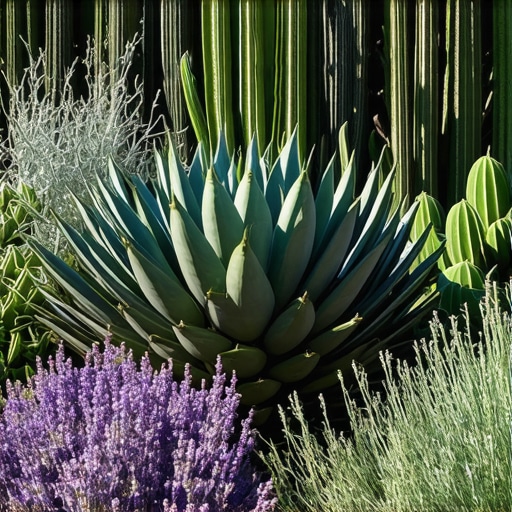
The 2026 palette is moving away from thirsty ornamentals toward high-performance C4 grasses and deep-taproot perennials. We are looking for plants that can handle the 100-degree spikes without dropping their lower foliage. Species like Baptisia australis (False Indigo) are non-negotiable for sun beds. They have a massive taproot that anchors them against wind and allows them to pull moisture from four feet down. Another powerhouse is Panicum virgatum (Switchgrass), specifically the newer upright cultivars. These provide the structural height without the flopping seen in older varieties. They don’t need fertilizer; in fact, if you give them too much nitrogen, they get weak and fall over. That’s the hallmark of a true low-maintenance plant: it thrives on neglect once established.
| Plant Species | USDA Zone | Height (Inches) | Drought Tolerance | Soil pH Preference |
|---|---|---|---|---|
| Baptisia australis | 3-9 | 36-48 | Excellent | 5.5-7.0 |
| Panicum virgatum | 4-9 | 48-72 | High | 5.0-8.0 |
| Perovskia atriplicifolia | 5-9 | 24-36 | Extreme | 7.0-8.5 |
| Echinacea pallida | 4-8 | 24-36 | High | 6.0-7.5 |
| Sedum ‘Autumn Joy’ | 3-9 | 18-24 | Extreme | 6.5-7.5 |
The Reality of Irrigation and Hydration
While the internet tells you to water every day, turf grass and sun-loving perennials actually need deep, infrequent watering—exactly 1 inch per week—to force roots to chase the water down. If you mist your plants daily, you are training them to keep their roots near the surface. When the July heat hits, those surface roots fry. We install drip irrigation with pressure-compensating emitters. This delivers water directly to the root zone at a rate of 0.9 gallons per hour, minimizing evaporation. Every system we build has a rain sensor and a soil moisture probe. If the ground is already at field capacity, the system stays off. Over-watering is just as lethal as drought because it leads to Pythium and other fungal pathogens that rot the root system from the inside out.
How do I choose drought-tolerant plants for a professional garden design?
Professional drought-tolerant plant selection involves analyzing site-specific microclimates, soil drainage rates, and USDA hardiness zones to ensure long-term viability. You must prioritize species with sclerophyllous leaves or deep taproots that can survive extended periods without supplemental irrigation after the initial establishment phase.
What are the hardiest full sun perennials for 2026?
The hardiest full sun perennials for 2026 include Baptisia, Amsonia hubrichtii, and Echinacea pallida, which offer high thermal resistance and low nutrient requirements. These plants are selected for their ability to maintain structural integrity in high-wind and high-heat environments without requiring frequent division or chemical intervention.
“A retaining wall doesn’t fail because of the stone; it fails because of the water trapped behind it.” – Hardscape Engineering Axiom
The Professional Site Preparation Checklist
- Verify utility markings via 811 before any excavation.
- Perform a percolation test: a 12-inch hole should drain in less than 4 hours.
- Test soil pH and adjust with elemental sulfur or lime only if strictly necessary.
- Check root flares on all nursery stock; remove excess soil from the top of the root ball.
- Apply a 3-inch layer of triple-shredded hardwood mulch, leaving a 2-inch gap around stems.
- Set irrigation timers for pre-dawn hours to minimize fungal growth.
Stop buying plants at big-box stores. Those plants are pumped full of high-nitrogen fertilizers to make them look green on the shelf, but they have no structural root density. When you put them in the ground, they go into shock because the ‘junkie’ fertilizer supply is cut off. Buy from local nurseries that grow their stock in the local climate. It costs twenty percent more, but the survival rate is nearly double. I’ve seen too many DIY projects fail because they saved fifty bucks on plants and lost five hundred in labor when they died. Quality nursery stock, proper grading, and a deep understanding of soil chemistry are the only things that matter. The rest is just window dressing.
![4 Drought-Tolerant Perennials for 2026 Full Sun [Zone 8]](https://lawnmajesty.com/wp-content/uploads/2026/05/4-Drought-Tolerant-Perennials-for-2026-Full-Sun-Zone-8.jpeg)