
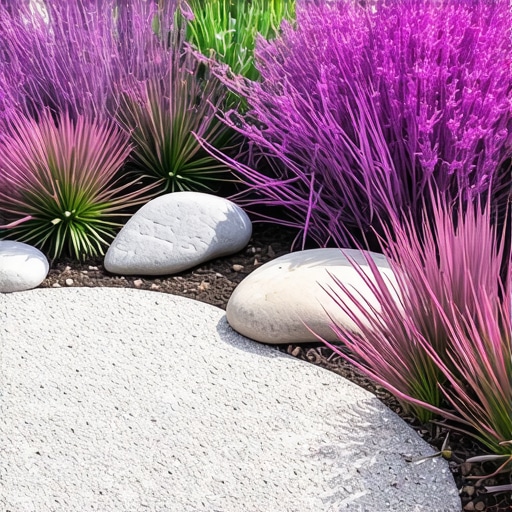
Best 2026 Drought-Tolerant Lawn Alternatives
Best 2026 Drought-Tolerant Lawn Alternatives: Engineering a Low-Water Landscape
I always drill into my new crew members: if you don’t fix the soil grading and biology first, every plant you put in the ground is just expensive compost. I have spent 25 years watching homeowners throw money at Kentucky Bluegrass in regions where it has no business growing. By the time they call me, they have a yard full of burnt-out thatch and a water bill that looks like a mortgage payment. We are moving into 2026, and the old-school ‘mow-and-blow’ monoculture is dying. If you want a landscape that survives the next decade of heat waves and water restrictions, you have to stop thinking about aesthetics and start thinking about civil engineering and soil microbiology.
What are the best 2026 drought-tolerant lawn alternatives?
The most effective drought-tolerant lawn alternatives for 2026 include micro-clover, creeping thyme, native sedges (Carex), and fine fescue blends. These selections provide functional ground cover with 70% less water than traditional turf, leveraging deep root systems and nitrogen-fixing capabilities to maintain soil health without synthetic inputs.
The Engineering of Soil: Why Your Current Lawn is Failing
Before we talk about plants, we have to talk about the medium. Most modern residential soil is ‘dead’—it is compacted subsoil left over from construction, stripped of organic matter. When you try to grow a thirsty turf on compacted clay, the water just runs off, causing hydrostatic pressure issues near your foundation or simply evaporating. In my firm, we don’t even look at seed catalogs until we have a lab-tested soil pH and a compaction reading. You need at least 6 inches of uncompacted, microbially active soil to support a drought-resistant root system. It is simple physics: deeper roots access the water table that shallow grass cannot reach.
“A lawn is not a natural ecosystem; it is a high-maintenance crop that requires constant intervention to stave off the natural succession of the local biome.” – Agricultural Extension Agronomy Manual
Option 1: Micro-Clover (Trifolium repens ‘Pipolina’)
Micro-clover is a game-changer for 2026. Unlike the clumpy white clover of the 1970s, these cultivars are bred for a low-growth habit and tiny leaves. The biological advantage here is nitrogen fixation. Micro-clover has a symbiotic relationship with Rhizobia bacteria in the soil, which pulls nitrogen from the atmosphere and converts it into a form the plant can use. You are essentially growing your own fertilizer. It stays green when the neighbor’s fescue goes dormant. It is tough. It handles foot traffic. Most importantly, it doesn’t need 1 inch of water every week. It will survive on half that once established.
Option 2: Creeping Thyme and Herbal Carpets
For areas with zero foot traffic to moderate walking, creeping thyme (Thymus serpyllum) is the engineering answer to the ‘perfect green’ look. We are talking about a plant that thrives in poor, rocky soil where grass would die in a week. It is a woody perennial. It doesn’t need mowing. It doesn’t need nitrogen-heavy fertilizers that leach into the groundwater. In fact, if you over-fertilize thyme, you will kill it. It requires a well-drained site. If your soil holds water like a bathtub, you need to install a French drain or a modified gravel base before you even think about planting thyme.
| Alternative Type | Water Requirement | Mowing Frequency | Foot Traffic Tolerance | Installation Cost (per sq ft) |
|---|---|---|---|---|
| Kentucky Bluegrass | High (1″/week) | Weekly | High | $0.50 (Seed) – $2.00 (Sod) |
| Micro-Clover | Low (0.3″/week) | Once a Month | Moderate/High | $0.80 (Seed) |
| Creeping Thyme | Very Low | None | Low/Moderate | $3.50 (Plugs) |
| Native Sedges | Moderate/Low | Twice a Year | Low | $4.00 (Plugs) |
How much water does micro-clover actually need?
To establish micro-clover, you must provide 0.5 inches of water daily for the first 14 days; however, once the root system reaches a depth of 4-6 inches, the plant only requires deep irrigation once every 10 to 14 days depending on soil evaporation rates and local humidity levels.
The Hardscape Integration: Reducing the ‘Living’ Footprint
Sometimes the best lawn alternative isn’t a plant at all. It is a functional hardscape. I’m not talking about pouring a giant slab of concrete—that’s a heat island waiting to happen. I am talking about permeable pavers and gravel paths. We use a 4-inch base of 21A modified stone, compacted to 95% Proctor density, topped with a 1-inch bedding layer. This allows rainwater to infiltrate the subgrade rather than overwhelming municipal storm drains. By reducing the ‘green’ area by 30% through strategic hardscaping, you can concentrate your irrigation efforts on the remaining 70%, making the entire system more resilient.
“Surface runoff in urban environments is significantly mitigated by the transition from non-porous turf-grass systems to permeable hardscape and native deep-rooted perennials.” – ICPI Hardscape Engineering Axiom
The Native Sedge Solution (Carex Species)
If you have a shaded yard, stop trying to grow grass. It won’t work. You’ll just get moss and frustration. Instead, look at native sedges like Carex pensylvanica. These are not true grasses, but they look like them. They are evolved for local climates. They have seen the droughts of 1930 and 1988 and 2012. They know how to survive. They require almost zero supplemental water once the root flare is established. You mow them once in the spring to clear out old growth, and that is it. It’s a set-it-and-forget-it system for the lazy homeowner who wants a professional look.
What is the best ground cover for high-foot-traffic areas?
For high-foot-traffic areas, a micro-clover and fine fescue mix is the superior choice because the fescue provides a structural mat while the clover fills in gaps and provides natural nitrogen, creating a self-repairing surface that withstands compaction better than traditional monocultures.
Installation Protocol: The Professional Method
Don’t just throw seed on the ground and hope for the best. That is how hacks work. 1. Scalp the existing grass. 2. Aerate the soil to a 4-inch depth using a core aerator. 3. Top-dress with 1/4 inch of high-quality organic compost to introduce beneficial mycorrhizae. 4. Broadcast your drought-tolerant seed or plugs. 5. Roll the area with a water-filled roller to ensure seed-to-soil contact. 6. Mulch with a thin layer of straw or peat alternative to retain moisture during germination. It will take work. It will be messy. But it will last 20 years instead of two.
- Step 1: Conduct a 12-inch soil probe to check for compaction layers.
- Step 2: Amend soil based on NPK and pH laboratory results.
- Step 3: Install subsurface drip irrigation if the budget allows for maximum efficiency.
- Step 4: Select species based on USDA Hardiness Zone and light exposure.
- Step 5: Apply a pre-emergent only if using plugs, never with seed.
Information Gain: The One-Inch Rule is a Lie
Every blog post tells you to water your lawn 1 inch per week. They are wrong. Most people do this by watering 10 minutes every morning. That is the fastest way to kill a lawn. It encourages shallow roots that bake in the sun. If you are switching to drought-tolerant alternatives, you need to water deeply and infrequently. Force those roots to chase the moisture down 8 or 10 inches into the soil profile. This builds a plant that is mechanically and biologically prepared for a 100-degree day in July. Shallow watering is for amateurs. Deep saturation is for professionals.
The Maintenance Shift
Transitioning to a drought-tolerant lawn in 2026 means changing your mindset. You won’t be out there every Saturday with a noisy mower and a bag of chemicals. Your maintenance will involve checking for invasive species and ensuring your soil biology remains intact. Use a mulching mower if you have a clover mix; let those clippings return to the soil. That is free organic matter. It will rot. That is the point. The decomposition process fuels the soil food web. A sterile lawn is a dead lawn. A thriving, biodiverse ground cover is an engineered asset for your property value and the local ecosystem.


![Stop 2026 Slut Seeding Mistakes [Better Germination]](https://lawnmajesty.com/wp-content/uploads/2026/07/Stop-2026-Slut-Seeding-Mistakes-Better-Germination.jpeg)
![Kill 2026 Crabgrass without Chemicals [Vinegar Method]](https://lawnmajesty.com/wp-content/uploads/2026/05/Kill-2026-Crabgrass-without-Chemicals-Vinegar-Method.jpeg)
![Why Your 2026 Fescue is Still Yellow After Fertilizing [Soil Fix]](https://lawnmajesty.com/wp-content/uploads/2026/05/Why-Your-2026-Fescue-is-Still-Yellow-After-Fertilizing-Soil-Fix.jpeg)