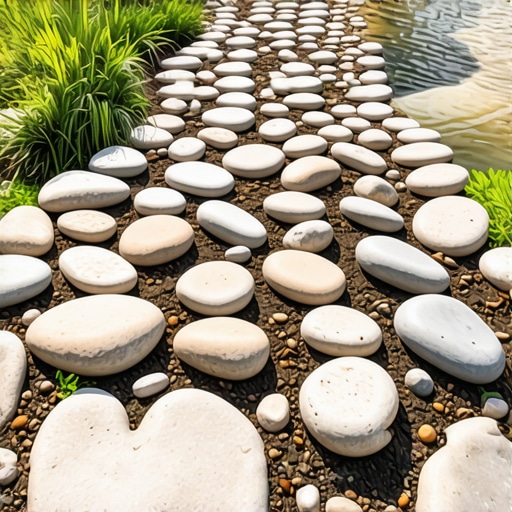
Build a $150 River Rock Path for 2026 Wet Areas
Why 80% of DIY River Rock Paths Fail Before Year Two
Building a river rock path for under $150 requires more than just dumping stone into a trench; it demands an understanding of hydrostatic pressure and soil saturation. Most homeowners fail because they ignore subgrade compaction and drainage physics, leading to a muddy mess where rocks vanish into the earth within twelve months. I always drill into my new crew members: if you don’t fix the soil grading first, every plant you put in the ground is just expensive compost, and every stone you lay is just a sinkhole waiting to happen. I’ve seen $5,000 projects ruined by a $50 drainage mistake. We are building for 2026, meaning we are accounting for the increased precipitation cycles and soil shifting that occurs over multi-year seasonal rotations.
“A retaining wall doesn’t fail because of the stone; it fails because of the water trapped behind it.” – Hardscape Engineering Axiom
How deep should a river rock path be?
A professional-grade river rock path should be excavated to a depth of 4 to 6 inches, depending on the soil plasticity and expected foot traffic. This depth allows for a 2-inch compacted aggregate base and 2 to 3 inches of decorative river stone, ensuring the path remains stable during freeze-thaw cycles and heavy rain.
The Anatomy of a $150 Hardscape Budget
Achieving a professional result on a $150 budget requires sourcing materials from local aggregate yards rather than big-box retailers where markups reach 300%. For a 15-foot path, you need roughly 0.5 cubic yards of 1-3 inch river rock and a roll of non-woven geotextile fabric. Skip the plastic weed barriers. They trap water and create a slip-plane that causes your stones to migrate. You need permeability. Use the following breakdown to manage your costs without sacrificing structural integrity.
| Material | Quantity | Estimated Cost (Bulk) |
|---|---|---|
| 1-3″ River Rock | 0.5 Cubic Yards | $45 – $60 |
| Non-Woven Geotextile | 3′ x 25′ Roll | $25 – $35 |
| Crushed Stone (3/4″ Minus) | 0.25 Cubic Yards | $20 – $30 |
| Steel Edging or Pressure Treated Wood | 30 Linear Feet | $30 – $40 |
| Total | – | $120 – $165 |
Don’t skip the base. If you put river rock directly on clay soil, the rocks will be swallowed. The crushed stone base acts as a bridge, distributing the load and preventing the decorative stones from sinking. It is the skeletal system of your path.
The Ground-Up Build: Step-by-Step Installation
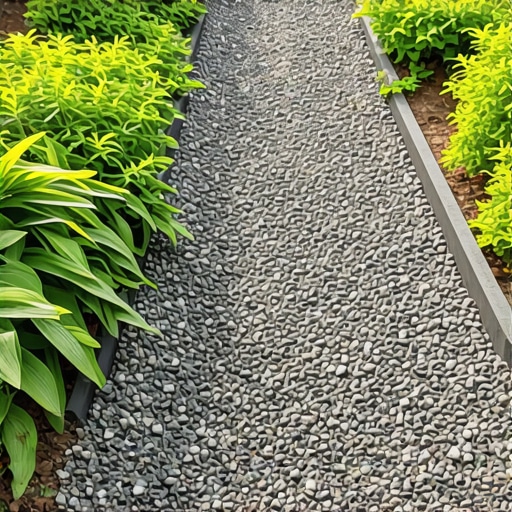
The installation process begins with mechanical excavation or aggressive hand-digging to remove all organic matter and turf grass. You must reach the subsoil. Roots left under a path will decay, creating voids that lead to differential settlement. Once excavated, you must check the pitch. Every path in a wet area needs a minimum 2% slope away from foundations. If the area is a literal swamp, you aren’t building a path; you are building a French drain disguised as a walkway. [image_placeholder]
“Effective drainage in landscape design requires a minimum 2% slope to prevent water stagnation and soil saturation.” – Penn State Agricultural Extension
- Excavate: Dig 5 inches deep, following the natural contour of the land.
- Tamp: Use a hand tamper to reach at least 90% Proctor density. The dirt should feel like concrete.
- Lay Geotextile: Run the fabric up the sides of the trench to prevent lateral soil migration.
- Base Layer: Add 2 inches of crushed stone. Wet it. Tamp it again. The tamper should literally bounce off the surface.
- Edge: Install your borders to keep the river rock contained.
- Stone Fill: Pour the river rock, leveling it with a rake. Do not overfill.
What is the best material to put under river rock?
The best material under river rock is a non-woven needle-punched geotextile layered over a 2-inch base of compacted 3/4-inch minus gravel. This combination provides the necessary tensile strength to support weight while allowing water to infiltrate the soil at a controlled rate, preventing surface erosion and stone displacement.
Managing Wet Areas and 2026 Climate Readiness
In 2026, we are seeing more “flash-saturated” events. Your path must handle 2 inches of rain in an hour. If the path sits in a low spot, you must incorporate a perforated drain pipe (SDR-35) beneath the gravel base. This is non-negotiable for wet areas. Without it, the water will sit in the trench, liquefy the subsoil, and turn your $150 investment into a muddy trench. Don’t use the cheap corrugated black pipe; it crushes too easily and clogs with silt. Go with rigid pipe. It costs $10 more but lasts 30 years. It will not rot. Period. This is where horticultural engineering beats DIY guesswork. You are managing pore water pressure. By giving the water a path of least resistance through the gravel and pipe, you protect the structural integrity of the surrounding lawn care environment. Deep, infrequent watering of the nearby turf will also help by forcing roots downward, stabilizing the soil around your new hardscape.
![Repairing Cracking Concrete Walkways [Fast Fix]](https://lawnmajesty.com/wp-content/uploads/2026/09/Repairing-Cracking-Concrete-Walkways-Fast-Fix.jpeg)