Stop Cooking in the Sun: 5 Fast-Growing Vines for Instant Natural Shade
The Engineering of Living Shade
Stop looking at your patio as a furniture showroom and start looking at it as a thermal regulation zone. I always drill into my new crew members: if you don’t fix the soil grading first, every plant you put in the ground is just expensive compost. I have seen guys spend five figures on a custom cedar pergola only to have the structure rot out in three years because they planted heavy vines in a low spot where water pools against the posts. You cannot build a vertical garden on a failing foundation. When we talk about using vines for shade, we are talking about biological engineering. You are installing a living cooling system that uses evapotranspiration to drop the ambient temperature by up to ten degrees. But if you ignore the soil pH or the tensile strength of your support wires, you are just inviting a maintenance nightmare. Real landscaping is about understanding the hydrostatic pressure of the site and the specific growth habit of the species you are forcing to do a job. Do not skip the prep work. If the root flare is buried, the plant dies. If the trellis is flimsy, the wind will take it down. It is that simple.
The Critical Failure Points of Vertical Landscaping
To achieve instant natural shade using fast-growing vines, you must install heavy-duty structural supports and utilize nutrient-dense soil amendments that cater to the specific nitrogen demands of rapid-climbing species. Most residential trellises are too weak for the literal tons of biomass a mature vine produces. A standard 4×4 post might look sturdy, but once a Wisteria reaches ten years of age, it can exert enough torque to twist a structural beam. We use 6×6 pressure-treated lumber buried 36 inches deep in concrete footers for any shade-bearing vine system. Anything less is a toy. You also need to look at the soil. Fast growth requires fuel. If your soil is compacted clay with a pH of 8.0, your vines will sit there and yellow. You need to break the compaction and get the biology right before the first leaf appears.
How much weight can a wooden pergola handle?
A standard residential pergola built with 2×8 joists can typically support 15 to 20 pounds per square foot, but wet foliage and snow loads can triple that weight. Always over-engineer your cross-beams to account for the massive biomass of mature woody vines like Trumpet Creeper or Grapevines.
“Vine growth is a function of light availability and the structural integrity of the host system; without proper anchoring, the plant will prioritize lateral spread over vertical height.” – Penn State Extension
The Top 5 Fast-Growing Vines for Thermal Relief
Not all vines are created equal. Some will tear your siding off, while others will provide a dense canopy in a single season. You need to choose based on your USDA Hardiness Zone and the amount of maintenance you are willing to perform. Here is the breakdown of the most effective shade-producers in the industry.
| Vine Species | Growth Rate (Annual) | Support Requirement | Best Feature |
|---|---|---|---|
| Wisteria sinensis | 10-15 Feet | Extreme (Woody Trunks) | Dense Floral Canopy |
| Campsis radicans | 8-12 Feet | High (Aerial Roots) | Hummingbird Attraction |
| Clematis armandii | 6-10 Feet | Medium (Twining) | Evergreen Privacy |
| Vitis vinifera | 5-8 Feet | High (Tendrils) | Edible Fruit/Shade |
| Lonicera sempervirens | 4-8 Feet | Low (Twining) | Native/Non-Invasive |
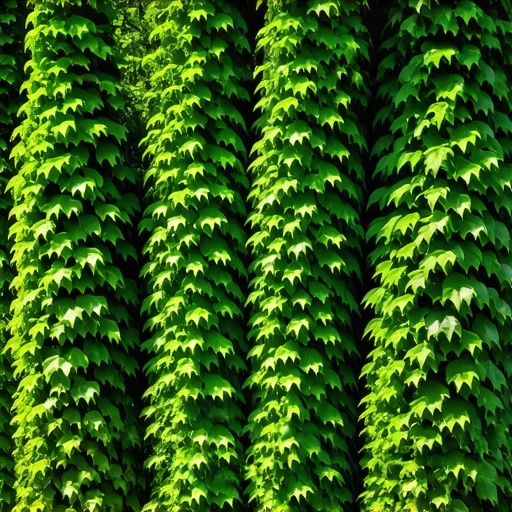
1. Wisteria (The Structural Menace): This is the king of shade, but it is a beast. You need a steel or heavy timber structure. It will produce a ceiling of purple flowers and thick green leaves that block 90% of UV rays. 2. Trumpet Vine (Campsis radicans): It grows anywhere. It loves heat. It uses aerial rootlets to grab onto surfaces. Be warned: it is aggressive. It will find cracks in your mortar if you let it. 3. Evergreen Clematis: If you want shade and privacy in the winter, this is your pick. It does not lose its leaves in most temperate zones. 4. Ornamental Grapes: These give you a classic Mediterranean look. They require aggressive pruning in the dormant season to stay productive. 5. Coral Honeysuckle: For the homeowner who wants to support local ecology. It is a twining vine, meaning it needs a lattice or wire to wrap around. It is much easier to manage than Wisteria.
How do I stop vines from destroying my house?
To prevent structural damage, install a standoff trellis at least 12 inches away from your home’s siding. This allows for airflow, prevents moisture buildup against the wall, and ensures that the vine’s attachment mechanisms do not penetrate your building envelope.
The Installation Protocol: From Dirt to Canopy
Installation is where most DIYers fail. They buy a 1-gallon pot, dig a hole just big enough for the root ball, and wonder why it takes five years to cover the pergola. Professional garden design starts with the hole. I want to see a hole three times the width of the root ball. I want the soil amended with organic matter to a depth of 18 inches. We also use a starter fertilizer with a high phosphorus count to encourage root establishment before we worry about top growth. If the roots aren’t deep, the vine will wilt the first time the temperature hits 95 degrees. Check the root flare. If you bury the stem too deep, it will rot. Keep the mulch two inches away from the main trunk to prevent fungal infections. We use 14-gauge stainless steel tension wires for climbers that use tendrils. It gives them a clean, durable path to the top of the structure.
- Step 1: Test soil pH and adjust to 6.5 for optimal nutrient uptake.
- Step 2: Install 6×6 posts with 36-inch concrete footers.
- Step 3: Dig a 3x wide hole and loosen the sides to prevent root circling.
- Step 4: Install a drip irrigation line directly to the root zone.
- Step 5: Secure the main leads to the trellis using loose gardener’s tape.
“A retaining wall doesn’t fail because of the stone; it fails because of the water trapped behind it, and a vine structure is no different—drainage is the soul of the garden.” – Hardscape Engineering Axiom
The Maintenance Schedule: Keeping the Beast Tamed
Fast growth is a double-edged sword. If you don’t prune, you end up with a tangled mess of dead wood and pests. I tell my clients: pruning is a haircut, not a surgery. You need to remove the three D’s: Dead, Damaged, and Diseased wood every spring. For Wisteria and Grapes, you need a second pruning in mid-summer to cut back the long, whippy runners. This forces the plant’s energy back into the main structural branches, creating a thicker, more effective shade canopy. Check your hardware twice a year. The weight of the vine can pull eye-bolts right out of the wood. Tighten your tensioners and look for signs of wood rot where the vine makes contact with the structure. If you stay on top of it, your living shade will last forty years. If you ignore it, it will be a pile of brush in five.
![Build a $200 Tiered Garden for 2026 Slopes [DIY]](https://lawnmajesty.com/wp-content/uploads/2026/06/Build-a-200-Tiered-Garden-for-2026-Slopes-DIY.jpeg)

![2026 Pollinator Garden Setup [Bee-Friendly]](https://lawnmajesty.com/wp-content/uploads/2026/09/2026-Pollinator-Garden-Setup-Bee-Friendly.jpeg)