
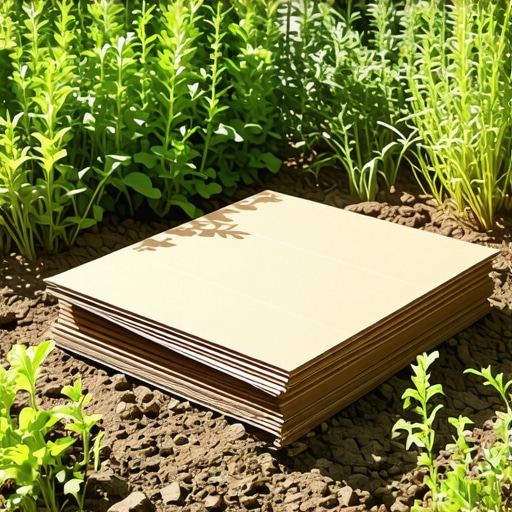
Stop 2026 Garden Weeds with This $40 Cardboard Hack
The Planning Phase: Why 80% of Landscaping Success Happens Before You Dig
Sheet mulching using a $40 cardboard hack is a professional-grade soil suppression technique that utilizes recycled cellulose and high-carbon barriers to starve the weed seed bank of light and oxygen while simultaneously boosting soil organic matter through slow-release decomposition cycles.
I always drill into my new crew members: if you don’t fix the soil grading and the underlying biology first, every plant you put in the ground is just expensive compost. I remember a job in the suburbs where a rookie insisted on just digging holes in heavy clay and dropping in $200 hydrangeas. Three months later, those plants were drowned in a bathtub of stagnant water because he ignored the soil horizons. This cardboard method, or sheet mulching, is the opposite of that amateur mistake. It is an engineering solution to a biological problem. Most homeowners see a weed and think ‘poison.’ I see a weed and think ‘succession.’ Weeds are nature’s way of covering bare, disturbed ground. If you want to stop them for the 2026 season and beyond, you have to change the environment so the weeds literally cannot breathe. We are talking about a total blackout of the soil surface. This isn’t about aesthetic mulch; it is about creating an anaerobic death zone for invasive seeds while building a microbial paradise for your desired landscape plants. Don’t skip the prep. If you rush the layering, the weeds will find the gaps. They always do. Nature hates a vacuum. If you leave a square inch of light, a dandelion or thistle will find it.
“Soil health is the foundation of any successful landscape. By utilizing sheet mulching, we improve the water-holding capacity and the cation exchange capacity (CEC) of the soil without the mechanical disruption of tilling.” – Agronomy Extension Manual, Texas A&M
How long does it take for cardboard to decompose in soil?
In a typical temperate climate with moderate rainfall, corrugated cardboard will fully decompose within 6 to 9 months, though this timeline accelerates in high-moisture environments. The process is driven by lignin-degrading fungi and earthworm activity, which eventually incorporate the carbon fibers into the A-horizon of the soil profile.
The Materials Breakdown: Defending Quality Investments
To execute a long-term weed suppression strategy, you must source plain corrugated cardboard, screened compost, and double-shredded hardwood mulch to ensure a stable carbon-to-nitrogen ratio that supports mycorrhizal fungi while preventing the nitrogen tie-up often associated with fresh wood chips.
Don’t buy the cheap stuff from the big-box store. Those plastic-wrapped bags of ‘mulch’ are often just ground-up pallets dyed with industrial pigments. They have zero nutritional value for your soil. You want arborist chips or high-quality hardwood. For the cardboard, you need bulk. Go to an appliance store. You want the big, thick sheets from refrigerator boxes. No glossy coatings. No heavy inks. No plastic tape. The tape is the enemy of a clean landscape. I have seen crew members spend hours picking out bits of plastic tape from a bed because they were too lazy to peel it off the cardboard before laying it down. It is a waste of labor. Below is a breakdown of why this $40 investment outperforms the heavy machinery and chemicals every time.
| Method | Initial Cost | Maintenance Level | Soil Health Impact |
|---|---|---|---|
| Cardboard Sheet Mulching | $40 – $60 | Low (Annual Top-off) | Increases Organic Matter |
| Glyphosate/Chemicals | $80 – $120 | High (Frequent Re-spray) | Microbial Degradation |
| Rototilling | $150 (Rental) | Extreme (Triggers Seeds) | Destroys Soil Structure |
Can I use printed cardboard for sheet mulching?
You should avoid glossy, wax-coated cardboard or boxes with heavy color printing because these often contain heavy metals or synthetic polymers that do not break down. Standard brown kraft cardboard with minimal black ink is the safest choice for maintaining soil purity and protecting earthworm populations.
The Installation Process: Engineering the Barrier
The installation of a sheet mulch system requires a 6-inch overlap of cardboard segments to prevent weed emergence through the seams, followed by a 3-inch layer of nitrogen-rich compost and a 2-inch finish layer of wood mulch to create a thermodynamic barrier that regulates soil temperature.
When you lay the cardboard, you are building a wall. Think like a hardscape foreman. If your base isn’t solid, the whole thing fails. I tell my guys to treat the cardboard like shingles on a roof. Start at the lowest point and work up. Overlap those edges. If you only overlap by an inch, the first time the soil settles or a bird scratches at the mulch, that seam opens up. Once light hits that soil, the dormant seeds from ten years ago will germinate. I’ve seen it happen. You also need to soak the cardboard as you go. Use a garden hose. The cardboard should be saturated. This starts the decomposition process immediately and helps it conform to the contours of the land. If it’s dry, it’s just a layer of paper. If it’s wet, it’s a biological catalyst. You are aiming for a bulk density that prevents air pockets. Air pockets are where rodents live. We aren’t building a vole hotel; we are building a garden.
“Effective weed control in perennial beds is best achieved through the maintenance of a continuous organic mulch layer, which suppresses the germination of light-sensitive weed species.” – Penn State Extension, Horticulture Department
- Mow the area: Scalp the existing weeds and grass as low as the mower will go. Leave the clippings.
- Hydrate: Deeply water the area to ensure the existing soil is at field capacity.
- Layer Cardboard: Remove all tape and staples. Overlap edges by at least 6 inches.
- Wet Again: Spray the cardboard until it is limp and heavy.
- Compost Layer: Apply 2-3 inches of high-quality compost. This is your ‘green’ layer.
- Mulch Layer: Finish with 3 inches of wood chips. This is your ‘brown’ layer.
- Edge: Use a spade to tuck the cardboard into a clean trench along any hardscaping or lawn edges.
The Settling-In Period: What to Expect in Year One
During the first 12 months, the decomposition of the cellulose will attract a high concentration of Anneric earthworms, which will tunnel through the cardboard, effectively aerating the soil and depositing nutrient-rich castings directly into the rhizosphere of your landscape plants.
Don’t freak out if you see mushrooms. Fungi are your friends. If you see ‘Shotgun Fungi’ or ‘Stinkhorns,’ it means the wood chips are breaking down exactly how they should. The mycelial network is moving in. This is the biological engine that feeds your plants. In that first year, the cardboard will feel stiff under your feet. By year two, you won’t even know it was there, except for the fact that the soil underneath will be dark, crumbly, and full of life. You’ll be able to stick your hand into it like it’s a bag of potting soil. That is the goal. No more 400-PSI compacted clay. No more fighting with a hoe every Saturday morning. You did the engineering work upfront. Now you just let the microbes do the maintenance. It will rot. That’s the point. The carbon returns to the earth, and the weeds stay buried. Skip the chemicals. Stop the rot from the bottom up. This is how pros build gardens that last decades instead of weeks.
![Why Your 2026 Drip System is Wasting Water [Fix]](https://lawnmajesty.com/wp-content/uploads/2026/06/Why-Your-2026-Drip-System-is-Wasting-Water-Fix.jpeg)
![Fix 2026 Yellowing Evergreen Needles [Soil Fix]](https://lawnmajesty.com/wp-content/uploads/2026/05/Fix-2026-Yellowing-Evergreen-Needles-Soil-Fix.jpeg)