
Fixing 2026 Sinking Patios with Polyurethane Foam
The Visual Death Rattle of a High-End Hardscape
A sinking patio is more than an eyesore; it is a structural failure of the subbase usually caused by hydrostatic pressure, poor soil compaction, or drainage issues. When you see pavers tilting or concrete slabs cracking, the grade has likely failed beneath the surface. You are looking at a safety hazard that devalues your landscape design instantly. It will not fix itself. Don’t wait until the tripping hazard becomes a lawsuit.
Option A: The Hardscape Autopsy
I recently got called out to tear up a $30,000 patio that was sinking because the previous contractor skipped the geotextile fabric and used unwashed stone for the base. Within two seasons, the fines from the stone migrated into the subsoil, leaving massive voids. The whole surface looked like a topographical map of the Andes. I had to tell the homeowner that their ‘savings’ on the original bid just cost them double in demolition and reconstruction. It was a drainage nightmare that could have been avoided with three inches of modified gravel and a proper plate compactor. We are seeing more of this in 2026 as homeowners try to cut corners with ‘discount’ crews who don’t understand soil mechanics.
How to Fix a Sinking Patio with Polyurethane Foam Injection
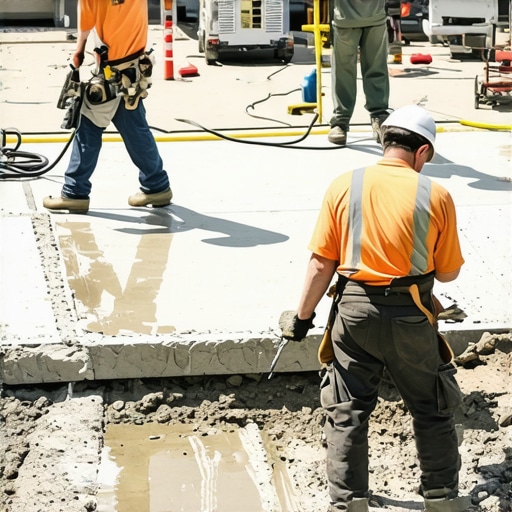
To fix a sinking patio using polyurethane foam injection, technicians drill small holes through pavers or concrete slabs and pump high-density geotechnical foam into the subbase voids. The foam expands, compacts the soil, and lifts the structure back to its original grade level. This method, often called polyjacking, is faster and less invasive than traditional hardscaping tear-outs. It sets in minutes. It works.
“A retaining wall doesn’t fail because of the stone; it fails because of the water trapped behind it.” – Hardscape Engineering Axiom
The Engineering of 2026 Polyurethane Geopolymers
We are no longer using the basic spray foam you find at a hardware store. The 2026-spec polyurethane foam is a two-part closed-cell polymer designed specifically for load-bearing applications. When the two components mix at the injection nozzle, an exothermic reaction occurs, causing the liquid to expand up to 20 times its original volume. This expansion exerts enough PSI to lift a 4,000-pound concrete slab with surgical precision. The hydrophobic nature of the foam means it doesn’t just fill the void; it displaces standing water and creates a moisture barrier that prevents future washouts. This is critical for hardscaping longevity.
How Much Modified Gravel Do I Need for a Patio Base?
A standard paver patio requires a minimum of 4 to 6 inches of compacted modified gravel (often called 21A or 3/4-inch minus) over a stable subgrade. If the soil is heavy clay, you must increase the base depth to 8 inches and include a woven geotextile to prevent the stone from sinking into the mud. Skimping on base material is the number one reason patios fail within the first five years. Don’t do it. Use a vibratory plate compactor in 2-inch lifts. Anything less is just gardening, not engineering.
| Repair Method | Installation Time | Longevity | Cost Impact | Landscaping Disruption |
|---|---|---|---|---|
| Polyurethane Foam | 1-4 Hours | 20+ Years | Moderate | Zero |
| Mudjacking | 1 Day | 5-10 Years | Low | Moderate |
| Total Tear-Out | 3-7 Days | 25+ Years | High | Severe |
Why 2026 Patios Fail: The Forensic Analysis
Most failures stem from the subbase. If your hardscape contractor didn’t use a transit level to ensure a 2% slope away from the foundation, water is pooling under the pavers. This leads to saturation, which softens the soil and allows the pavers to settle. In 2026, we are seeing more extreme weather events, meaning your drainage system—whether it is French drains or catch basins—must be sized to handle 2-inch-per-hour rainfall. If the water has nowhere to go, it will take your patio with it. It is simple physics.
“Soil compaction is the most critical factor in hardscape longevity; 95% Proctor density must be achieved to prevent settlement.” – Penn State Department of Plant Science
Will Polyurethane Foam Harm My Garden Soil?
Modern geotechnical foams used in landscaping are inert once cured, meaning they do not leach chemicals into the surrounding garden beds or turf grass. Because the foam is closed-cell, it does not break down over time, even when exposed to soil microbes or acidic groundwater. It effectively becomes a permanent part of the underground structure. Your perennials and shrubs are safe. The foam stays put. It won’t migrate.
[IMAGE_PLACEHOLDER_1]
Checklist for Detecting Early Patio Failure
- Standing Water: Puddles that remain 30 minutes after rain stop indicate grading failure.
- Sand Migration: Polymeric sand disappearing from paver joints suggests a void below.
- Ant Hills: Excessive insect activity under pavers often indicates loose, uncompacted base material.
- Step Cracks: Cracks following the mortar lines in brickwork indicate uneven settling.
The Remediation Process: Step-by-Step
First, we map the voids using ground-penetrating radar or simple probe rods. Second, we drill 5/8-inch injection ports at the low points of the settlement. Third, we inject the polyurethane in short bursts, monitoring the lift with a laser level. Fourth, we patch the drill holes with matching grout or sand. Fifth, we address the root cause, which is usually a clogged gutter or poorly positioned downspout. If you don’t fix the water, the foam is just a temporary bandage. Fix the drainage. Save the patio. It’s a binary choice.
![Building a 2026 Simple Stone Bench [DIY]](https://lawnmajesty.com/wp-content/uploads/2026/09/Building-a-2026-Simple-Stone-Bench-DIY.jpeg)

![Why Your 2026 Retaining Wall is Leaning [3 Fixes]](https://lawnmajesty.com/wp-content/uploads/2026/06/Why-Your-2026-Retaining-Wall-is-Leaning-3-Fixes.jpeg)