Fixing 2026 Yellow Patches in Bermuda Grass
Fixing 2026 Yellow Patches in Bermuda Grass: A Forensic Guide to Turf Recovery
The sight of yellowing Bermuda grass in 2026 is often the first sign of a systemic failure within the turf’s micro-environment. Most homeowners see a yellow patch and immediately reach for more water or a bag of high-nitrogen fertilizer. This is a mistake. It is often a fatal one. To fix Cynodon dactylon, you must understand that the leaf blade is merely a sensory output for the complex biological engine occurring beneath the soil surface. If that engine is starved of oxygen or poisoned by salt, no amount of ‘green-up’ spray will save it.
The Chemical Nightmare: A Lesson in Osmotic Stress
A homeowner called me in a panic after they completely torched their front lawn by applying a triple-dose of quick-release synthetic fertilizer during a dry spell. They thought they were helping the grass ‘pop.’ Instead, they created a chemical nightmare. The high salt index of the urea pulled every drop of moisture out of the root system through a process of reverse osmosis. The grass didn’t just turn yellow; it turned brittle and gray. We had to flush the soil with three inches of water over 48 hours and apply humic acid just to stabilize the microbial colony. It was a $4,000 mistake that could have been avoided with a $20 soil test. If you don’t respect the chemistry of the yard, the yard will punish your wallet.
Diagnosing the 2026 Yellowing Phenomenon
To fix yellow patches in Bermuda grass, you must identify the cause: nitrogen burn, soil compaction, or fungal pathogens like Rhizoctonia solani. Recovery involves core aeration, pH adjustment, and proper irrigation cycles to restore the soil microbiome and encourage stolon lateral growth. Do not guess. Diagnosis is the first step of the autopsy.
How much modified gravel do I need for a patio base?
While this seems unrelated to turf, drainage is the common denominator. To calculate modified gravel for a stable base, multiply the square footage by the depth in feet (usually 0.5 feet) and divide by 27 to get cubic yards. Proper hardscape drainage prevents the hydrostatic pressure that often causes adjacent Bermuda grass to drown and turn yellow from root rot.
“Bermuda grass is a nitrogen-hungry species, but excessive applications, especially in high-heat conditions, can lead to leaf tip burn and root desiccation.” – Texas A&M Agrilife Extension
The Physics of Soil Compaction and Thatch
Bermuda grass recovery depends on the root zone temperature and soil oxygen levels. If your 2026 lawn has yellow spots, check for thatch layers exceeding 0.5 inches. High bulk density in the soil prevents nutrient transport, leading to localized chlorosis and plant death. It is basic physics. If the soil is as hard as concrete, the roots cannot breathe.
| Symptom | Probable Cause | Diagnostic Test | Remediation |
|---|---|---|---|
| Circular Yellow Rings | Large Patch (Fungal) | Pull test (blades slip off) | Fungicide (Azoxystrobin) |
| Irregular Straw Patches | Nitrogen Burn | Salt crust on soil | Heavy flushing/leaching |
| General Pale Yellowing | Iron Deficiency | Soil pH test | Chelated Iron application |
| Spongy, Wilting Turf | Over-watering | Screwdriver test | Reduce irrigation/Aeration |
How to stop Large Patch fungus in Bermuda?
To stop Large Patch fungus, apply a fungicide containing azoxystrobin or propiconazole when soil temperatures are between 60F and 70F. Ensure you treat the yellow margins of the patch, as this is where the mycelium is most active and spreading through the turfgrass. Timing is everything. Once the grass is brown, it is already dormant or dead.
The Step-by-Step Remediation Checklist
- Conduct a soil test: Measure pH, Nitrogen, Phosphorus, and Potassium.
- Check for Thatch: Cut a 3-inch deep wedge; if the brown spongy layer is over 0.5 inches, you must verticut.
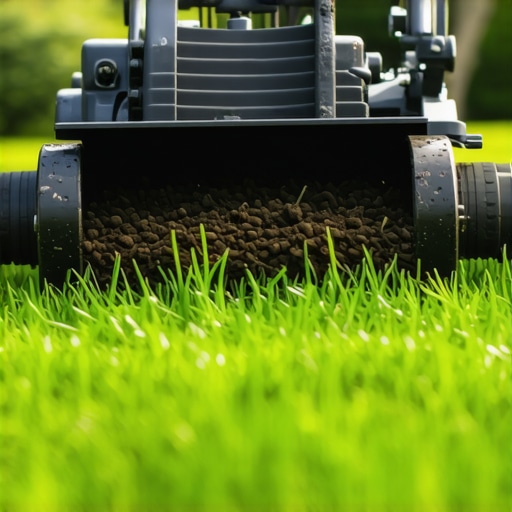
- Core Aeration: Pull 3-inch plugs to relieve compaction and allow gas exchange.
- Adjust Irrigation: Shift to deep, infrequent watering (1 inch per week in one session).
- Monitor for Pests: Check for grubs or sod webworms by drenching a spot with soapy water.
Bermuda grass is an aggressive spreader. It wants to live. It uses stolons (above-ground runners) and rhizomes (below-ground runners) to colonize space. When you see a yellow patch, the plant is telling you it has lost the ability to produce chlorophyll. This is usually due to a lack of iron or nitrogen, but in the heat of 2026, it is more likely heat stress or drought dormancy. Stop cutting it too short. Scalping the lawn in 95-degree heat is a death sentence. Keep it at 1.5 to 2 inches to shade the stolons.
“Core aeration should be performed when the grass is actively growing to facilitate rapid recovery and maximize the infiltration of oxygen into the root zone.” – Penn State Center for Turfgrass Science
The Long-Term Maintenance Strategy
Maintaining a resilient lawn requires moving away from the ‘mow-and-blow’ mentality. You must manage the soil biology. In late 2026, we are seeing a trend of potassium deficiency leading to poor winter hardiness. Apply a 0-0-50 potassium sulfate treatment in late fall. This strengthens the cell walls. It makes the grass tough. A tough lawn doesn’t turn yellow just because the sun stayed out an hour longer. Stop using cheap big-box fertilizers. They are loaded with fillers that increase soil salinity. Use slow-release organic-based products. Feed the soil, and the soil will feed the grass. It is a simple contract. Don’t break it.