Why Flagstone Is Better Than Concrete for Your New Path
The Engineering of a Walkway: Why Flagstone Wins
Choosing flagstone over poured concrete is a decision based on structural flexibility, hydrostatic pressure management, and long-term soil interaction. Unlike rigid concrete slabs that inevitably crack under thermal expansion, individual flagstones allow for micro-movements in the earth, ensuring the path remains functional for decades without structural failure.
The $30,000 Hardscape Autopsy
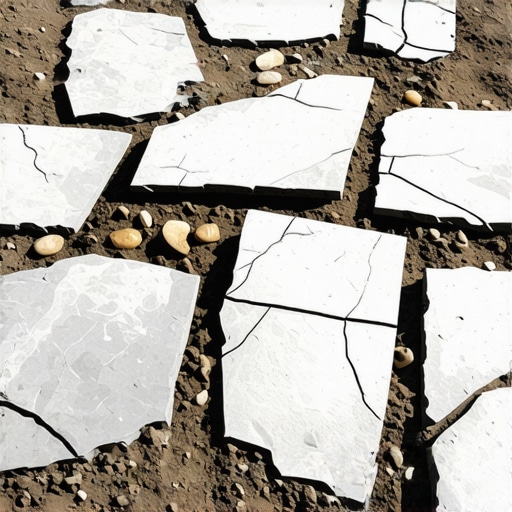
I recently got called out to tear up a $30,000 patio and walkway that was sinking and spider-webbed with cracks. The previous contractor poured a 4-inch concrete slab over 2 inches of loose pea gravel. They ignored the frost line. They ignored the heavy clay soil. In three winters, the ground heaved, the concrete snapped, and the homeowners were left with a trip hazard. If they had used flagstone, that movement would have been absorbed by the joints. Instead, they had a monolithic disaster. I spent three days with a jackhammer just to reach the dirt. It was a total waste of raw material and labor. This is why I tell my crew: concrete is temporary; stone is permanent. Concrete is a chemical reaction that wants to return to the earth as rubble. Natural stone, specifically sandstone or limestone flagstone, is already part of the earth. It has spent millions of years under pressure. It is not afraid of a little frost.
“A retaining wall or paved surface doesn’t fail because of the stone; it fails because of the water trapped behind or beneath it.” – Hardscape Engineering Axiom
Comparing Structural Integrity: Flagstone vs. Concrete
When evaluating materials, you must look at compressive strength and flexural capacity. Concrete has high compressive strength but almost zero flexural capacity. Flagstone, when dry-laid on a properly compacted base, creates a permeable system that manages water better than any solid slab. Use the table below to understand the technical differences.
| Feature | Natural Flagstone (Dry-Laid) | Poured Concrete (Standard 4000 PSI) |
|---|---|---|
| Permeability | High (via joints) | Zero (Runoff heavy) |
| Flexibility | Excellent (Articulated) | Brittle (Requires joints) |
| Repairability | Individual stones replaceable | Requires patching or total tear-out |
| Lifespan | 50+ Years | 15-25 Years (Before cracking) |
| Soil Interaction | Moves with freeze/thaw | Resists movement until it snaps |
How much modified gravel do I need for a patio base?
To calculate base material volume, you need a minimum of 4 to 6 inches of compacted 21A or 3/4-inch modified gravel for a pedestrian path. For every 100 square feet at a 6-inch depth, you will need approximately 2.5 tons of aggregate to ensure a stable, non-shifting foundation. Don’t eyeball it. Use a calculator. If you skimp on the base, you are just building a very expensive mud pit. You also need to factor in a 20% compaction rate. That means if you want 6 inches of solid base, you need to pour 7.2 inches of loose gravel and hit it with a vibratory plate compactor until it rings. If the compactor doesn’t bounce, the ground isn’t ready.
Why is flagstone better for drainage?
Flagstone is superior for drainage because the joints between the stones act as natural conduits for water to reach the subsoil. In a dry-laid system, water migrates through the polymeric sand or stone dust into the DGA (Dense Graded Aggregate) base, reducing the hydrostatic pressure that typically causes concrete to lift. In a heavy rain event, a concrete path becomes a flume. It sends thousands of gallons of water toward your foundation or into your flower beds, eroding your mulch and drowning your root zones. Flagstone absorbs the energy of the water. It slows it down. It is the difference between a flood and a filter.
“The longevity of a segmental pavement system is directly proportional to the density of the sub-base compaction and the quality of the bedding layer.” – ICPI (Interlocking Concrete Pavement Institute) Technical Manual
The Ground-Up Build: Step-by-Step Flagstone Installation
Building a path that lasts 50 years requires discipline. It is 80% excavation and 20% aesthetics. If you spend all your time picking out pretty colors and no time on soil grading, you are failing. Follow this checklist for a professional-grade install.
- Excavation: Dig to a depth of 8 to 10 inches. Remove all organic matter. If you see a root, cut it. Roots under a path are ticking time bombs.
- Sub-Grade Compaction: Use a plate compactor on the raw soil. If the soil is heavy clay, install a geotextile fabric to prevent the gravel from sinking into the clay over time.
- Base Layer: Add 6 inches of modified gravel in 2-inch lifts. Compact each lift. The base should be hard enough that you can’t drive a screwdriver into it.
- Bedding Layer: Add 1 inch of coarse sand or stone dust. Use screed pipes to ensure a perfectly level (but slightly sloped for drainage) surface.
- Stone Selection: Choose stones at least 1.5 to 2 inches thick. Thinner stones, like those sold at big-box retailers, will snap under foot traffic. Look for full-color Pennsylvania Bluestone or high-density Quartzite.
- Jointing: Fill the gaps with polymeric sand. This isn’t just sand; it’s sand mixed with binders that harden when wet, preventing weed growth and ant hills while remaining flexible.
Thermal Expansion and the Freeze-Thaw Cycle
In regions with significant temperature swings, concrete is a liability. As ground moisture freezes, it expands. A concrete slab is too rigid to accommodate this expansion, leading to heave. Once a slab heaves and cracks, the structural integrity is gone forever. Flagstone is an articulated system. Each stone is an independent unit. When the ground moves, the stones move slightly. When the ground thaws, they settle back into place. This is why 100-year-old European streets are made of cobbles and stone, not slabs. It is simple physics. You cannot fight the earth; you have to move with it. If you try to fight the soil with a 4-inch pour of 4000 PSI concrete, the soil will win every single time. It might take one year, or it might take five, but the soil never loses.
Maintenance and Lifecycle Economics
Homeowners often choose concrete because it’s cheaper upfront. This is a false economy. A concrete path will look terrible in 10 years and require replacement in 20. A flagstone path, if properly installed with a compacted aggregate base, only requires a refresh of polymeric sand every 5 to 7 years. If a single stone ever cracks—which is rare if you buy 2-inch thick stock—you simply pop it out and replace it. You can’t “pop out” a section of a concrete sidewalk without it looking like a bad dental filling. Furthermore, flagstone doesn’t suffer from salt scaling or spalling like concrete does during the winter. It is chemically inert and physically resilient. Stop thinking about the cost of the material today. Start thinking about the cost of the demolition in fifteen years.