How to Get Rid of Moss in Your Grass
The Forensic Autopsy of a Failing Lawn
When you walk across a lawn and it feels like stepping on a wet kitchen sponge, you aren’t looking at a landscaping choice; you are looking at a structural failure. Moss doesn’t just show up because it likes your yard. It arrives because your turf has abdicated its position. I always drill into my new crew members: if you don’t fix the soil grading and chemistry first, every plant you put in the ground is just expensive compost. Moss is an opportunistic colonizer. It thrives in the exact conditions that suffocate high-quality turfgrass. If you see Bryophyta—the scientific group for mosses—creeping across your property, it is a glaring red flag that your soil is compacted, your pH is out of whack, or your drainage system is non-existent. Most homeowners reach for a bag of ‘Moss Killer’ and think the job is done. It isn’t. You’ve just killed the symptom while the disease remains in the dirt. You need to understand the microscopic reality of your yard before you can fix it.
What Causes Moss in Lawns?
To get rid of moss in your grass, you must address the underlying cultural conditions: high soil acidity, excessive moisture, poor soil drainage, and low light availability. While chemical treatments like iron sulfate provide immediate desiccation, permanent eradication requires core aeration and soil pH adjustment to favor turfgrass biology over moss rhizoids.
The Biological Mechanics of Moss vs. Turf
Mosses are non-vascular plants. They don’t have roots in the traditional sense; they have rhizoids. They don’t suck nutrients from deep in the soil; they absorb moisture and minerals directly through their leaves. This is why they can survive on a damp brick or a compacted clay slab where a blade of Kentucky Bluegrass would starve. Turfgrass requires a specific soil bulk density to allow for gas exchange and root elongation. When your soil reaches a compaction level that prevents oxygen from reaching the root zone, the grass dies back, and the moss moves in. It is a simple matter of biological vacancy. Moss is the squatter that moves in when the landlord stops maintaining the building. It doesn’t need much. It just needs a lack of competition and a bit of stagnant water.
“A lawn that supports moss is almost always a lawn with a soil pH below 5.5 or a soil structure that is too dense for oxygen penetration.” – Penn State Center for Turfgrass Science
Analyzing Soil Compaction and Hydrostatic Pressure
Compaction is the primary enemy of lawn health. In heavy clay soils, common across many regions, the particles are so fine that they bind together under the weight of foot traffic or even heavy rain. This creates a literal seal. Water cannot move vertically through the soil profile, so it sits on the surface. This is where hydrostatic pressure becomes your enemy. If your yard isn’t graded to move that water away, it saturates the top half-inch of soil. Moss thrives in this anaerobic environment. Grass roots, however, undergo a process called ‘damping off’ or root rot. They literally drown. When I’m on a job site, I use a penetrometer to measure the PSI required to break the soil surface. If it’s over 300 PSI, your grass doesn’t stand a chance. You aren’t growing a lawn; you’re growing a green parking lot. Don’t skip the core aeration. It’s the only way to break that seal.
| Condition | Turfgrass Requirement | Moss Preference | Remediation Step |
|---|---|---|---|
| Soil pH | 6.2 – 7.0 (Slightly Acidic to Neutral) | 4.0 – 5.5 (Highly Acidic) | Apply Pelletized Lime |
| Sunlight | 6+ Hours of Direct Sun | Low Light / Deep Shade | Prune Canopy / Thin Trees |
| Drainage | Rapid Percolation | Stagnant Surface Water | Install French Drains / Grading |
| Compaction | Low Bulk Density (Oxygenated) | High Compaction (Anaerobic) | Core Aeration |
The Chemical Warfare: Iron Sulfate and pH
If you want to kill moss fast, you use iron. Ferrous sulfate or ferrous ammonium sulfate are the industry standards. When you apply iron to moss, it reacts with the plant’s lack of a protective cuticle, causing it to turn black and die within hours. It’s satisfying to watch, but it’s temporary. If you don’t change the pH, the moss spores—which are everywhere in the air—will just land and restart the colony next season. Most moss-ridden lawns are too acidic. This acidity locks up essential nutrients like phosphorus and potassium, making them unavailable to the grass but perfectly fine for the moss. You need to apply calcium carbonate (lime) based on a professional soil test. Don’t just guess. Too much lime can lead to iron chlorosis in your grass. Use a calibrated spreader. Get the numbers right.
“Effective drainage is the foundation of all successful hardscaping and landscaping; without it, the structural integrity of the soil is compromised.” – Hardscape Engineering Axiom
How much modified gravel do I need for a patio base?
While this seems like a hardscaping question, it’s actually a drainage question. If your moss is growing near a patio, it’s because the patio wasn’t built with a proper modified gravel base and pitch. A standard patio requires a 6-inch base of crushed stone (2A modified) to allow water to move away from the surface and into the sub-grade. If that water is shedding off the patio and pooling on your lawn, you will have a moss ring. You calculate the gravel needed by multiplying square footage by depth (in feet) and dividing by 27 to get cubic yards. If you don’t manage this runoff, your lawn is the sacrificial lamb for your hardscape.
Does vinegar kill moss in grass without killing the lawn?
No. This is a classic ‘mow-and-blow’ hack that ruins soils. Vinegar is acetic acid. While it will burn the moss, it is non-selective. It will burn the grass blades and, more importantly, it can drastically lower the local soil pH even further, making the area even more hospitable for moss in the long run. It’s a short-sighted fix. Use chelated iron instead. It targets the moss and actually greens up the grass by boosting chlorophyll production. It’s scientific. It’s cleaner. Use it.
The Mechanical Remediation Protocol
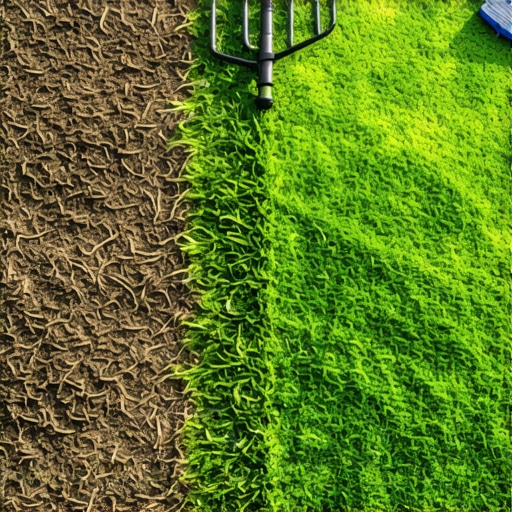
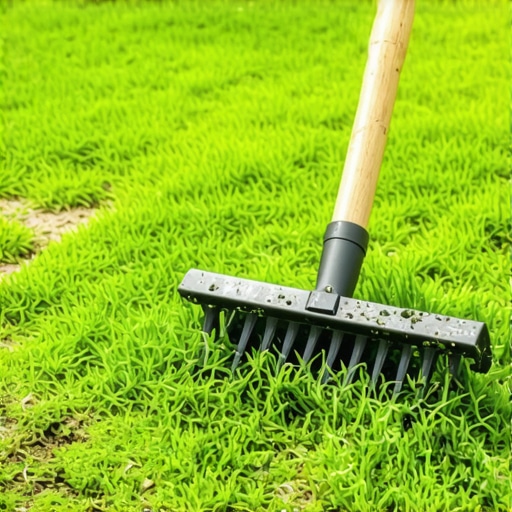
Once you’ve killed the moss with iron, you have to get the dead biomass out. Moss is dense. If you leave it, it acts like a thatch layer that prevents seed-to-soil contact. You need to power rake or use a heavy-duty thatch rake. Get down to the dirt. You should see bare earth when you are done. This is the only way to prepare for overseeding. If you’re just throwing seed on top of dead moss, you’re wasting money. It won’t take. The seed needs to be tucked into the soil at a depth of about an eighth of an inch.
- Step 1: Soil Test. Determine the exact pH and nutrient deficiencies.
- Step 2: Chemical Kill. Apply iron sulfate when the moss is actively growing (damp conditions).
- Step 3: Mechanical Removal. Power rake the blackened moss out of the yard.
- Step 4: Drainage Correction. Fix low spots and install French drains if water is standing.
- Step 5: Aeration. Use a core aerator to pull 3-inch plugs across the entire area.
- Step 6: pH Adjustment. Apply pelletized lime as dictated by your soil test.
- Step 7: Overseeding. Use a high-quality, shade-tolerant fescue or rye blend.
The Maintenance Schedule: Year One and Beyond
Your lawn is a living organism, not a static carpet. After the initial remediation, you need to change your habits. Stop watering for 15 minutes every day. That only saturates the surface and encourages moss. Water deeply and infrequently—exactly one inch per week in a single session. This forces the grass roots to grow deep into the soil to chase the receding water line. This ‘root chasing’ increases turf density and makes it impossible for moss to find a foothold. Also, keep your mower blade sharp and set it high. Scalping the lawn opens up the canopy and lets light hit the soil surface, which triggers moss spore germination. Mow at 3.5 or 4 inches. Let the grass shade out the moss. It’s a war of attrition. You have to be more disciplined than the weeds.
The Reality of Shade Management
If you have a 100-year-old Oak tree casting deep shade over your lawn, you might never have a perfect carpet of grass. No amount of chemicals can replace the sun. In these cases, you have two choices: thin the tree canopy to let 20% more light through, or transition that area to a shade-loving garden design. Use Hostas, Ferns, or Pachysandra. Sometimes, the best way to get rid of moss in your grass is to realize that the grass shouldn’t be there in the first place. Fighting nature is expensive and exhausting. Work with the biology of your site. If it’s too dark for grass, it’s a garden, not a lawn. That’s just the reality of horticulture. Know when to pivot.