
Fix 2026 Soil Acidity with This $15 Lime Application
Fix 2026 Soil Acidity with This $15 Lime Application
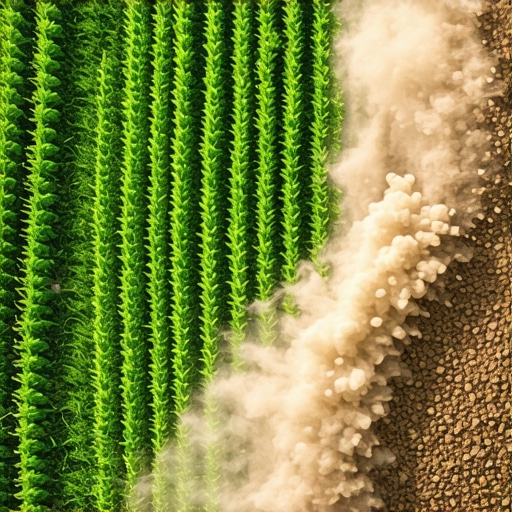
The ground feels spongy, the grass is a sickly shade of chartreuse, and moss is winning the war in the shaded corners of your lot. You have dumped hundreds of dollars into high-nitrogen fertilizers, yet the turf remains stunted. This is the classic signature of a soil pH crisis. Most homeowners think they need more chemicals when what they actually need is a simple, 50-pound bag of crushed limestone. If your soil chemistry is off, you are essentially throwing money into a metabolic void where your grass cannot eat, no matter how much you feed it.
Why Your Lawn is Starving Despite the Fertilizer
Correcting soil acidity with a $15 bag of lime unlocks dormant nutrients like nitrogen, phosphorus, and potassium by neutralizing hydrogen ions. When your soil pH drops below 6.0, the chemical bonds between soil particles and nutrients become too strong for root hairs to break, leading to a state called nutrient lockout. It is a biological bottleneck that makes even the most expensive fertilizers useless.
I have seen this play out a thousand times. A homeowner spends their entire Saturday spreading premium seed and fertilizer, only to watch the lawn turn brown by mid-summer. They assume it is a lack of water or a mysterious fungus. In reality, the soil is so acidic that the plant roots are literally being pruned by aluminum toxicity. When the pH is low, aluminum becomes soluble and toxic. It stops root cell division. Your grass is not thirsty; it is physically unable to grow the plumbing it needs to survive. [IMAGE_PLACEHOLDER] I recently got called out to a property in the suburbs where the owner was in a total panic. He had torched his entire front lawn by applying a high-sulfur fertilizer on top of soil that was already sitting at a 5.2 pH. The resulting chemical reaction essentially pickled the root systems. He thought he had a pest infestation. I took one look at the yellowing, spindly blades and pulled a core sample. The soil was so acidic it smelled like vinegar. We had to wait for the salts to leach before we could even begin a lime remediation program. It was a $5,000 mistake that could have been avoided with a $15 bag of lime and a $20 soil test. Stop guessing. The dirt does not lie.
“A soil pH that is too low or too high can significantly limit the availability of essential plant nutrients, regardless of how much fertilizer is applied.” – Penn State Center for Turfgrass Science
The Logarithmic Reality of Soil Chemistry
Soil pH is measured on a logarithmic scale, meaning a pH of 5.0 is ten times more acidic than a pH of 6.0 and one hundred times more acidic than a pH of 7.0. This is why a small numerical drop represents a massive shift in the cation exchange capacity (CEC) of your yard. In acidic environments, hydrogen ions (H+) crowd out the essential cations like Calcium (Ca2+), Magnesium (Mg2+), and Potassium (K+). Imagine your soil particles as a series of magnetic parking spots. In a healthy lawn, these spots are filled with nutrients. In an acidic lawn, those spots are occupied by useless hydrogen ‘squatters’ that refuse to leave until lime is introduced to force them out.
How much lime do I need for my lawn?
To determine the lime application rate, you must calculate the buffer pH of your soil, which measures the soil’s resistance to change based on its clay and organic matter content. For most sandy loams, applying 40 to 50 pounds of pelletized limestone per 1,000 square feet will raise the pH by roughly 0.5 points over a six-month period. Heavy clay soils may require double that amount due to their higher CEC and buffering capacity.
| Soil Type | Existing pH | Target pH | Lbs of Lime per 1,000 Sq Ft |
|---|---|---|---|
| Sandy Loam | 5.5 | 6.5 | 45 lbs |
| Silt Loam | 5.5 | 6.5 | 75 lbs |
| Heavy Clay | 5.5 | 6.5 | 100+ lbs |
Choosing Your Weapon: Calcitic vs. Dolomitic Lime
Not all lime is created equal, and choosing the wrong one can lead to an imbalance of magnesium that ruins your soil structure. Calcitic lime is primarily calcium carbonate and is the standard choice for most lawns that just need a pH boost without adding extra minerals. Dolomitic lime contains both calcium and magnesium. You only use dolomitic lime if your soil test specifically indicates a magnesium deficiency. Adding magnesium to soil that already has enough will result in ‘tight’ soil that resists aeration and water penetration. It makes the dirt feel like concrete when it dries. Don’t do it. Stick to calcitic unless the lab report says otherwise.
When is the best time to apply lime to grass?
The best time to apply lime is during the fall or early spring because the freeze-thaw cycles of the soil help pull the lime particles deeper into the root zone. Since lime is not highly mobile in the soil, it can take months for the chemical reaction to complete. Applying it in the fall allows the calcium carbonate to work through the winter, ensuring your soil chemistry is optimized for the spring growth surge. Don’t expect results overnight. It is a slow burn.
“Liming materials must be finely ground to be effective, as the rate of reaction depends on the surface area of the lime particles in contact with the soil.” – Agronomy Society of America
The $15 Remediation Protocol
If you have identified that your soil is too acidic, follow this precise sequence to fix it. Do not skip steps. Shortcutting the process leads to uneven results and wasted labor. You are dealing with chemistry, not magic. Precision matters. Follow this checklist:
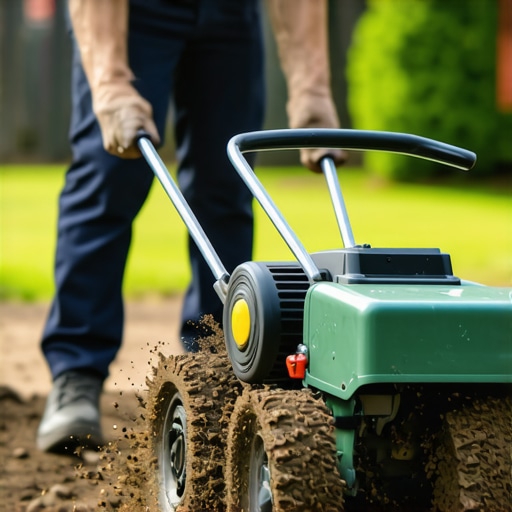
- Core Aeration: Pull 3-inch plugs across the entire lawn to create pathways for the lime to reach the subsoil.
- Calculate Square Footage: Measure your lawn exactly. Over-applying lime can lead to iron chlorosis (yellowing due to high pH).
- Calibrate Your Spreader: Use a broadcast spreader, not a drop spreader, to ensure even coverage without striping.
- Hydrate the Application: Water the lawn with at least 0.5 inches of water immediately after spreading to begin the breakdown of the pellets.
- Wait Before Fertilizing: Do not apply nitrogen fertilizer at the same time as lime; the lime can cause the nitrogen to gas off as ammonia.
The Forensic Autopsy of a Failed Lawn
When I walk onto a property that is failing, I look for the ‘tells.’ It is usually a combination of low pH and soil compaction. The grass is thin because the roots are shallow. The roots are shallow because the subsoil is an acidic wasteland where they cannot survive. If you don’t fix the pH, every other maintenance task is a waste of time. You can mow it, edge it, and blow it all you want, but you are just decorating a corpse. The $15 bag of lime is the foundation of the entire biological pyramid. Without it, the microorganisms that break down thatch and cycle nutrients simply go dormant. The soil dies. Then the grass dies. It is a predictable cycle of failure that is entirely preventable. Fix the dirt first. The rest is easy. It will rot if you don’t. Your soil is a living organism. Treat it like one. Avoid the big-box ‘all-in-one’ bags that promise a green lawn in three days. Those are just shots of caffeine for a starving plant. Use the lime. Build the base. The results will follow in 2026 and beyond.
![Why Your 2026 Zoysia Lawn is Patchy [3 Soil Fixes]](https://lawnmajesty.com/wp-content/uploads/2026/05/Why-Your-2026-Zoysia-Lawn-is-Patchy-3-Soil-Fixes.jpeg)