
How to Repair a Cracked Concrete Step Without a Pro
The Science of Concrete Failure and DIY Limitations
Concrete steps fail primarily due to hydrostatic pressure, freeze-thaw cycles, and sub-grade settlement. When water enters micro-fissures and freezes, it expands by 9 percent, exerting massive internal force that turns small cracks into structural breaks that require mechanical bonding for a permanent fix. Most homeowners treat concrete as a static material, but it is a rigid sponge that reacts to environmental stressors 365 days a year. If you do not respect the physics of the pour, your patch will pop out by next spring. That is a guarantee.
The Hardscape Autopsy: A Warning from the Field
I recently got called out to tear up a $30,000 patio that was sinking because the previous contractor ignored a hairline crack in the adjacent staircase. He simply smeared some cheap acrylic caulk over the gap. Behind that caulk, water was channeling directly into the sub-base, washing out the 21A modified gravel that held the entire structure together. By the time I arrived, the steps had moved 2 inches away from the foundation. We had to excavate 4 feet down to stabilize the footer. This is what happens when you prioritize aesthetics over engineering. In hardscaping, the invisible work determines the lifespan of the visible work. If you are doing this yourself, do not just cover the crack. Fix the cause. It is about landscaping integrity and water management. You cannot hide from gravity or fluid dynamics.
“A concrete repair is only as strong as its bond to the host substrate; without mechanical profiling, the new material is merely a sitting tenant.” – Portland Cement Association Manual
Diagnostic Engineering: Identifying Structural vs. Cosmetic Cracks
Before you buy a single bag of mix, you must diagnose the movement of the concrete to determine if the repair is feasible for a homeowner or if the footer is compromised. Check for horizontal shearing or vertical displacement of more than 0.25 inches. If the step is physically leaning away from the house, you do not have a crack problem: you have a soil compaction problem. This usually stems from poor garden design that directs gutter runoff toward the steps. It will rot the sub-base. Use a level to check for pitch. If the step has lost its 1 percent slope away from the structure, you are fighting a losing battle against water pooling. It is critical to address the lawn care and grading around the stairs before patching. Deep, infrequent watering of nearby turf can also cause soil expansion and contraction, which stresses the concrete. Keep your soil moisture consistent.
How much modified gravel do I need for a patio base?
For a standard concrete step repair involving a small footer, you need a minimum of 6 inches of compacted 21A modified stone. Calculate the volume by multiplying the length by the width by the depth in feet, then divide by 27 to get cubic yards. Compact in 2 inch lifts.
Material Selection: Why Big-Box Premix Often Fails
The material selection for concrete repair must account for compressive strength, measured in PSI, and the ability to bond to old, carbonated concrete surfaces. Standard Type S mortar is for bricks, not for structural steps. You need a high-strength, polymer-modified structural repair mortar. These products contain fine aggregates and powdered resins that create a chemical bond far superior to standard Portland cement. Refer to the table below for material comparisons.
| Material Type | PSI Rating | Bond Strength | Best Use Case |
|---|---|---|---|
| Vinyl-Modified Patch | 3,000-4,000 | Moderate | Surface scaling and thin cracks |
| Epoxy Injection | 7,000+ | Extreme | Structural cracks with no movement |
| Rapid-Set Mortar | 5,000-6,000 | High | Step nosing and vertical repairs |
| Standard Mortar Mix | 1,800-2,500 | Low | DO NOT USE for structural steps |
Step-by-Step Restoration Protocol
Follow this checklist to ensure the repair lasts a decade, not a season. Do not skip the cleaning phase. Surface preparation is 90 percent of the job.
- Mechanical Profiling: Use a cold chisel and hammer to “V-cut” the crack. It must be wider at the bottom than at the top to lock the patch in place.
- Debris Removal: Use a wire brush followed by high-pressure air or a 3,000 PSI pressure washer. No dust can remain.
- Chemical Etching: For smooth surfaces, apply a 10 percent muriatic acid solution to open the pores of the old concrete. Neutralize with baking soda.
- Bonding Agent: Paint a liquid bonding adhesive (SBR latex) onto the damp, but not dripping, substrate.
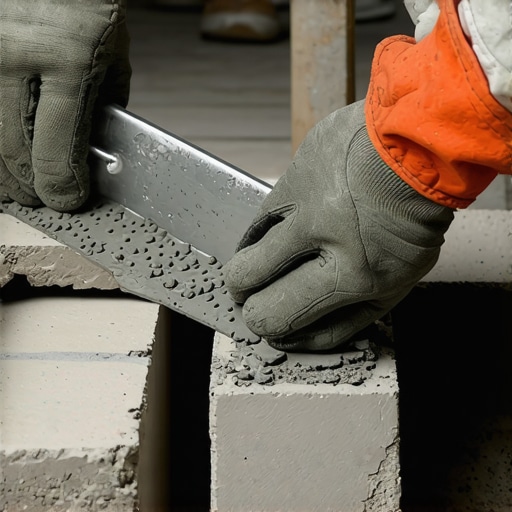
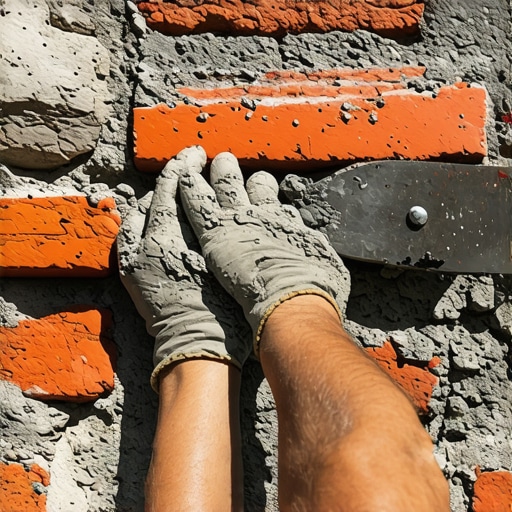
- The Pour: Pack the repair mortar tightly to eliminate air pockets. Use a margin trowel for sharp edges.
- The Cure: Mist the repair with water for 48 hours or use a chemical curing compound. Rapid drying causes shrinkage and cracking.
“The most common cause of concrete repair failure is the dehydration of the patch material before it reaches 70 percent of its design strength.” – ICPI Technical Bulletin
Can I use regular mortar to fix a structural crack?
No. Regular mortar lacks the tensile strength and adhesive properties required to bridge a structural gap in concrete. It will shrink as it cures, creating a secondary gap that allows water to penetrate deeper into the step. Use a structural repair mortar with at least 5,000 PSI.
Post-Repair Maintenance Strategy
Once the concrete has cured for 28 days, apply a high-quality silane-siloxane sealer. This sealer is breathable but hydrophobic, meaning it allows vapor to escape while preventing liquid water from entering. Check your landscaping and garden design to ensure no plants are growing against the steps; root pressure can easily snap a fresh repair. Ensure your lawn care equipment, like heavy zero-turn mowers, stays at least 2 feet away from the edge of the steps to avoid lateral pressure. Maintenance is a discipline. If you see a hairline crack next year, seal it immediately. It will save you thousands. Don’t be the guy who ignores the warning signs. Use your head. Protect your investment.

![Build a $200 Gravel Path for Wet Side Yards [Fast]](https://lawnmajesty.com/wp-content/uploads/2026/06/Build-a-200-Gravel-Path-for-Wet-Side-Yards-Fast.jpeg)